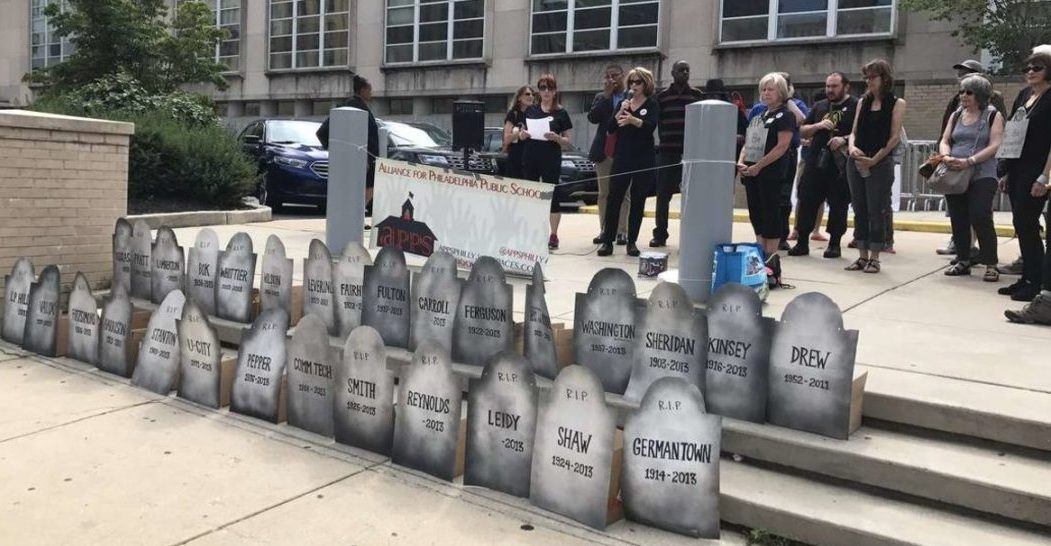
Charter Schools Have Built a Profitable Patronage Network in Philadelphia

by Alliance for Philadelphia Public Schools and Philly Power Research

The privatization of public schools has never been about improving education. The goal was to create opportunities for businesses while diminishing the political power of parents, educators and the community.  In that respect, the expansion of charter schools in Philadelphia has been an undeniable success. 

The privatization of public schools, though a reform agenda funded by wealthy corporations, individuals, and foundations, has been devastating to school districts across the country. The school privatization movement has been funded by right-wing billionaires including Jeffrey Yass, the richest person in Pennsylvania; it is a major plank in the Republican party platform. The strategies and methods of the corporate reform agenda have been incorporated into both the curricula and pedagogy of both public and charter schools, including standardized testing of children in every grade after third and the requisite test prep classes that edges out creative teaching and learning.  Students are judged on how well they can take a standardized multiple-choice test, not on creative thinking and problem-solving. Schools whose students score lower, for a number of reasons including poverty, inadequate resources and understaffing, are labeled “failing”. Schools in underserved neighborhoods have found themselves on the chopping block, either handed over to a charter company in a hostile takeover or closed for good. 

Charter schools were sold as the answer to struggling schools. They promised to improve student achievement. Some investors even contended that more charter schools would lead to the elimination of poverty and violence.

None of that has come to pass. By every measure, including those instituted to justify the creation of charter schools—data-driven education—charter schools have failed to keep the promises they made. The median Philadelphia  charter school in 2022-2023 had a lower percentage of students who scored at least proficient in PSSA math than the median Philadelphia public school. (1) Charter schools excuse their failure to meet standards by saying they are educating children in underserved neighborhoods, despite the fact that they sold themselves as a means to educate those very children. 

To read more about how charter companies have profited, continue here.

Board Outsources Extended Year Programs

Board of Education Action Meeting: June 27, 2024

by Lisa Haver

APPS member Lynda Rubin testifies at June 27 board meeting (Photo: Lisa Haver)

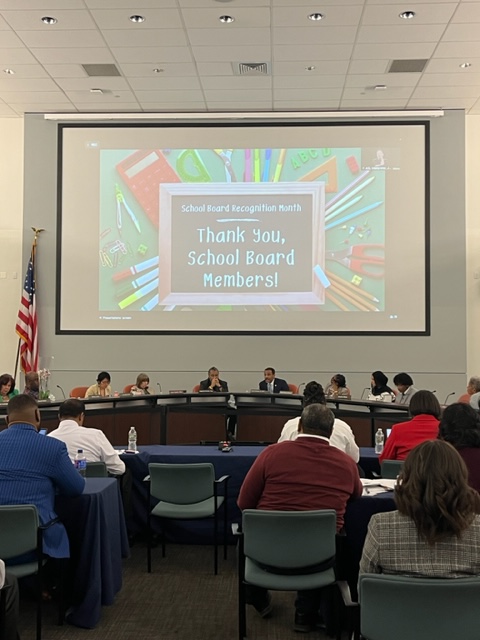
APPS members have asked the Board of Education many times, most recently at its June 13 “community hearing” at Rush middle school earlier this month, why they set up so few chairs for the public at their monthly meeting. In an auditorium that holds 240 people, there have been only 140 chairs. At this meeting, the board set up only 102 chairs. Why? The board raised the issue during the meeting of how they can improve public engagement, yet they have no explanation why room for the public shrinks with every meeting.

Board Outsources Extended Year Programs 
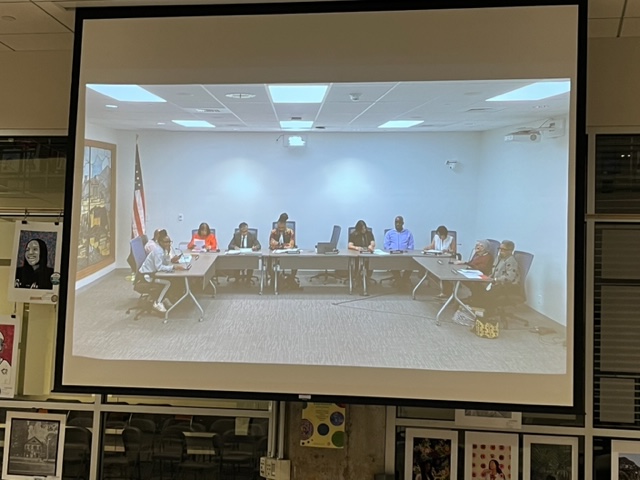
The board also raised the issue of public engagement when they discussed the pilot program for an extended school at 20 district schools. The district sent out emails to staff at the 20 designated schools on June 24–almost two weeks after schools closed for the summer. Many teachers found out when the email, sent by Deputy Superintendent Germaine Dawson, was reported in news stories and posted on social media. In addition, the Watlington administration has not sent emails to parents at the designated schools. On Thursday, hours before the board meeting, Mayor Cherelle Parker held a news conference to launch the pilot program for year-round school, a signature plank in her campaign platform. She was adamant, however, that reporters not refer to it as “year-round school”, saying that it was limited, at this time, to more extended day and extended year services. Parker expressed frustration that the story was “leaked”, but the fact is that her administration failed to communicate with those who would be involved, including the PFT, whose spokesperson told the Inquirer that they were “still awaiting direct communication” from the administration” about the program. The lack of coordination between the Watlington and Parker administration, and the failure of both to communicate with affected parties before the announcement, raised concerns about the success of the year-round initiative.

Read more about June 27 2024 action meeting.

Board Must Not Bar Parents, Students, Educators from Public Meetings

Board of Education Action Meeting: May 30, 2024

by Lisa Haver

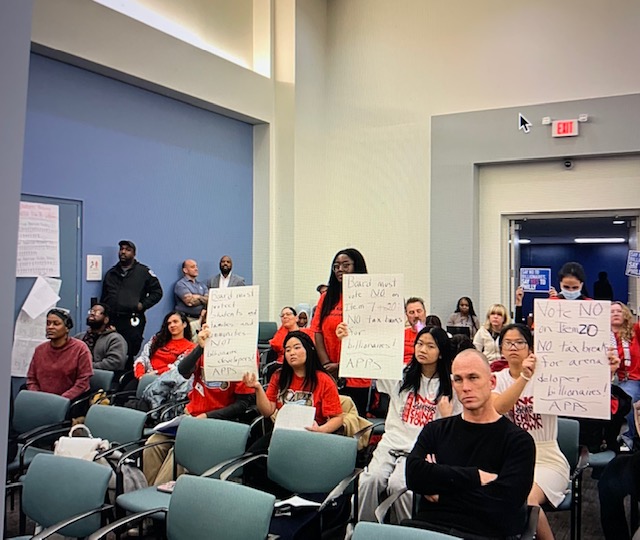
Philadelphia’s unelected Board of Education demonstrated how little it is accountable to the public at this May action meeting. Before and during the meeting, both district security and Philadelphia police blocked parents, students, educators and community members from entering the building and the auditorium. As social media was documenting in real time the violation of the rights of the people outside the doors to exercise their First and Fourth Amendment rights, as people were calling out to the board to do something, not one member of the board spoke up for their constituents. At least two reporters who showed press credentials were blocked from entering the building by 440 security and Philadelphia police; another reporter had to intercede twice before they were allowed inside. 

Continue reading here.

Board Consistently Renews Charters that Fail to Meet Standards

by Lisa Haver

In its recent report on alleged bias against some charter school operators, the law firm of Ballard Spahr recommended that the Philadelphia Board of Education make the renewal process more transparent, with more opportunities for public input.  APPS has been calling for public renewal hearings for over ten years. It seemed strange that the charter operators themselves were not making the same demand, as it would give them a chance to present evidence that they were outperforming district schools. Charter operators could list the charter schools that were fully enrolled or over overenrolled, thus verifying their assertion that there is a waiting list of 40,000 students waiting for admission to the city’s charter schools. When you consider, though, the fact that district schools outperform charters in every category, that charter schools in every area of the city are actually significantly under-enrolled, and that charter administrators are collecting exorbitant salary and compensation packages, the failure of charter operators to call for public hearings starts to make sense.  

During the expansion of charter schools, enabled by the state takeover of the district and the installation of the School Reform Commission in 2001, charters sold themselves by promising to outperform public schools and provide children with better education. Every year, however, the data shows that has not happened.

Continue reading here.