Reckless Facilities Plan Will Devastate Philadelphia Communities

by Lisa Haver and Deborah Grill

Moffet Elementary parent Katy Donoghue testifies at March 12 district town hall.
(Photo: Lisa Haver)

You didn’t answer my question.”
Parents, teachers, students, community members at district facilities meetings

‘This is not a budget issue.”
From the District’s  2024-25 facilities plan presentation

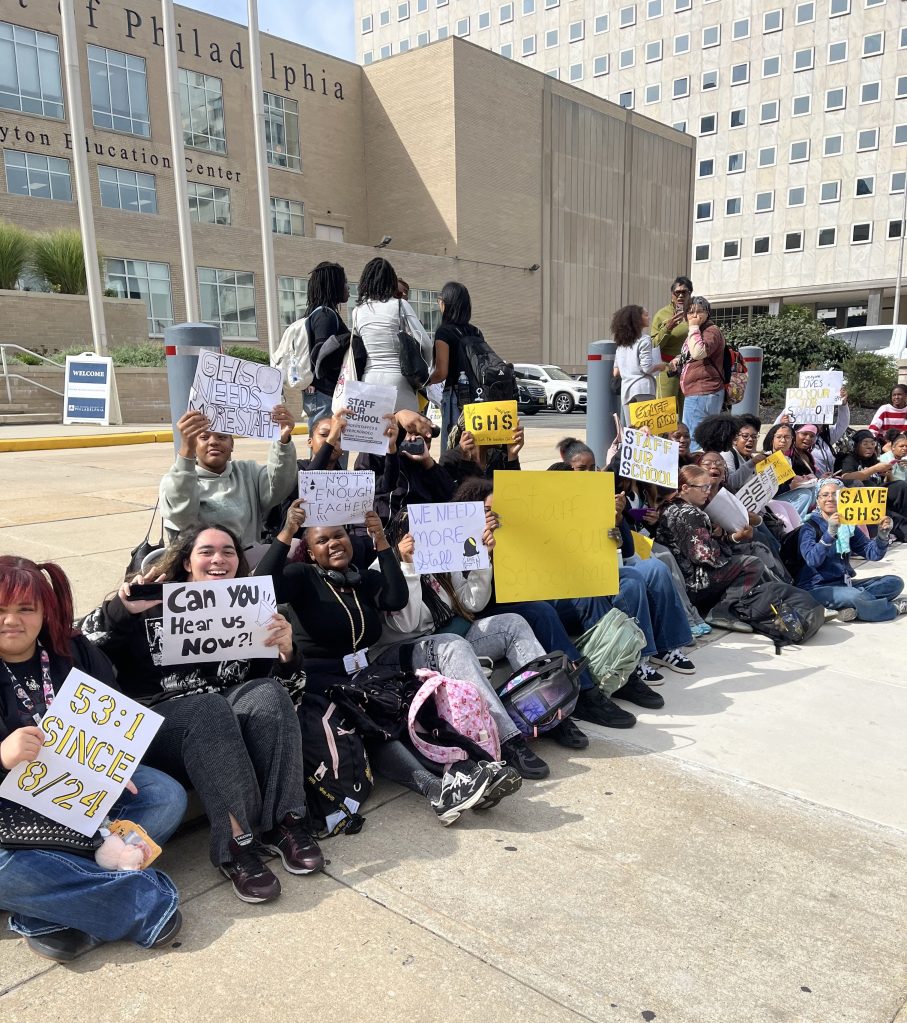
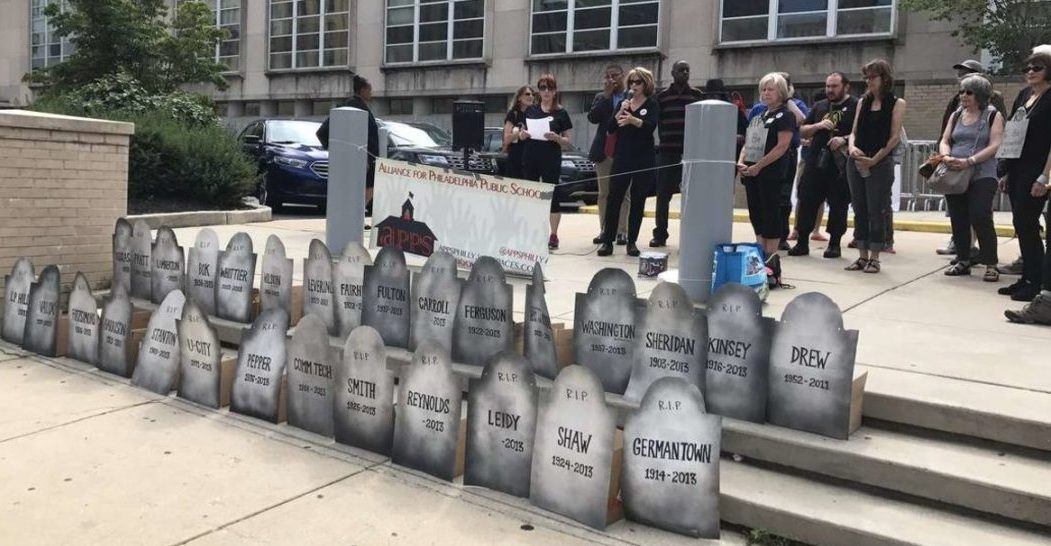
School District of Philadelphia Tony Watlington Sr. has released a $2.8 billion Facilities Master Plan that, if passed by the Board of Education, will have a devastating effect on communities in every part of the city. The latest draft of the plan, issued on February 27, recommends 18 permanent school closures, 12 co-locations, 8 buildings to be given to the city at no cost, grade band changes in 34 schools, 16 catchment areas redrawn affecting approximately 33 schools in over 20 zip codes, and modernization projects at 159 schools to begin in 2032. Schools targeted for closure are fighting to stay open. With a couple of exceptions, no meetings were held at schools facing grade conversions or catchment area changes. Most of those recommendations, in fact, were issued weeks after the original plan. 

There are no projected costs for any of the recommendations or modernization projects in the plan. 
The Watlington administration and its consultants have assembled a house of cards. If a middle school is built in South Philadelphia, then students would feed into certain high schools. If a school is built in Kensington, then the catchment maps would be redrawn for the three high schools in that neighborhood. If the district creates an honors program in one high school, the students who transfer to the school after theirs was closed might get into that program. And the one that the entire plan balances on: If the district receives more funding from the state and if the district raises funds from unnamed philanthropic sources, they might be able to make improvements to over 150 school buildings. At almost every meeting, board members implore the public to call their representatives in Harrisburg and ask them to fully fund public schools. Yet this plan assumes that Harrisburg will fund a large part of it.  How can the district base a comprehensive 10-year plan on imaginary funding?

Continue reading here

Nobody Wants This, They Don’t Care

Board of Education Action Meeting: February 26, 2026

by Lisa Haver

Robeson High School teacher Andrew Saltz testifies at February action meeting. (Photo: Lisa Haver)

“Passing this facilities plan would be an egregious breach of trust by the board.”
West Philadelphia Community Member Leah Clouden

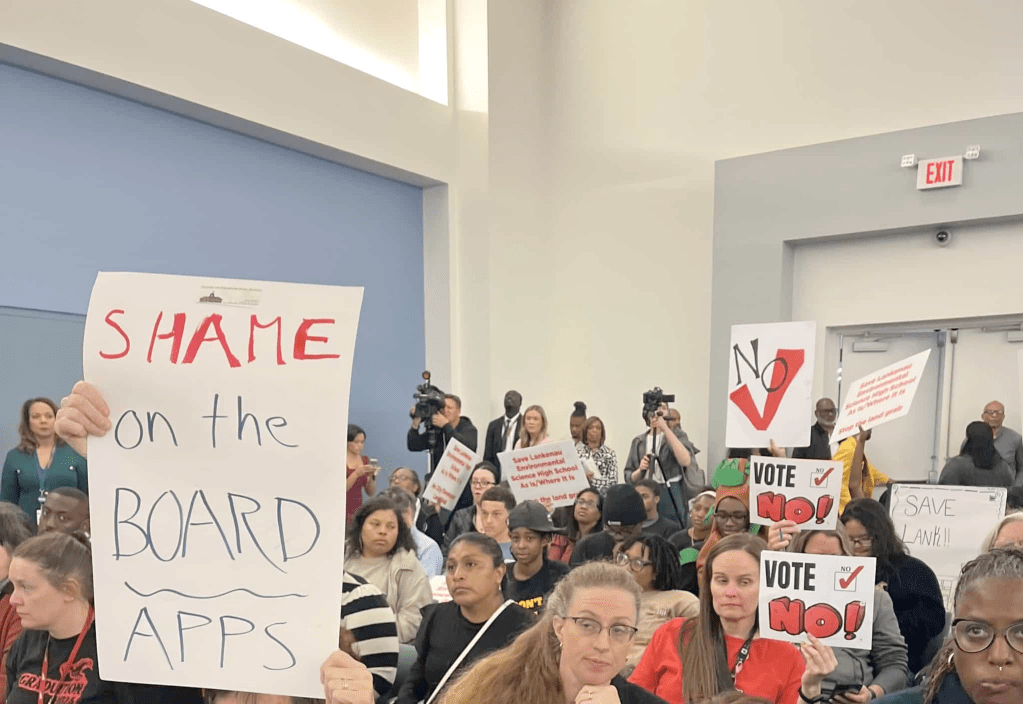
Not for the first time, Philadelphia students put the adults in charge to shame. They came with facts and data that disproved the district’s misinformation. They came with well-reasoned arguments about why closing their school makes no sense. They came with charts and maps that clearly illustrate their position that their schools should remain open. They presented data that showed that Black students would be harmed most by losing their schools. This in contrast to Superintendent Tony Watlington, whose rambling, tangent-filled 31-minute speech was one of the reasons this meeting did not adjourn until early Friday morning. Parents, educators, and community members packed the meeting. They were joined by elected officials including City Councilmembers Jamie Gauthier, Jeffery Young, Quetcy Lozada and Cindy Bass, along with State Senators Anthony Williams and Sharif Street and State Representative Daresha Parker. All spoke against the plan and any school closings. The board, for the second month in a row, violated its own by-laws by marking present one board member, Chou-Wing Lam, despite the fact that she was seen by the public on screen for less than half an hour total during the 8-hour-plus meeting. She was not present for the public testimony, yet she was allowed to cast a vote for all action items. APPS did score one victory: after repeated emails to the board, they restored to the auditorium the almost 100 seats they had removed last year.

Read more about February Board of Education meeting here.

Board Members Silent on Facilities Plan, School Closings

Board of Education Action Meeting: January 29, 2026

by Lisa Haver

Board Member Crystal Cubbage the only Board Member visible and present during public testimony of APPS Member Kristin Luebbert. (Photo: Lisa Haver)

The students showed up. So did the parents, teachers, principals, and community members who packed the auditorium at 440. Who didn’t show up? Most of the members of the Board of Education. Only President Reginald Streater and Vice-president Sarah-Ashley Andrews attended in person. Board Members Wanda Novales, Whitney Jones and Joan Stern were absent. Joyce Wilkerson, Crystal Cubbage and Chou-Wing Lam could be seen intermittently on the screen but were not fully present even virtually; Lam was visible for less than 15 minutes throughout.. Cheryl Harper never appeared; her voice could be heard occasionally. Board of Education Policy 006.1, Meetings, clearly states that members may attend remotely if they “participate in the entire meeting”. Board members “must be visible on the screen”; if they step away “they must notify the Board’s Chief of Staff or their designee.” The board violated all of these provisions. The board did not have a quorum as only the two members in the auditorium were fully present. The board must re-vote on all of the action items at a subsequent meeting. The board’s disrespect for the public, especially after the release of a potentially devastating facilities plan, is unacceptable. 

Continue to read about January 29, 2026 Action Meeting here.


Board Must Protect Constitutional Rights of Public School Educators

Board of Education Action Meeting: December 4, 2025

by Lisa Haver

APPS members support Stand Up for Public Schools speakers.
(Photo: Lisa Haver)

The Board of Education says little of consequence. They create the illusion of deliberation, but most of what they say is directed not to members of the public but to the administration–not to question Superintendent Tony Watlington Sr. but to thank him and his staff for doing their jobs. At this action meeting, Board President Reginald Streater called on every board member for questions or comments after Watlington’s announcement of the new contract with members of the principals’ union (CASA). Except for Board Member Chou Wing-Lam, who asked one question, the rest simply echoed each others’ thanks to Watlington and his negotiating team. That took eleven minutes.  But real deliberation? Almost none. Prior to every action meeting, the board members agree to move most items into a “consent agenda” (likely a Sunshine Act violation), then take one vote–whether it’s for ten items or ninety–without any deliberation. At most action meetings, the entire process takes less than one minute. Streater calls this “efficiency. Parents, students, educators and community members who come to be heard and to get answers have never demanded “efficiency”. They ask the board and the administration to answer them and to take the time to address issues and solve problems that affect their children. The board is the governing body of the School District of Philadelphia. Their constituents include every person in the city–who deserve answers from board members. 

Continue reading here for December 4, 2025 action meeting.