Board Again Renews Substandard Charters

by Lisa Haver and Deborah Grill

“As a board member, I am not willing to ignore low academic outcomes,” said Andrews. “We have to hold schools accountable for outcomes.” 
Board Member Sarah Ashley Andrews, May 14 Goals and Guardrails Meeting

The Board of Education does, in fact, ignore low academic outcomes every year when it renews charter schools that fail to meet basic academic standards.  Last year, the board renewed Mastery Douglass despite its “Does Not Meet” rating in Academics with only 36% points. They are now poised to renew 9 of the 11 schools in this year’s cohort despite only one rating “Meets” in Academics. 

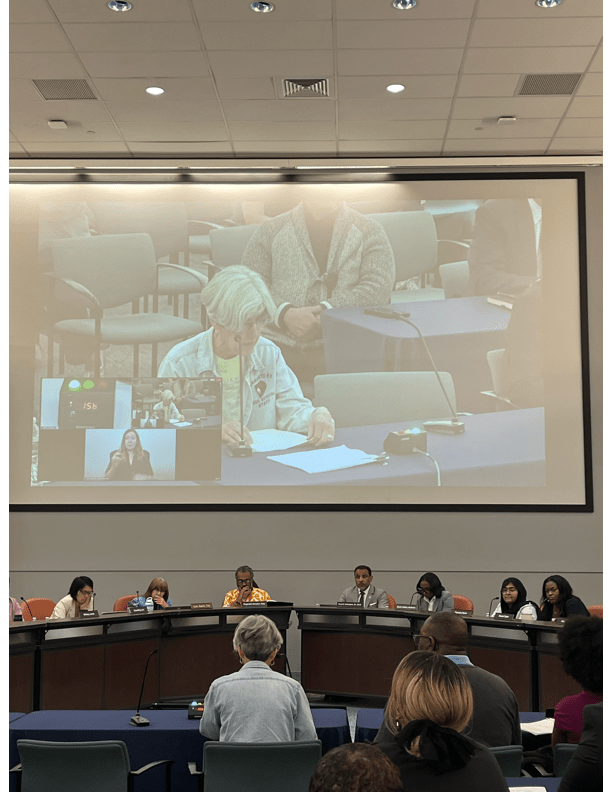
The board conducts most charter business in secret.. There are no public renewal hearings. All negotiations with the board and the Charter School Office take place out of the public eye. The board deems all charter business “quasi-judicial”, then deliberates in executive session. The board votes on all charter renewals without posting the content of the renewal agreements, in effect taking those votes in secret. This year and last, Board President Reginald Streater took a de facto vote after the Charter School Office presentation at the Goals and Guardrails (G & G) Committee Meeting by polling board members, then instructing CSO Director Peng Chao to draw up the renewal documents. The G & G agenda did not list the renewals on the agenda as official action items. These are all clear violations of the state’s Sunshine Act. 

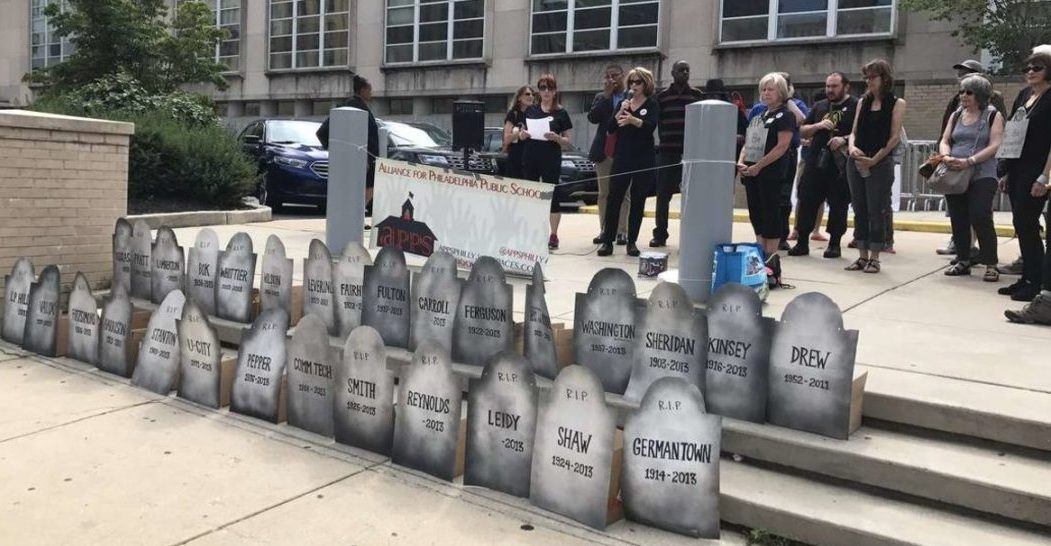
Charters sold themselves over 30 years ago as the key to improving public education; ceding control of public schools to private managers, maintaining only non-union staff, and testing children every year to prove their superiority. Charter companies, in their applications, promised to educate the city’s poor and minority children in underserved communities better than the district public schools. Many even predicted that establishing charter schools would lead to a decrease in poverty and violence. Districts across the country applied the free-market ideology that had public school systems run as businesses, including placing public assets of school buildings and property in the hands of private companies. That was accomplished in some cities by appointing an Emergency Financial Manager (EMF) to usurp the duties of the elected school board. In Philadelphia, the School Reform Commission (SRC) was installed by the state to replace the city’s appointed school board. 

Continue reading about 2025-26 charter renewals here.

Board of Education Stonewalls Community on School Closings

by Lisa Haver

This image has an empty alt attribute; its file name is img_4184.jpg
Distract staff preset data packets for community members at Bluford Elementary. (Photo: Lisa Haver)

At its September 2024 Action Meeting, the Board of Education, by unanimous vote, approved contracts with two consulting companies totaling $4,880,918. The board approved a one-year  $430,000 contract with Brownstone PR and Insight Education Group, LLC for “Community Engagement and Facilitation Support”. Purpose: “For support in community engagement and the facilitation of advisory groups and a working group related to the Facilities Planning Process”. They also hired DLR Group Inc. for “Facilities Planning Services” for $4,450,918; one-year contract for “development of a comprehensive Facilities  including Facility Condition Assessments, Educational Suitability Assessments, updated enrollment projections, and stakeholder engagement. 

One year later, at its August 2025 Action Meeting, the board unanimously ratified a $404,626 contract extension with Aramark, Inc. for “Facilities Assessment for Phase III”. According to meeting agenda attachments: “The facilities planning data warehouse has been completed and is currently hosted by Aramark.” 

Continue reading here

Board Postpones Votes on Tax Abatements for Developers

Board of Education Action Meeting: August 21, 2025

by Lisa Haver

Photo: Lisa Haver

In his remarks at the August action meeting, Superintendent Tony Watlington warned of the impending SEPTA service cuts that are scheduled to go into effect on Monday, the first day of school for students. He promised that schools would not mark students late, at least for the first week or so. Yet Watlington presented no plan for getting to school the 52,000 district students who use SEPTA if the transit system goes through with eliminating over thirty of the city’s bus routes; no member of the board asked Watlington for any plan. He encouraged parents to carpool and to make use of the district’s $300.00 allotment for driving their children to school, but he provided no details on that program. Nor did he provide any guidance for parents and guardians who do not own cars. Many parents will walk their children to bus stops at which they will see a notice that no bus will be coming–that day or ever. Is the administration coordinating in any way with SEPTA to direct students and parents to a working bus route? Is the district planning to email parents and guardians–many of whom may not be aware of the service cuts? What’s the plan? Where is the leadership?

Ilene Poses contributed to this report.

Board Hears Only One Side on KOZ Abatements
Continue reading about the meeting here:

Board Moves to Renew More Substandard Charter Schools

by Lisa Haver, Deborah Grill, Lynda Rubin, Barbara Dowdall, Ilene Poses

At some time in the future, the Board of Education will cast their final votes on the eighteen charter schools in the 2024-25 renewal cohort. Actually, the board has already made its decision on all of the schools. The future of the schools now lies in the hands of the charter operators.

The board convened a “Special Action Meeting” June 12, 2025 for the sole purpose of reviewing the charter schools in the current cohort. The agenda included a presentation from 

Charter Schools Office Chief Peng Chao summarizing their 18 renewal evaluation reports, along with public testimony.  It was actually a public hearing as there were no official action items on the agenda to be voted on. By the end of the meeting, they had separated the cohort into two categories: 12 that needed no further review and 6 that did because of failure to meet academic standards. That meant that 12 would proceed to renewal, with CSO Chief Chao drawing up renewal agreements with the schools’ administrators. For all intents and purposes, the board had voted to renew 12 charter schools. 

Continue reading here.