by Karel Kilimnik
January 15, 2018
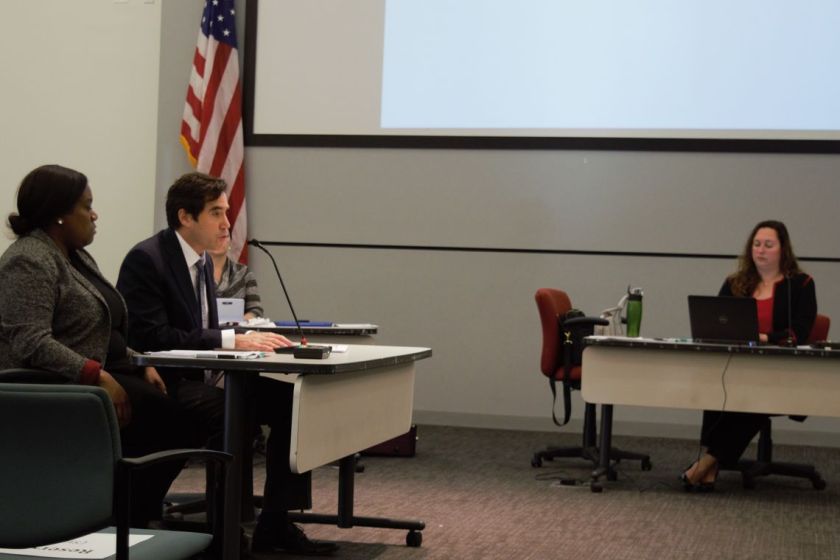
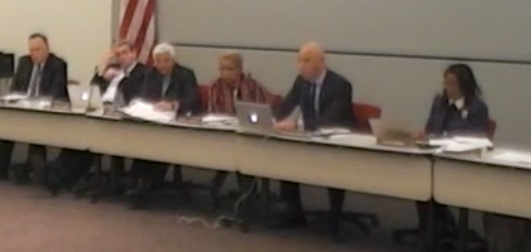
Change is in the wind this month as we look forward to the end of the SRC, await the pronouncement of the fate of the six Priority Schools, and see how many of the nine applicants for new charters will hit the taxpayer lottery. Both Dr. Hite and Mayor Kenney have said that the district will need to close more neighborhood schools every year for at least the next five years in order to balance the budget.
APPS members who testified last month at the first round of hearings for new charter applicants reminded the district that it cannot ignore the financial health of the district when considering new charters. District CFO Uri Monson has testified at the SRC and in City Council that charters are the single biggest item in the District’s budget. Philadelphia is fast approaching the 50/50 tipping point of district to charter schools.
Is the SRC deliberately pushing the District toward the New Orleans Model, which Commissioner Green has often lauded despite evidence that it has been a disaster for that city’s students and teachers?
Approving any new charter comes with the understanding that no matter how well or poorly that school may perform, the city is stuck with it for a long time. The five-year charter term has become meaningless. On the rare occasion that the SRC votes not to renew a charter, a long and expensive hearing process must take place, followed by a possible legal appeal. This can take years—while the school continues to operate. But when Dr. Hite targets public schools for closure, there is no appeal. In fact, there is not even a legal requirement for a hearing.
Despite the fact that the SRC agreed in a court-ordered settlement to post resolutions two weeks before action meetings, after APPS sued them for a pattern of violations of the PA Sunshine Act, the SRC just posted two new resolutions last Friday. Two concern renewal resolutions: the Memphis Street Academy resolution has been tabled since April 2017, the Universal Vare resolution since April 2016. Both were recommended for non-renewal by the district Charter School Office. APPS has asked at every meeting when the SRC would be deciding on these renewals; of course, we never got an answer.
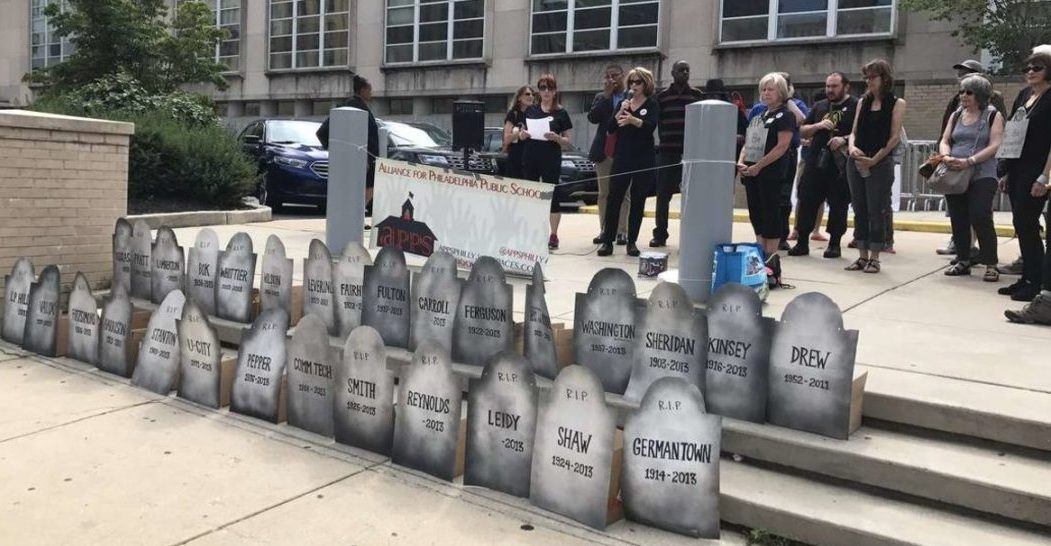
In the face of predictions of more financial problems for the district, the SRC continues to sell school buildings at prices far below market value. This month, Resolution A-24 proposes the sale of the former Ada B. Lewis Middle School to an unknown out-of-state buyer. This raises questions about the effect of closing public schools, not just on the students but on the community as a whole, and about how little the community gets to say about it. Lewis was closed over ten years ago despite strong opposition from parents, teachers, students and community members. The district allowed the building, once home to the largest middle school in the city, to become an eyesore. In 2013, the District closed Smith Elementary in the rapidly gentrifying Point Breeze area. Many of the same community members who fought to keep Smith open formed the Save Smith School Committee to stop the sale of the building. Their long legal battle was lost when a judge ruled in favor of the district, thus enabling an out-of-state real estate investor to purchase the building, who quickly flipped the property to a local developer of high-priced housing.
Last month, the SRC approved the sale of the Beeber Wynnefield Annex. Neighbors had attempted to buy the building to convert it to a community center when the district closed it in 2002, but the District’s asking price of $300,000 was beyond their means. The building stood as an eyesore for almost twenty years, when Iron Stone Capital Partners bought it last month for $140,000—less than the original asking price.
Is this what the people of Philadelphia want—for the District to shut down schools, then sell the buildings to satisfy the financial interests of developers and investors? The SRC offered little opportunity for the community to express its own needs, neither in Point Breeze nor in Wynnefield. Hite shut down Bok even though it was a thriving high school in a beautiful building; now that building is lost to the community. The SRC should consider the wishes of the community before it votes, not just the bottom line of developers and real estate investors.
Dr Hite’s pronouncement on the fates of this year’s cohort of Priority Schools may be made this month. He announced in a September press release that Penn Treaty will be “partnered” with the Institute for Student Achievement (ISA)—even before Cambridge Education and Temple University started to do their “School Quality Review”. The District told members of the six school communities that they would not be closed or charterized, but only for the next two years. Parents have repeatedly demanded a seat at the table where the future of their school is being decided, but have only gotten the usual dog-and-pony show of District-run meetings where no real decisions are made.
Catapult Learning reappears this month in two resolutions that propose lucrative contracts for the company. Since 2015 the company has shared in contracts totaling over $60 million for programs for high-needs students. In 2017, the District proposed awarding Catapult a $54million contract to run a stand-alone school for former Wordsworth Academy students; the District had to withdraw students from Wordsworth after the murder of a student at the facility. After strong pushback from The Coalition of Special Education Advocates, which is comprised of over fifteen organizations including APPS and represented by attorneys from the Public Interest Law Center (PILCOP) and the Education Law Center (ELC), the proposal was cut back to $10 million to provide for the 100 returning Wordsworth students. [See Lynda Rubin’s summary of the July 6, 2017 meeting for more details.]
Even after the SRC approved that Catapult contract, there were still concerns about Catapult’s record, about the fact that no contract has been made available to the public, and the exclusion of parents, teachers, and advocates from the process. Dr. Hite attempted to reassure Coalition members by having Chief Academic Officer Cheryl Logan address those concerns. Logan said that the District would be carefully monitoring Catapult’s new schools, beginning with weekly visits. To date, neither Dr. Hite nor Dr. Logan has provided any account of visits or any type of oversight of Catapult.
What If…
…instead of spending $490,000 on some kind of undefined direct marketing campaign, and another $68,600 to a vendor for professional development, that half million plus went directly into classrooms? Students could have necessary supplies like paper, pencils, and crayons—as students in suburban districts do—and teachers would not have to beg for funds online.
Next SRC meeting: Thursday January 18 at 4:30 PM. To register to speak, call 215-400-4180 before 3:30 PM Wednesday January 17.

 Alliance for Philadelphia Public Schools