Board Must Protect Constitutional Rights of Public School Educators

Board of Education Action Meeting: December 4, 2025

by Lisa Haver

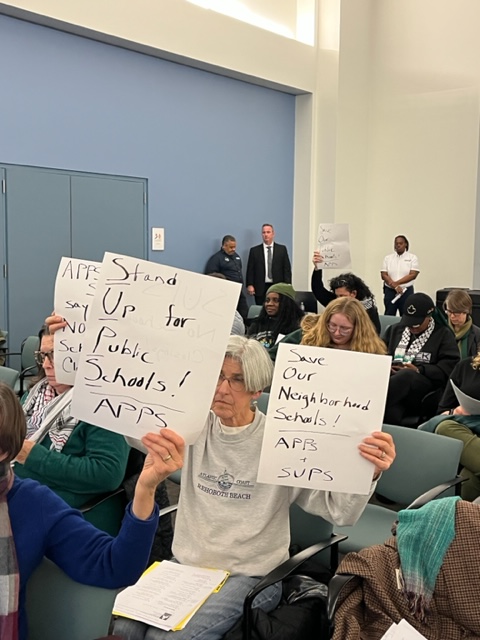
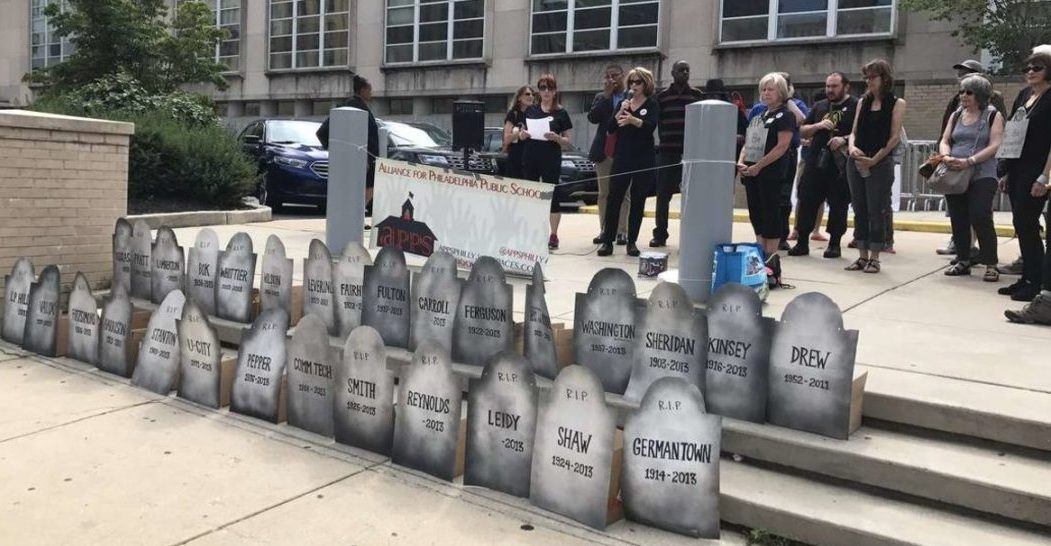
APPS members support Stand Up for Public Schools speakers.
(Photo: Lisa Haver)

The Board of Education says little of consequence. They create the illusion of deliberation, but most of what they say is directed not to members of the public but to the administration–not to question Superintendent Tony Watlington Sr. but to thank him and his staff for doing their jobs. At this action meeting, Board President Reginald Streater called on every board member for questions or comments after Watlington’s announcement of the new contract with members of the principals’ union (CASA). Except for Board Member Chou Wing-Lam, who asked one question, the rest simply echoed each others’ thanks to Watlington and his negotiating team. That took eleven minutes.  But real deliberation? Almost none. Prior to every action meeting, the board members agree to move most items into a “consent agenda” (likely a Sunshine Act violation), then take one vote–whether it’s for ten items or ninety–without any deliberation. At most action meetings, the entire process takes less than one minute. Streater calls this “efficiency. Parents, students, educators and community members who come to be heard and to get answers have never demanded “efficiency”. They ask the board and the administration to answer them and to take the time to address issues and solve problems that affect their children. The board is the governing body of the School District of Philadelphia. Their constituents include every person in the city–who deserve answers from board members. 

Continue reading here for December 4, 2025 action meeting.

Public School Board Bars Public School Parents, Educators from Speaking and Attending

Board of Education Action Meeting: June 26, 2025

by Lisa Haver

“The Party told you to reject the evidence of your eyes and ears. It was their final, most essential command.” George Orwell, 1984

This image has an empty alt attribute; its file name is img_4150.jpeg
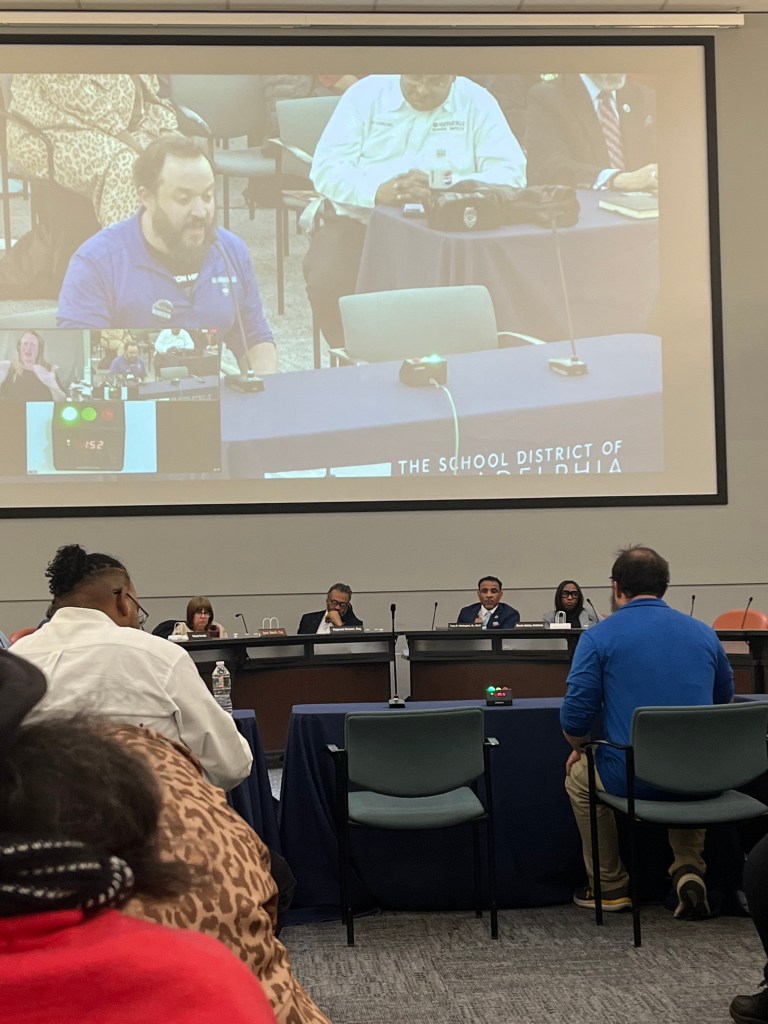
CASA President Robin Cooper testifies at June 26 action meeting. (Photo: Lisa Haver)

A governing body convenes an action meeting. They listen to a presentation from the director of a department they oversee. The president of the board raises each issue, and members of the board comment and question. The president then calls on each member to give their position. He tallies the responses, then directs the department chief to carry out the action that the majority of the board voted for. Except when the Philadelphian Board of Education does this, according to Board President Reginald Streater, it’s not voting. True, the terms “motion”,  “roll call” , and “vote” were not used. But the board came to decisions on the futures of six charter schools in the renewal cohort after listening to Charter Schools Chief Peng Chao and deliberating on the information presented.  Streater called on each member to state their position on whether the school would be granted a 5-year renewal, a 1-year renewal, or no renewal. He counted their responses, then directed Chao on what type of document to draw up. How is that not voting? Every time APPS members called out that the board was voting, even though none of those charter items had been placed on the agenda, Streater insisted they were not.  The dictionary definition of the word “vote”: a formal indication of a choice between two or more candidates or courses of action, expressed typically through a ballot or a show of hands or by voice. The public’s faith in this board continues to erode because of its lack of transparency and public engagement, along with its reluctance to hold the administration accountable. Now they want to tell people not to believe what they see and hear with their own eyes and ears. 

Continue reading here

President Streater, Tear Down This Wall!

Board of Education Action Meeting: November 21, 2024

by Lisa Haver

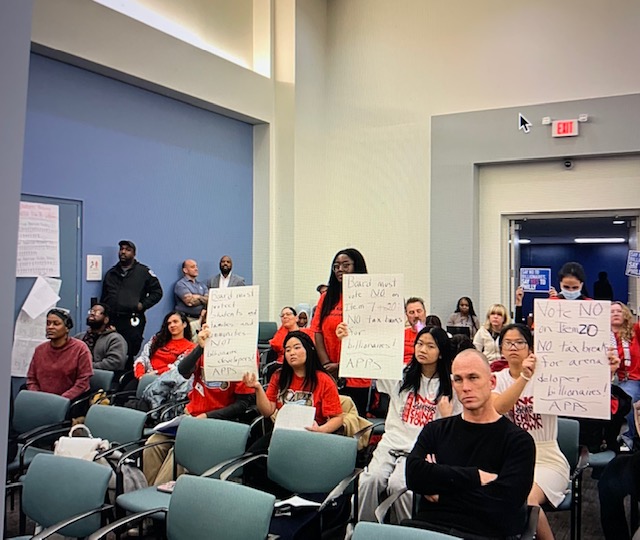
Community members protest Board’s vote on Sixers arena TIF (Photo: Lisa Haver)

Parents, students, educators and community members came to November’s board meeting to be heard on many issues: student censorship, funding to save extra-curricular activities, school closings, renewal of substandard charter schools, restoring school librarians, and the board’s vote on tax breaks for developers of the proposed arena at Chinatown’s door. They hoped to find a board that would be open to their concerns and respond to them. They found, instead, a board that had built a wall around itself, ramped up security measures, and attempted to intimidate public speakers. Outside the auditorium they encountered a table for people to sign in and be issued an identification sticker to be worn during the meeting. Inside had been erected a barrier between the audience and the board, with security staff positioned on both sides of public speakers. Board members now enter and exit through a door on their side of the barrier. There was no opportunity for any contact between board members and their constituents. All of this was an apparent reaction by the board to the protest at the October meeting, during which the board left the meeting and re-convened in a locked room. The board’s bunker-like mentality violates its own Guardrail 2: “Every parent and guardian will be welcomed and encouraged to be partners in their child’s school community.”

Continue reading about the November board meeting here.

Board Outsources Extended Year Programs

Board of Education Action Meeting: June 27, 2024

by Lisa Haver

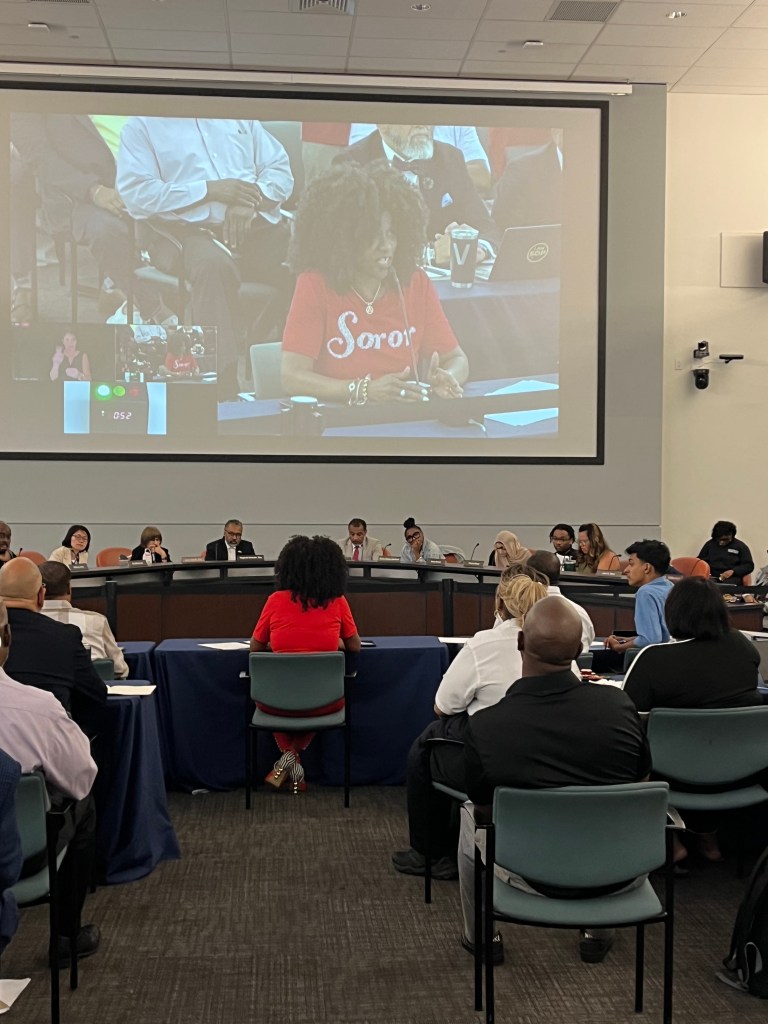
APPS member Lynda Rubin testifies at June 27 board meeting (Photo: Lisa Haver)

APPS members have asked the Board of Education many times, most recently at its June 13 “community hearing” at Rush middle school earlier this month, why they set up so few chairs for the public at their monthly meeting. In an auditorium that holds 240 people, there have been only 140 chairs. At this meeting, the board set up only 102 chairs. Why? The board raised the issue during the meeting of how they can improve public engagement, yet they have no explanation why room for the public shrinks with every meeting.

Board Outsources Extended Year Programs 
The board also raised the issue of public engagement when they discussed the pilot program for an extended school at 20 district schools. The district sent out emails to staff at the 20 designated schools on June 24–almost two weeks after schools closed for the summer. Many teachers found out when the email, sent by Deputy Superintendent Germaine Dawson, was reported in news stories and posted on social media. In addition, the Watlington administration has not sent emails to parents at the designated schools. On Thursday, hours before the board meeting, Mayor Cherelle Parker held a news conference to launch the pilot program for year-round school, a signature plank in her campaign platform. She was adamant, however, that reporters not refer to it as “year-round school”, saying that it was limited, at this time, to more extended day and extended year services. Parker expressed frustration that the story was “leaked”, but the fact is that her administration failed to communicate with those who would be involved, including the PFT, whose spokesperson told the Inquirer that they were “still awaiting direct communication” from the administration” about the program. The lack of coordination between the Watlington and Parker administration, and the failure of both to communicate with affected parties before the announcement, raised concerns about the success of the year-round initiative.

Read more about June 27 2024 action meeting.