Board Must Deny New Charter Applications

by Lisa Haver and Deborah Grill

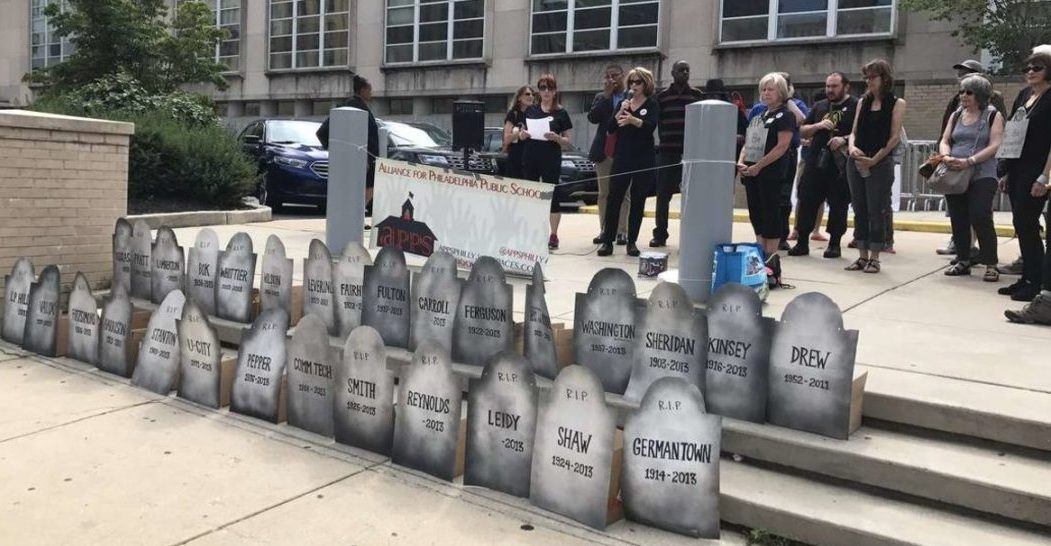
The privatization of public schools over the past 25 years has had more to do with real estate and investments than educating children. By any standard, the privatization of public schools has been a failure. Data collected over the years, in Philadelphia and in districts nationwide, shows that neighborhood public schools consistently out-perform charter schools. Charter schools are not public schools; they do not accept all children in their neighborhood, and many have been cited for lack of service to students with special needs and English Language Learners. Charter expansion in Philadelphia has not improved education for the city’s children. It has, however, resulted in an entrenched financial and political patronage system. 

Both applications submitted to the district this year also promise educational superiority. Years of data show that the majority of charter schools in the district have failed to perform at even a satisfactory level, let alone out-perform the district’s public schools.  The district’s evaluation system, in effect, equates an “approaches standard”rating with a “meets”. Thus, a charter needs only to rate above 45% in Academics to be approved by the board for a 5-year renewal. One of the most common violations cited in charter renewal reports is lack of due process for students in expulsion or other disciplinary cases, along with barriers to enrollment.  In recent years, the board of education has routinely renewed charter schools without the legally mandated child abuse clearances and criminal background checks. 

When a charter school fails to fulfill the promises it made in its application, a common occurrence, the school should admit failure and voluntarily close its doors. But most charter administrators take their case to the state-appointed Charter Appeal Board which has the power to overrule the locally elected or appointed board. If CAB votes against them, they take their case to the state courts. All of this paid for by taxpayers. 

The district does not need, nor can it afford, any new charter schools. In addition to the substandard academic performance, over half the city’s charter schools are presently under-enrolled. 

The Board of Education must deny these applications.

Lynda Rubin contributed to this report.

Clink on the links below to read our reports on the new charter school applications:

Early College Charter School of Philadelphia

Pan American Academy Charter School-Pathways High School
Board Unresponsive to Concerns of Parents and Students

Board of Education Action Meeting:  January 30, 2025

by Lisa Haver

Photo: Lisa Haver

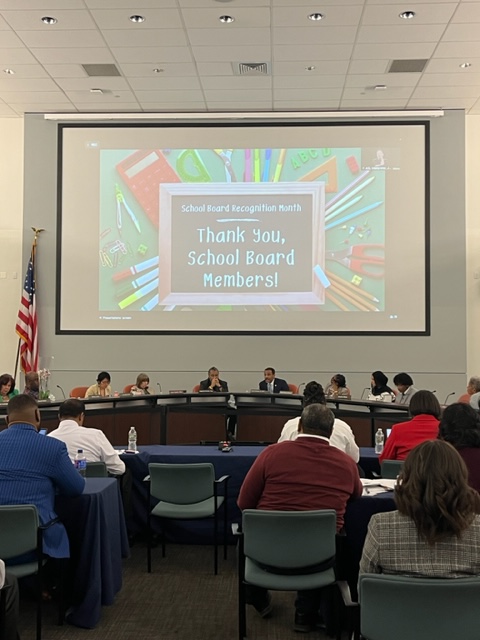
Members of the Board of Education, at their January action meeting, spent more time congratulating  themselves and the administration than they did deliberating on action items or responding to public speakers. Board members offered no questions or comments on any of the 27 action items before passing them unanimously. Several board members praised Superintendent Tony Watlington for his data-centered report on the state of the district, but none inquired as to the inconsistencies in that data. Not one board member answered questions from any of the 38 students, parents, educators, or community members about what the board intends to do about bringing back school librarians, protecting students from ICE raids, repairing dangerous facilities at a district high school, or voting on two new charter applications. Every year, they bask in self-congratulation just for showing up. Have they lowered class size? Brought back school librarians?  Taken steps to rein in rampant charter corruption

Continue reading full APPS report of Board of Education January meeting.

Board Calls Police on Silent Protesters

Board of Education Action Meeting: December 5, 2024

by Lisa Haver

Do Not Obey in Advance.
Timothy Snyder, On Tyranny

Which side are you on?
Pete Seeger

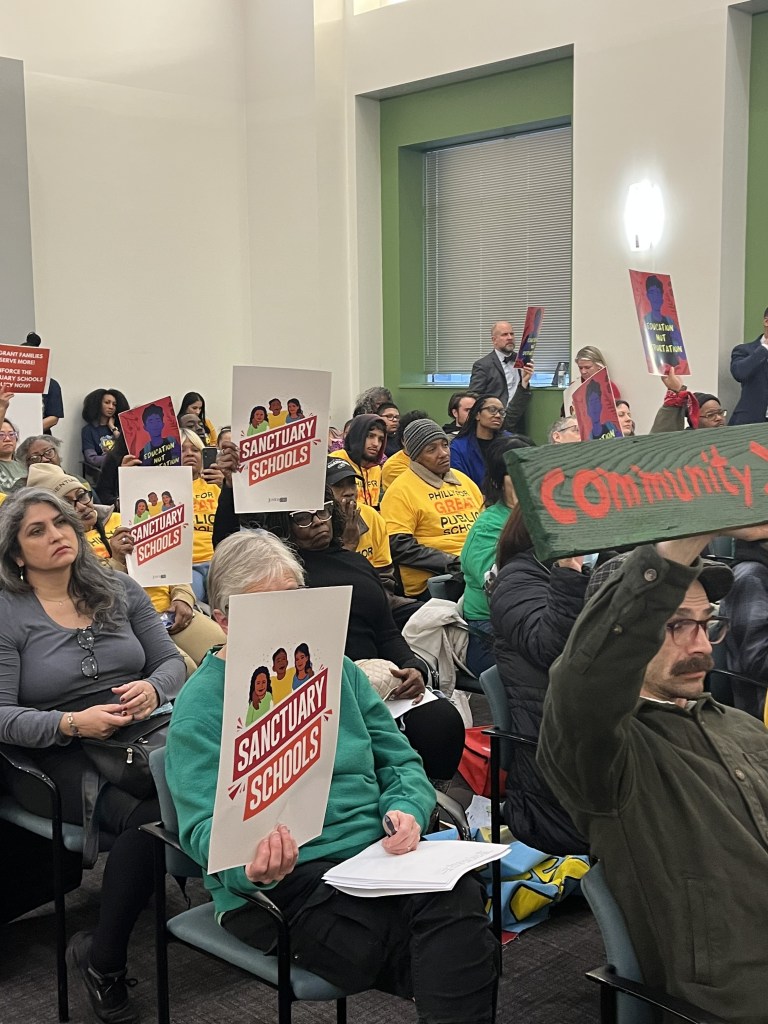
Several APPS members, in their testimony, asked the members of the Board of Education, in essence: Which side are you on? They pointed out that the board sided with billionaire developers in October when they voted to extend their Keystone Opportunity Zone (KOZ) tax abatements and again in November when they approved tax breaks for developers that paved the way for building an arena on Chinatown’s doorstep. Almost every month the board sides with charter investors and their highly paid CEOs when, in secret voting, and with no public hearing, they vote for 5-year extensions for substandard charter schools.  Many Philadelpians are expressing real fears that under the next president, they and their loved ones may be deported, unfairly prosecuted, or targeted and profiled–some possibly  removed from public schools by law enforcement and ICE. They have already asked Mayor Cherelle Parker to strengthen Philadelphia’s  sanctuary city status. The next action will be held in the first month of the next Trump administration. What will the Board of Education do to protect students, families and educators?

The board gave its answer: they called in police to threaten silent protesters with arrest.

Continue reading here

President Streater, Tear Down This Wall!

Board of Education Action Meeting: November 21, 2024

by Lisa Haver

Community members protest Board’s vote on Sixers arena TIF (Photo: Lisa Haver)

Parents, students, educators and community members came to November’s board meeting to be heard on many issues: student censorship, funding to save extra-curricular activities, school closings, renewal of substandard charter schools, restoring school librarians, and the board’s vote on tax breaks for developers of the proposed arena at Chinatown’s door. They hoped to find a board that would be open to their concerns and respond to them. They found, instead, a board that had built a wall around itself, ramped up security measures, and attempted to intimidate public speakers. Outside the auditorium they encountered a table for people to sign in and be issued an identification sticker to be worn during the meeting. Inside had been erected a barrier between the audience and the board, with security staff positioned on both sides of public speakers. Board members now enter and exit through a door on their side of the barrier. There was no opportunity for any contact between board members and their constituents. All of this was an apparent reaction by the board to the protest at the October meeting, during which the board left the meeting and re-convened in a locked room. The board’s bunker-like mentality violates its own Guardrail 2: “Every parent and guardian will be welcomed and encouraged to be partners in their child’s school community.”

Continue reading about the November board meeting here.