Board of Education Action Meeting: June 26, 2025
by Lisa Haver
“The Party told you to reject the evidence of your eyes and ears. It was their final, most essential command.” George Orwell, 1984
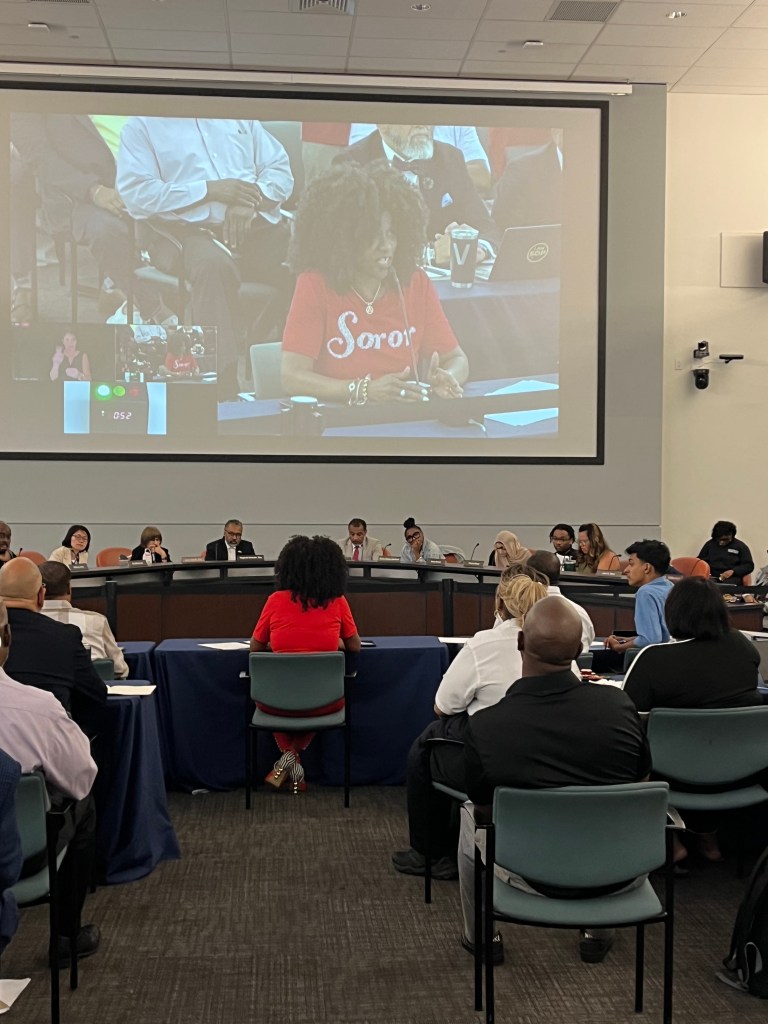
A governing body convenes an action meeting. They listen to a presentation from the director of a department they oversee. The president of the board raises each issue, and members of the board comment and question. The president then calls on each member to give their position. He tallies the responses, then directs the department chief to carry out the action that the majority of the board voted for. Except when the Philadelphian Board of Education does this, according to Board President Reginald Streater, it’s not voting. True, the terms “motion”, “roll call” , and “vote” were not used. But the board came to decisions on the futures of six charter schools in the renewal cohort after listening to Charter Schools Chief Peng Chao and deliberating on the information presented. Streater called on each member to state their position on whether the school would be granted a 5-year renewal, a 1-year renewal, or no renewal. He counted their responses, then directed Chao on what type of document to draw up. How is that not voting? Every time APPS members called out that the board was voting, even though none of those charter items had been placed on the agenda, Streater insisted they were not. The dictionary definition of the word “vote”: a formal indication of a choice between two or more candidates or courses of action, expressed typically through a ballot or a show of hands or by voice. The public’s faith in this board continues to erode because of its lack of transparency and public engagement, along with its reluctance to hold the administration accountable. Now they want to tell people not to believe what they see and hear with their own eyes and ears.
Continue reading here
 Alliance for Philadelphia Public Schools