Reprinted from the July 22, 2026 edition of the Hall Monitor
By Lisa Haver
This year, Philadelphia hosts the nation’s 250th birthday party. We celebrate our rights and freedoms as Americans, none of which are possible without the right to choose our leaders in free and fair elections.
Here in the birthplace of democracy, however, Philadelphians remain disenfranchised when those who make decisions that affect the daily lives and future of the city’s children are chosen: the Board of Education.
Unlike every other district in Pennsylvania, Philadelphia has never had an elected school board. The city’s Home Rule Charter empowers one person, the mayor, to choose all nine members of the board, through a process that shuts out the public completely. The mayor first appoints the thirteen members of the Nominating Panel, which, in secret meetings, reviews applications and selects a number of candidates from which the mayor chooses nine finalists. Nominees’ names are announced at the Panel’s final meeting, after public testimony is heard. Not until the board members give their opening speeches do we know what their positions may be on any issue.
Parents, students, educators and community members are blocked from having a say in who sits on a governing body that among other duties approves all district spending from its $4.6 billion budget, hires and supervises the superintendent, and authorizes the creation and renewal of charter schools. The board makes decisions that will affect the well-being of the city’s children and their families, including which neighborhoods will keep and which will lose their public schools.
The most common response from those against or still skeptical about creating an elected school board is: well, we don’t want to let politics into the process. The reality is that the board is an entirely political body. All members are chosen by one elected official, who looks for those who will carry out their agenda. The district receives funding from the city, state and federal governments.
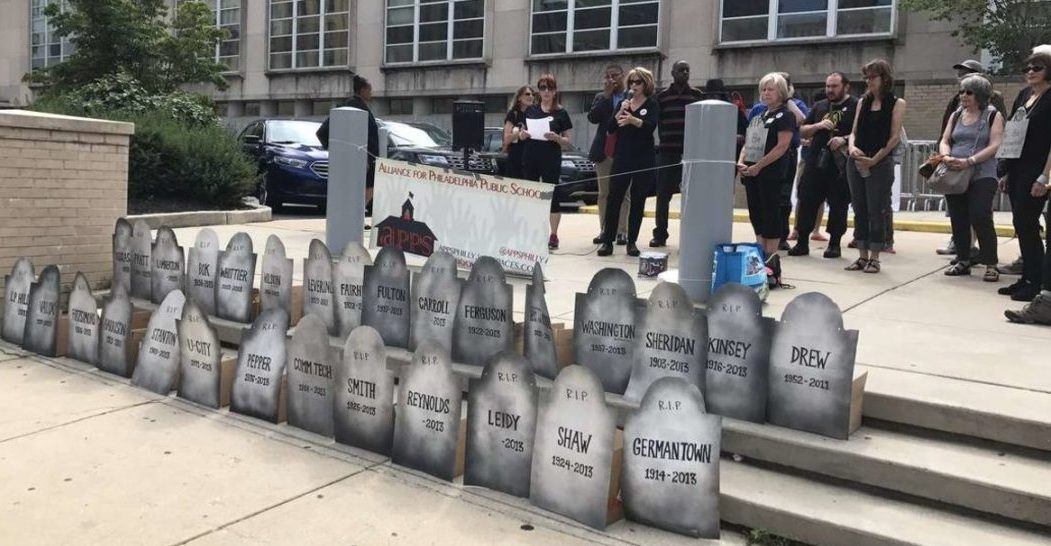
There is a legitimate concern that PAC money and large donations from outside contributors will influence elections for board members. The answer is to reform campaign finance laws, not to stop citizens from voting. And big money has been behind the changes in the district for years, most notably the privatization of public schools. The School Reform Commission’s vote in 2011 to approve a major grant from the Bill and Melinda Gates foundation led to charter expansion and the resulting closure of over 20 public schools in 2013.
Some point to the disruption seen in local school board meetings in recent years over book-banning, violation of LGBT students’ rights and other causes championed by right-wing groups such as Moms for Liberty as a reason against an elected school board. Actually, we witnessed democracy in action in districts including Central Bucks when parents and community members organized and ran in opposition to the conservative members–and won.
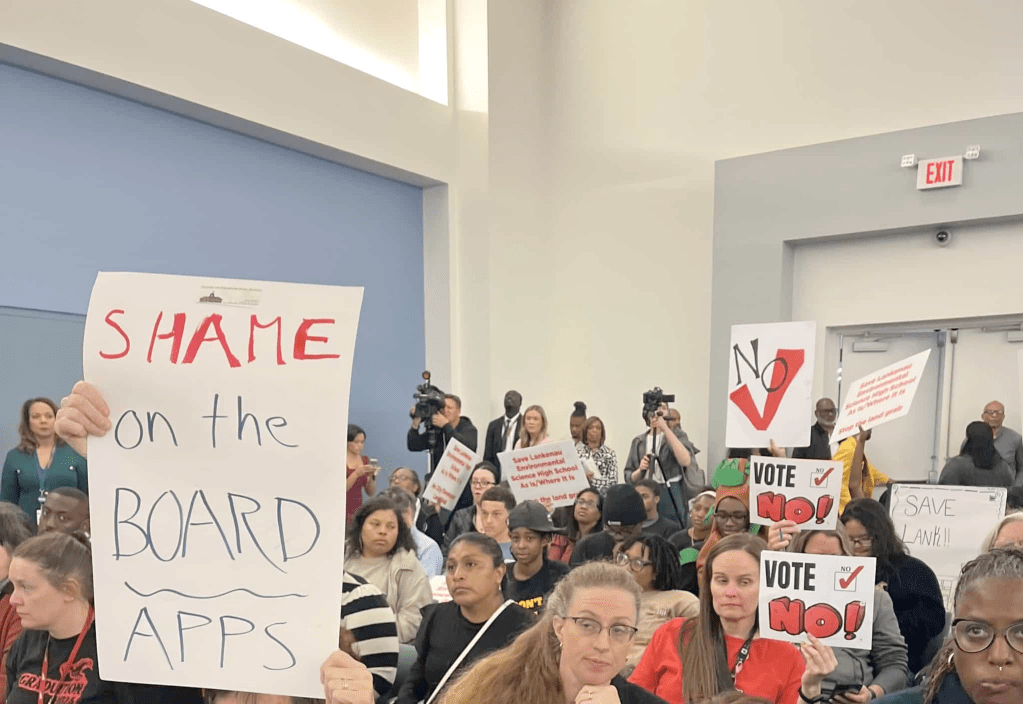
In April, the board passed a $3 billion facilities plan that will cause disruption unprecedented in the district. In addition to the closure of 17 schools, the plan calls for the co-location of 12 schools, grade band changes in 34 schools, 16 catchment areas redrawn affecting approximately 33 schools in over 20 zip codes, and modernization projects at 159 schools to begin in 2032. The district summary acknowledged that no one who testified at any public meeting or responded to their survey expressed support for the closure of any district schools. Students, parents and educators testified at board meetings, with close to 100% against the closings. Meetings were never held for school communities targeted for grade band or catchment changes.
What recourse does the public have when the board goes against the sustained and vocal will of the people? In Philadelphia, very little. We can’t vote out the six members who voted for the plan. We can’t even lobby the individual members of the board to change course because, unlike elected officials in City Council and the state legislature, board members are not required to meet with constituents.
Chicago just seated its first elected school board in decades. After their mayor-appointed board closed more than 50 public schools in 2013, parents and educators organized and fought to change the law. It will take changes at both the state and local level to convert Philadelphia’s mayoral-controlled board to an elected one, including referendums on changing the Home Rule Charter.
In May, City Council Education Committee Chair Isaiah Thomas introduced a resolution to hold hearings on replacing the mayoral-appointed board with an elected one. Council’s 2026-27 term ended before a hearing was scheduled; Thomas may re-introduce the resolution this Fall.
In a democracy, there is no place for any governmental body that is not accountable to the public it has been entrusted to serve. It is past time for Philadelphia to end the disenfranchisement of its people.
Lisa Haver is a former Philadelphia middle school teacher. She is a co-founder and coordinator of the Alliance for Philadelphia Public Schools. apps.philly.net

