Commentary: Board of Education must hold charters accountable

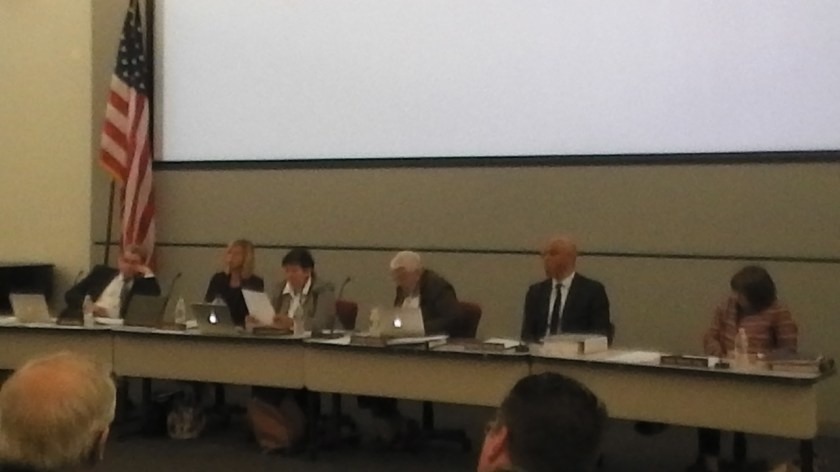
401738944397064137-schooldist

The following commentary by Lisa Haver and Deborah Grill was published by the Notebook on July 11, 2018

Philadelphia charter school operators and advocates have long maintained that if they were freed from the bureaucracy and regulations imposed on public schools, charters would be able to quickly and consistently raise student achievement. The School Reform Commission bought into that argument, approving new charters in almost every year of its 17-year reign.

The SRC also turned over control of more than 20 neighborhood schools to charter operators through its Renaissance initiative, whose provisions include“stringent academic requirements” that would be used “as a basis for a decision to renew, not renew or revoke a Renaissance school at the end of its [five-year] term.”

But when the data show many of those schools failing to achieve anything close to the “dramatic gains” promised, the SRC did not hold those charters accountable.

Recently, charter operators have actually lobbied the District to lower the standards by which their schools are evaluated. A June 11 Philadelphia Public School Notebook/WHYY story,“Philadelphia School District nearing new accountability rules for charters,”revealed that secret negotiations had taken place between District and charter officials about changes in the rating system, which “was developed with substantial input from the charter operators themselves.”  This is not the first time charter operators and District officials have met in secret: They conducted closed-door meetings from fall 2016 through spring 2017 to formulate public policy about charters.

Belmont Charter CEO Jennifer Faustman argued that it’s not fair to compare charters who took over poor-performing District schools, saying, “You’re basically being challenged to exceed the District.”

But hasn’t that been the justification for creating and expanding charters — that they would always do better than public schools? Belmont Charter would not sign its 2017 renewal agreement, citing unfairness of conditions, even though Belmont failed to meet standards in all three categories—academic, financial, and organizational.

District officials contend that the new rubric is “fair” to charter operators, but do not explain how it is fair to the students or their parents. Theoretically, a charter school could earn a 45 percent academic grade even with near-zero proficiency rates. That is, a charter could be renewed as long as it showed improved attendance and growth — if not actual academic achievement. Incredibly, the charter coalition finds that expectation too high. They are holding out for a 40 percent passing grade.

Then-SRC Chair Estelle Richman told reporters that the charter “performance framework” has undergone “more than 60 negotiated changes” in the last year and that the “charter agreements incorporate a revised performance framework which provides charter schools with transparent and predictable accountability and ensures charter schools are quality options for students and families.”

Transparency, apparently, should be extended to charter operators but not to the public. If charters are truly public schools, as charter operators contend, then all policy discussions, including changes in the rating system, must be open to the public. Nor did Richman explain why the SRC felt the need to consult those being regulated on how they wished to be regulated.

Last month, in one of its final actions, the SRC approved 10 charter renewals. Four others, including two Mastery charters, were not on the agenda, reportedly because they rejected conditions suggested by the District.

The SRC has failed to take action on seven Mastery renewals, including five Renaissance schools, over the last three years, as Mastery officials have refused to accept proposed conditions. The District does not publicize conditions until after the operator accepts them as part of its new charter; the District does not disclose any conditions that the school has rejected. Despite, or perhaps because of, Mastery’s stonewalling, the company was invited to take part in negotiations regarding the new rating system.

In Mastery’s February 2018 application for a new elementary school to be located in North Philadelphia, it asserted that it has had a successful track record of turning around unsuccessful schools. However, the District’s School Progress Reports (SPR) for the last two years show that 14 of Mastery’s 17 Philadelphia charters (most of them converted District schools) are in the lowest performance tier — Intervene — in the academic categories. The remaining three are in the Watch category, the third lowest of the four performance tiers.  Lenfest Middle and High School, which Mastery has been managing since 2001, has an achievement placement in Intervene and an overall placement in Watch.

Mastery’s application also stated that none of the four District elementary schools in that targeted area (Dunbar, Ludlow, McKinley, and Moffet) ranks in the top quartile citywide on either the SPR or the state’s School Performance Profile (SPP). However, SPP data for the last two years show that none of Mastery’s Philadelphia schools rank in the top quartile. In fact, those four public schools in Mastery’s targeted area have SPP scores comparable to most of Mastery’s schools.

The new Board of Education must hold charter operators accountable. Any adjustments in the rating system — which would be a major policy change — should be deliberated on in a public process, for the purpose of raising standards, not lowering them.  The District cannot afford to subsidize charters that are not adequately educating their students.
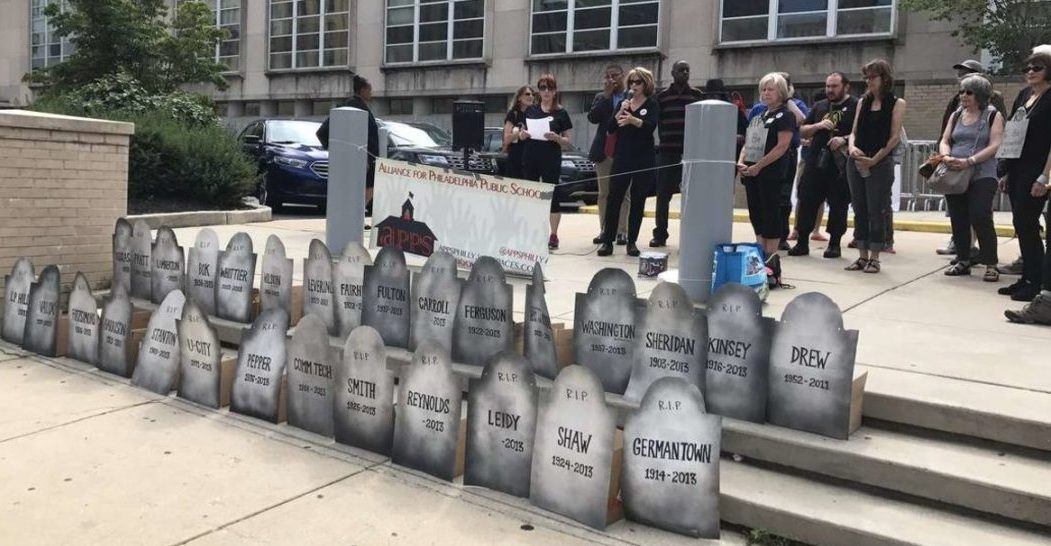
Defenders of public education speak before the Philadelphia School Reform Commission June 21,2018

SRC 5-24-18

Click on the picture to view the testimony of defenders of public education.


SM KnightsClick here to view the testimony and read the transcripts of supporters of Strawberry Mansion High school.


MAYFAIR-LOGO_SECONDARY-A_COLOR1

Click here to view the testimony and read the transcripts of supporters of Mayfair School.

Transcripts of APPS members testimony before the SRC.
Transcripts are in the order of appearance at the meeting.

Diane Payne SRC 6-21-18

Click Diane Payne’s picture to read the transcript of her testimony before the SRC.


Ilene 6-21-18

Click Ilene Poses picture to read the transcript of her testimony before the SRC.


Lynda 6-21-18

Click Lynda Rubin’s picture to read the transcript of her testimony before the SRC.


Lisa Haver 6-21-18

Click Lisa Haver’s picture to read the transcript of her testimony before the SRC.


Barbara Dowdall SRC 6-21-18

Click Barbara Dowdall’s picture to read the transcript of her testimony before the SRC.


Karel Kilimnik SRC 6-21-18

Click Karel Kilimnik’s picture to read the transcript of her testimony before the SRC.


APPS sends a letter to the SRC

SRC 5-24-18


June 18, 2018

Dear SRC Chair Richman, Commissioner Neff, Commissioner Burns, and Commissioner Green,

The SRC has scheduled a special meeting for 1 PM on June 21 for the purpose of voting on the 2017-18 cohort of charter renewals.  As yet, no resolutions have been posted for that meeting. Nor is there a resolution posted for the charter amendment requested by Discovery Charter.

A June 11 Philadelphia Public School Notebook/WHYY story about the new charter rating system, “Philadelphia School District Nears New Accountability for Charters”, reports that there have been ongoing negotiations with charter operators about the district’s rating system.

The Notebook quotes both district and charter officials who confirm that negotiations between them about revamping the rating system have taken place without any public notification or inclusion.

In that spirit, the standard charter agreement has undergone “more than 60 negotiated changes” over the past year, according to Estelle Richman, chair of the soon-to-be dissolved School Reform Commission.

“These charter agreements incorporate a revised performance framework which provides charter schools with transparent and predictable accountability and ensures charter schools are quality options for students and families,” she said in a statement.

… If charters accept the terms in this revamped rubric — known as the “charter school performance framework” — the District will have a clear and mutually agreeable road map for deciding whether a school should close when its term expires or remain open for another five years.

If charters blanch at the deal, the incoming school board will inherit a dispute fraught with political implications and real-world consequences for tens of thousands of children.

 There are a limited number of items the SRC is permitted to deliberate on in non-public meetings, including personnel and legal matters.  “Charter rating system” is not one of them.

We understand that the district has also held convenings with charter operators in recent years, without public notice or inclusion, to discuss issues including the district’s rating system.

We ask that you respond to the following questions:

  • When were the changes in the rating system negotiated by district and charter officials? How many meetings took place?
  • Who was present during these negotiations?
  • Why were these meetings, about a major policy change, kept secret from the public?
  • Charter operators maintain that charters are public schools. Why would policy changes about any public schools be conducted in private?
  • Why does the SRC allow the charter operators—the entities who are regulated—to determine how they will be regulated?

Could you please send the dates and minutes for all meetings or convenings held by the district for charter operators which were not posted as public meetings?

Sincerely,
Lisa Haver
Karel Kilimnik


There has been no response from the SRC.


Resolutions were posted  June 19th after this letter was sent. If you want to speak on these resolutions you must call 215-400-4010 by Wednesday, June 20th before 1 PM.


Eyes on the SRC: June 21, 2018

SRC 5-24-18
The Philadelphia School Reform Commission and Superintendent William Hite

by Lisa Haver

[Note: Deborah Grill, Ken Derstine, Diane Payne and Lynda Rubin contributed to this edition of Eyes.]

Seventeen years ago, after a vote taken in the middle of the night in Harrisburg, the Commonwealth of Pennsylvania took control of the School District of Philadelphia.  The School Reform Commission supplanted the School Board as the governing body of the city’s public schools. Few of us could have imagined the devastation wrought by this body: over thirty neighborhood schools shuttered, public schools handed over to private managers, charter expansion and charter fraud, outsourcing union jobs, and a succession of superintendent/CEOs whose policies and practices opened up a marketplace for corporate education reformers and outside vendors.

The SRC will hold its final meetings this month. The SRC will go out the same way it came it—by withholding important information from the public. Up until last week, the SRC had posted two June meetings; one is tentative as action is contingent on the budget vote of City Council.  On June 14, the SRC posted a small notice (the minimum notice required by law) in the classified section of the Philadelphia Inquirer of a Special Meeting to be held at 1 PM on June 21 for the purpose of voting on renewals of seventeen charters.  Rather than put the charter renewals on the agenda of the regular 4:30 meeting, they decided at the last minute to have two separate meetings on the same day. Will working parents be able to attend a 1 PM meeting? Unlikely.

The notice on the district webpage (not on the homepage but on the inside SRC page) says that speakers who will be addressing items on the agenda will be “prioritized”. Here’s the problem: the SRC has not posted any resolutions for this meeting. We know which schools are up for renewal; they are listed on the Charter Schools Office page. So why aren’t they listed as resolutions?  The actions of the SRC, particularly in recent years, leave little doubt about the district’s increasing accommodations to charter operators and investors at the expense of district schools.

A June 11 Philadelphia Public School Notebook/WHYY story, “Philadelphia School District Nears New Accountability for Charters”, offers a disturbing account of secret negotiations between the district and charter officials. The subject: how to lower the bar on charter achievement once again.

The School District of Philadelphia has a new tool for evaluating its charter schools, one that it hopes will help end a long and public tug of war with the city’s growing charter sector.

 If charters accept the terms in this revamped rubric — known as the “charter school performance framework” — the District will have a clear and mutually agreeable road map for deciding whether a school should close when its term expires or remain open for another five years.

 If charters blanch at the deal, the incoming school board will inherit a dispute fraught with political implications and real-world consequences for tens of thousands of children.

To be clear: the SRC has always had an accountability framework for rating charters.  The fact that they ignored it doesn’t mean there wasn’t one. When the SRC’s Charter Schools Office (CSO), citing over thirty reasons, recommended non-renewal in 2016 for two Aspira Renaissance charters, Olney High School and Stetson Middle School, the SRC voted to postpone the vote, ostensibly to allow Aspira Inc to get its financial house in order. Two years later, the SRC finally voted not to renew.  That same year, the CSO recommended non-renewal for two Universal Renaissance charters, Audenreid High and Vare Middle.  Those two votes were also tabled and have not been brought back for a vote, although both schools continue to operate with tax dollars, as do the two Aspira charters. The fact that the SRC ignores overwhelming evidence outlined by the CSO does not mean that there has not been a rating system.  It means that the SRC has a history of caving to political pressure and selling out the best interests of the school children who attend actual public schools. The Notebook article states:

The new tool is an attempt to break this stalemate, and it was developed with substantial input from the charter operators themselves. District leaders say it is far more transparent and consistent about what schools must do to meet District standards in academics, operations, and financial stability. They also hope it will create an ever-increasing academic bar for charters, one that ensures these publicly financed, privately run schools are superior to their District counterparts and worth the financial burden they place on the system as a whole.

 In that spirit, the standard charter agreement has undergone “more than 60 negotiated changes” over the past year, according to Estelle Richman, chair of the soon-to-be dissolved School Reform Commission.

 “These charter agreements incorporate a revised performance framework which provides charter schools with transparent and predictable accountability and ensures charter schools are quality options for students and families,” she said in a statement.

 SRC Chair Estelle Richman told reporters that the charter agreement has undergone “more than 60 negotiated changes” over the past year. We intend to ask the SRC directly:

  • When were these changes negotiated?
  • Who was present during these negotiations?
  • Why were these meetings, about a major policy change, kept secret from the public?
  • Charter operators maintain that charters are public schools. Why would policy changes about any public schools be conducted in private?
  • Why does the SRC allow the charter operators—the entities who are regulated—to determine how they will be regulated?

The district and the charter operators say that charters are public schools.  Then all dealings with charter operators must be conducted in public and all information about them made available to the public.


 Next SRC Meetings:

Thursday, June 21 2018 at 1 PM. Call 215-400-4010 (NOTE: Different number) by 1 PM the day before.

Thursday, June 21 2018 at 4:30 PM.  Call 215-400-4180 before 3:30 PM the day before.


 Click here to read the Resolutions of Note
and the APPS Analysis.