The Battle for Wister Elementary School

Wister

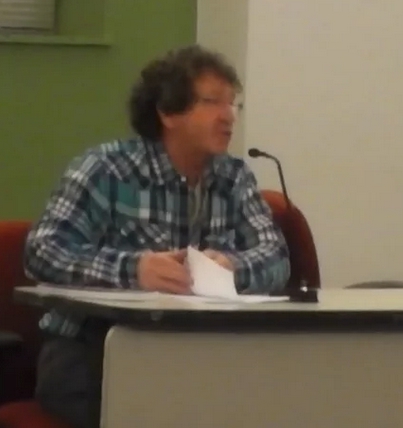
At the December 17, 2015 meeting of the Philadelphia School Reform Commission, APPS member Coleman Poses testified that the SRC was using incorrect information for the Wister Elementary School “turnaround” to Mastery Charter.

On January 11, 2016, School District of Philadelphia Superintendent William Hite announced that he had reversed his position on Wister Elementary and that he was recommending that it remain a public school.    According to NewsWorks reporter Kevin McCorry:

The proposed conversions have been a topic of fierce debate at School Reform Commission meetings in recent months. Each school has seen parents and advocates pushing both for and against conversion.

Wister was home of the most coordinated campaign to keep the school within district control. Community member Coleman Poses correctly pointed out that the district relied on faulty enrollment data in its pitch to convert the school.

The response of local corporate education reformers was to go into overdrive, as Hite’s reversal would interfere with Mastery’s attempt to create its own charter district in Philadelphia.   The Philadelphia Inquirer, owned by Mastery backer H. F. Lenfest, published an article publicizing Mastery’s petition drive and its aftermath.

On January 18, the Philadelphia Public School Notebook published a commentary by Jonathan Cetel, director of the corporate education reform group PennCan, in which he says that Hite made the wrong decision on Wister.  He contends that regardless of the faulty data, Wister should be turned over to Mastery. In a comment after the article, Coleman Poses responded:

I take issue with several of the points that Cetel makes in his commentary. He speaks to the fact that 34% of the families in Wister’s catchment area have chosen other schools to attend. Nowhere does he mention the fact that the school’s capacity is 517, and that the school was operating at 88% of its capacity in 2013.  But even if we accept Mr. Cetel’s argument that 34% of Wister catchment families have voted with their feet, what does this say about the 66% of the families that have remained in their local district school?

Mr. Cetel points out that money alone will not solve Wister’s problems, but his argument appears to belie this point. He mentions that in the 2010-2011 school year, Wister received more money from the district, yet was still struggling academically. Missing from this argument, however, was the fact that Wister was still making AYP, and that, when the money was taken away, proficiency rates diminished at the school. Missing also, was the fact that the school was still not funded the way that schools in richer districts were funded. Given the fact that Wister also has more socio-economic challenges than many of the schools in richer districts, the results at the school are even more impressive.

What confirms Mr. Cetel’s argument might be the fact that one would expect even more progress from the cash flush Mastery Schools. His cherished view of Gratz High School appears less dazzling when one looks at the school’s rating in the Great Philly Schools database, where Gratz scored an overall 3 out of 10 for all Philadelphia high schools, with a “1” in Math, and a “3” in reading. Although I am certain that a number of Gratz students like Jerome and Terrell make it to college, those colleges will need to provide a lot of help to bring them up to the level of proficiency that they should have gotten in high school.

Joining the usual refrain of corporate reformers, Mr. Cetel contends that more resources will make no difference in providing a quality education at Wister.  He fails to explain why that same standard does not apply to Mastery, one of the greatest beneficiaries of the policies which continue to starve public schools while feeding more and more to charters.


Update

Ignoring its much vaunted “data” which it claims is the basis for turning  “underperforming schools” over to charters, the SRC at its Thursday, January 21st meeting voted to begin the process of turning Wister over to Mastery Charter company regardless of the data.

SRC moves toward giving 3 schools to charter firms | Philadelphia Inquirer

In bombshell, SRC defies Hite, votes to turn Wister over to Mastery | the Notebook

SRC overrules Superintendent Hite, moves to convert three schools into charters [photes]
Newsworks

Sylvia Simms, the SRC member who changed the fate of a school | Philadelphia Inquirer

What is clear is that public schools will continue to be starved and the resulting corrupt “data” and the the interests of the community will continue to be ignored in order to achieve a privatization agenda.

Eyes on the SRC: January 21, 2016

SRC 11-19-15 #2

By Karel Kilimnik

Welcome to the Sixth Edition of Eyes on the SRC.

A note to our readers: this analysis is based on what the SRC has released to date. The SRC often adds new resolutions up until the day of the meeting. We will review the list periodically and let you know of any new resolutions. In addition, rules for speaking appear to be fluid at this time. From the district website:

Revisions to current practice regarding speaker order: 

The School Reform Commission will be implementing new protocols based on two general principles. First, it is important to group speakers on the same or similar topics at Action Meetings in order to give Commissioners the ability to gain the big picture on each topic. Second, the Commission would like to encourage new voices and topics at meetings.

Beginning January 21st, 2016, the School Reform Commission (SRC) will be enacting the following changes to the order in which speakers testify at SRC Action Meetings:

  • Student speakers will continue to be prioritized and normally will speak first.
  • Other speakers will be grouped by topic, based on the order in which their topics were registered.
  • Speakers who did not speak at the previous meeting, will be allowed to speak first within their topic group, and followed by those speakers who did have the opportunity to speak at the previous meeting.
  • Speakers on resolutions will no longer be prioritized, given that all speakers have an opportunity to speak before votes are taken on resolutions. These speakers will be grouped by topic and the time at which they register along with all other speakers. [Emphasis added]

 When you call to register to speak, please ask what number your topic is. Let’s hold them to their new set of rules. Fasten your seatbelt for the ride. It may be bumpy.

Next SRC meeting: Thursday January 21, 5:30 PM. To register to speak you must call 215.400.4180 by 4:30 January 20. It’s best to identify yourself as a teacher, parent, or community member as the rules stipulate that only “one member of an organization can register to speak.”


Click here for: 

Proposed Resolutions for January 21, 2016 SRC Action Meeting


The Unelected, Unaccountable SRC Tells the People of Philadelphia: “Just Trust Us”

imgres-1
The hallmark of the School Reform Commission , since its inception, has been its contempt for the stakeholders of the district.  For years, the SRC held public meetings on weekday afternoons,  a time when most of the public was unable to attend.  They abolished their Planning Meetings, when actual deliberation took place, and went to one meeting a month.  At the same time, much of the real decision-making shifted to private venues including the boards of the Philadelphia School Partnership, the William Penn Foundation, and the Great Schools Compact Committee. That Committee was formed for the purpose of enacting the mandates of the Gates Compact, enacted by the SRC without any public vote or discussion.
 
This year, with no announcement or explanation, the SRC stopped holding its monthly Strategic Policy and Planning Meetings.
 
The rules, such as they are, for listing speakers for each meeting, have always been nebulous and secretive.  No matter when you called, or what your topic was, there was no way to know where you would appear on the list until you arrived.  Many times our members, who called well in advance, would end up at the bottom of the list.  Questions to SRC were routinely ignored; the only answer being: we do it how we do it and you have nothing to say about it. The most egregious example of this abuse of power was APPS member Lisa Haver placed at the bottom of the list–# 65—at last month’s meeting, even though she had called weeks before to register. 
 
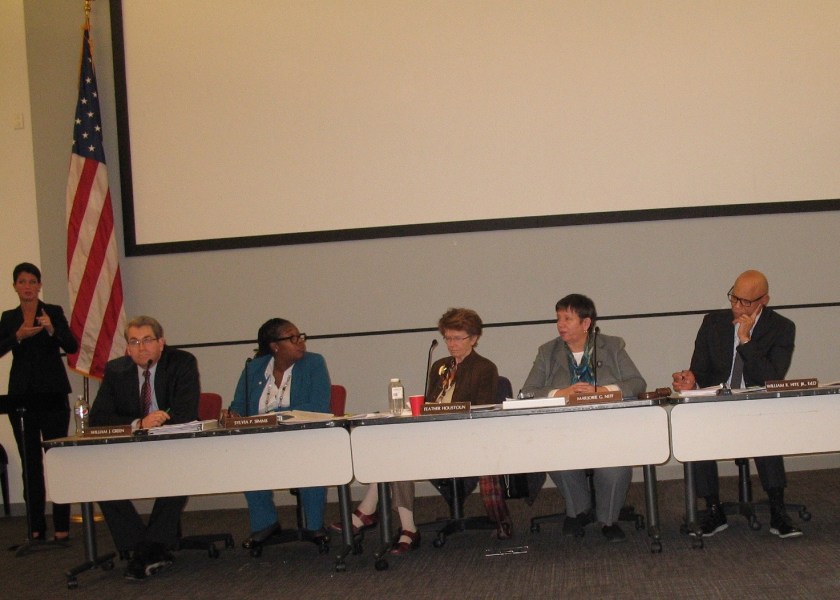
At the December 2015 meeting, Chairwoman Marjorie Neff announced that rules for speakers would be changed. The SRC wanted to give priority to those who had not spoken before.  The new rules,  posted on the district website, stated that speakers would be grouped by topic and that topics would be listed “in the  order in which they were registered.”  Those who had not spoken at the previous meeting would be given priority “within each topic area.” But when our members asked where there topic was on the list when they registered to speak, the SRC staff refused to divulge that information.  In other words, you’ll just have to trust us.  Even worse, some members found that their names were not on the list at all. 
 
After a series of fruitless emails, phone calls, and in-person visits with SRC staff, APPS co-founder Lisa Haver sent the following letter to Chairwoman Neff on Wednesday, January 13, 2016:

Relay Graduate School of Education: A Policy Brief

Relay GSE

This year the Philadelphia School District used training videos on classroom management from The Relay Graduate School of Education as part of its New Teacher orientation.  The principals of Blaine and Kelley Elementary School (recent turnaround schools) are enrolled in Relay’s principal training program.

Relay Graduate School of Education is a teacher/principal training program based in New York and founded by people who had little experience or training in education.  The school has opened a Philadelphia/Camden branch and has a partnership with Mastery Charter in the Philadelphia region.  Since it appears to be extending its reach inside the Philadelphia School District we felt the need to explore Relay’s history and influence.

Kate Peterson, a graduate student at Arcadia University, has looked into Relay’s founders and programs.  Her findings are posted below.   We want to thank Kate for her thorough research and for allowing us to post it.


Relay Graduate School of Education Policy Brief

by Kate Peterson
January 2, 2016

Relay Graduate School of Education is a stand-alone school based in New York City. It began as Teacher U in 2007, when Dave Levin, co-founder of KIPP Public Charter Schools, and Norman Atkins, co-founder of Uncommon Schools, decided to develop a program that would supply their charter schools and others with high-quality teachers, which they deemed as scarce. They partnered with the founder of Achievement First, Dacia Toll, to create their program. Receiving $10 million from Larry Robbins, founder of the hedge fund Glenview Capital Management and current board member of Relay, and $20 million from the non-profit The Robin Hood Foundation, the three charter school leaders partnered with Hunter College in New York to implement their program (Relay Graduate School of Education, 2015h; Barbic, 2013).

Click here to read the entire article.