Victory for APPS in its SRC Sunshine Suit

APPS logo

From the Philadelphia Inquirer, November 18, 2016
SRC agrees to more transparency

The meeting was held early in the morning, called with minimal notice. Barely any members of the public were present, and no one registered to speak.

 But the School Reform Commission took an unprecedented step – voting to cancel its teachers’ contract – on Oct. 6, 2014.

The Alliance for Philadelphia Public Schools, an activist group, sued, alleging the SRC violated the Pennsylvania Sunshine Act with this under-the-radar move. More than two years later, it has settled the case against the SRC and then-Chair Bill Green, winning a promise of more transparency from the commission.

 The SRC must now be more forthcoming about the purposes of its executive sessions, telling members of the public which specific cases it discussed if legal matters come up.

It also agreed to post on the Philadelphia School District’s website full SRC resolutions two weeks before meetings. The exception is quasi-judicial resolutions.

Resolutions presented less than 48 hours before a regular meeting will be made available to the public and clearly marked as walk-on matters. The SRC also promised to allow interested people to speak about walk-on resolutions without advance registration, and agreed to not take any votes until the public has had the chance to comment.

A district spokesman said the SRC was pleased that the parties were able to reach a settlement.

“The policy adopted in response to this case codifies practices, such as publishing resolution lists two weeks in advance of public action meetings, which the SRC put in place last year in order to increase public access and transparency,” said H. Lee Whack Jr., the spokesman.

At the October 2014 SRC meeting, no one was allowed to testify until after the vote – which has since been nullified by the state Supreme Court.

The lone speaker that day was Lisa Haver, a retired School District teacher, a frequent district critic, and a founder of the Alliance for Philadelphia Public Schools. This week, she called the settlement, years in the making, “a first step – a significant step – toward more openness and transparency.”

Haver and others have been frustrated by the SRC’s method of operation.

“People have to know what their government is doing, and to have a reasonable opportunity to speak on it,” Haver said.

The settlement is enforceable in court, and Haver said her group would continue to monitor the SRC closely.

But, she said, she is optimistic that a new-look SRC – Joyce Wilkerson just joined as chair and Estelle Richman awaits state Senate confirmation – will help push the issue.

“I think that they will honor this agreement, and they may be open to making the SRC more accountable, more transparent,” Haver said. “They both worked in government for a long time. The SRC is a governmental body. It controls a $2.6 billion budget. It has to be more accountable.”

APPS and community members testimony before the Philadelphia School Reform Commission – November 15, 2016

src-11-15-16-5

On November 15, 2016 the Philadelphia School Reform Commission met for its monthly Action Meeting.

This is testimony of community members and members of the Alliance for Philadelphia Public Schools at this meeting.

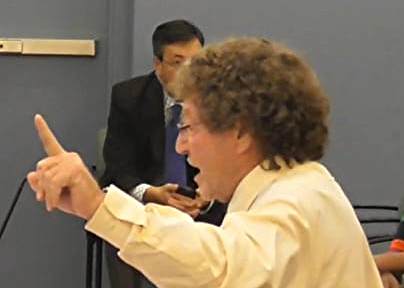
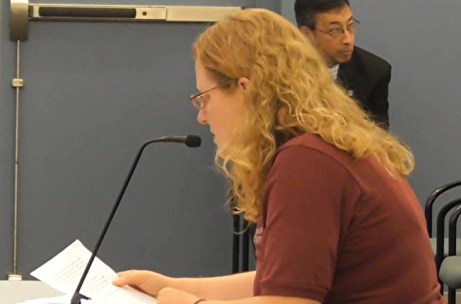
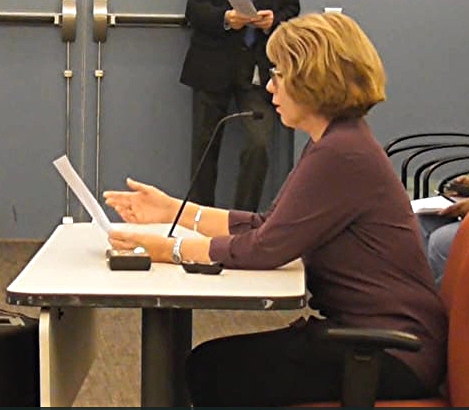
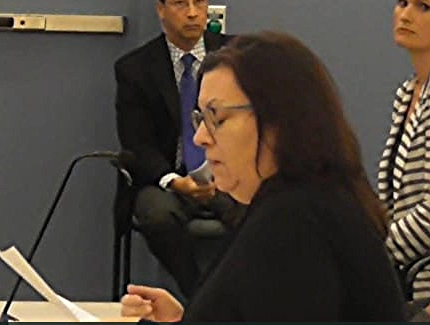
Click on the pictures below to view individual videos. Speakers are in order of appearance at the SRC meeting.


Video of parent Linda Barnes testifying before the Philadelphia School Reform Commission hearing – November 15, 2016.

linda-barnes-src-11-15-16


Video of APPS member Lisa Haver testifying before the Philadelphia School Reform Commission hearing – November 15, 2016.

lisa-haver-src-11-15-16

Clie here to read the transcript of Lisa’s testimony.


Video of APPS member Barbara Dowdall testifying before the Philadelphia School Reform Commission hearing – November 15, 2016.

barbara-dowdall-src-11-15-16

Click here to read the transcript of Barbara’s testimony.


Six videos of teacher Marianne Kennedy and her supporters who testified against her threatened termination of employment by the SRC.

marianne-kennedy-src-11-15-16


Video of APPS member and teacher  Kristen Luebbert testifying before the Philadelphia School Reform Commission hearing – November 15, 2016.

kristen-luebbert-src-testimony-11-15-16

Click here to read the transcript of Kristen’s testimony.


Video of APPS member Deborah Grill testifying before the Philadelphia School Reform Commission hearing – November 15, 2016.

deborah-grill-src-11-15-16

Click here to read the transcript of Debbie’s testimony.


Video of APPS member Karel Kilimnik testifying before the Philadelphia School Reform Commission hearing – November 15, 2016.

karel-kilimnik-src-11-15-16

Click here to read the transcript of Karel’s testimony.


Video of APPS member Diane Payne testifying before the Philadelphia School Reform Commission hearing – November 15, 2016. Note the dispute with Superintendent Hite about under resourced schools at the end of the video.

diane-paine-src-11-15-16

Click here to read the transcript of Diane’s testimony.

Eyes on the SRC – November 15, 2016

src

by Karel Kilimnik

November’s meeting is the first to be chaired by Joyce Wilkerson, sworn in by Mayor Kenney on November 3 and appointed as Chair by Governor Wolf. Ms. Wilkerson was Chief of Staff for Mayor John Street and has extensive experience in government. She stated publicly that she favors or a return to local control.

The resolutions for November embody recurring themes, fully supported by the SRC, of Superintendent William Hite’s administration. One is the issue of the resolutions that have been appearing and disappearing since last April. Resolutions for renewals of Mastery Clymer, Mastery Shoemaker, and Mastery Gratz are posted—as they have been every month since April. The SRC has tabled, postponed or withdrawn these resolutions, without explanation, for seven months.

At September’s meeting, the SRC approved the reopening of Vaux High School, which had been closed in 2013, as a “contract school” to be operated by Big Picture Philadelphia. The proposed school would serve up to 500 students through 2022. Just before October’s meeting, the SRC withdrew Resolution B-10 which would have approved a six-year, $23 million contract with the education vendor to manage the school. That resolution also stipulated an option for a five-year renewal through 2017. There was never any staff presentation to explain what that program entailed or why it cost $23 million. Once again, we ask: What is happening behind the scenes that resulted in the resolution to be withdrawn? Where is this money to operate one small high school coming from?

On October 11, Dr. Hite announced that eleven schools have been designated “Priority Schools”. Details about the initiative have been sketchy. There is a list of five options for some type of turnaround, at least three of which would include major staff overhauls. One of the options is “restarting the schools”, which would imply that the school would be closed. Dr. Hite has repeatedly said that no schools would be closed this year. How do you restart a school if you haven’t closed it? In September, the SRC approved a $200,000 contract with “The Cambridge Team”, an education vendor based in Massachusetts, to conduct “school quality reviews” over a period of three weeks. Cambridge will hold three community meetings at each school and conduct two days of site visits. The contract resolution stated that part of the SQR process will be “to identify strengths at these schools which can be built upon, and will provide additional, on-the-ground data to inform which strategic investments would be most likely to drive sustained school improvement.” Of course, it is the teachers and principals who have been developing these strengths—in spite of lack of resources, teacher vacancies, the substitute debacle last year, and cutbacks in support staff. If the district observed good pedagogy, those teachers and principals would remain in these schools while the district replaced the services which have been cut by the Hite administration over the past four years. APPS has attended and written reports on many of these meeting.

Dr. Hite will announce his recommendation for all eleven schools in January 2017. Perhaps at the time he will also tell us how much the Priority School initiative will cost.

One set of Resolutions raises the issue of what happens to the buildings of shuttered schools. In 2013, there was a massive closing of 24 schools. Several of these properties are located in gentrifying neighborhoods. Bok High School, the only Philadelphia school building financed and constructed by the Works Progress Administration in 1938, and included on the National Register of Historic Places, has gone from providing “a core academic curriculum where students have been able to study accounting, bookkeeping, carpentry, health/medical assisting services, commercial/advertising art, computer systems networking and communications, engineering technologies, and culinary arts” into a space filled with a private preschool program, a range of small non-profits, working space for artists and craftspeople, as well as a summer rooftop bar. These programs may fill a need, but so did Bok High School—as a vibrant educational institution that provided opportunities for our young people. There are many other vacant buildings that would provide space for non-profits and artists, such as the Budd building in Nicetown. The neighborhood surrounding Bok is gentrifying and the services lodged within the building reflect that reality. How many more shuttered buildings are part of this gentrification of our city? Our neighborhood schools have served generations of families who expected that their children and grandchildren would be able to continue that tradition. How many of these closed schools are slated to become mixed-use buildings with market-value residences replacing residents who can no afford the rent? The SEPTA strike has shown us the value of having a neighborhood school within walking distance. What happens to a community stripped of its school?

This month, we see the continued use of non-profits to replace school staff. Partners are invaluable but should be supplemental, not primary. Volunteers are wonderful, generous people, but our students need educated and experienced staff who at the school every day. Our students need school librarians, counselors, nurses, reading specialists, art and music teachers. They deserve the best, and we should do everything we can to ensure that they receive it. Rather than close or charterize or turnaround our schools, the Hite administration needs to institute real reforms, beginning with putting back so many of the resources which have been taken out:

  • A full time school nurse to help in assessing any health issues (such as vision and auditory screenings)
  • Classroom aides to provide support in the classroom
  • Reduced class size that enables classroom teachers to support every child
  • Reading Specialists who can diagnose and remediate reading issues
  • Reading Recovery teachers in elementary schools
  • A flourishing ESOL program to support our English Language Learners
  • Small class size and supports for Special Needs students

Please note that November’s SRC Action Meeting is Tuesday (not Thursday) November 15th at 4:30 PM.

Click here to read selected resolutions relating to the ongoing expansion of charter schools, real estate interests purchases of closed Philadelphia public schools, contracting out of custodial services in violation of the SEIU contract, and more.

APPS member Eileen Duffey’s statement of support for the Transport Workers Union strikers

14925366_899624916835272_2018501620693254369_n

My solidarity with the transit workers is rooted in my deeply held conviction that if we are to build a future worth handing to our children, we need to care about each other and stand together where issues of justice are evident.

Much is said in the media about the inconvenience a strike engenders. Yet, for me, it is clear that a strike is never intended to be convenient.

Transit workers are striking for improved working conditions, including the right to have breaks with sufficient bathroom time. They are striking for decent wages.

As a public school employee, I am deeply aware how my working conditions become my students’ learning conditions. When I see these transit workers, I recognize that their working conditions become the conditions under which hundreds of thousands of citizens are transported across the city each day. There is no “us and them.”

As Martin Luther King told us, our lives are inextricably linked. When I see the transit workers, I see my neighbor. I see the parent or grandparent of my students.
The conditions under which SEPTA employees work need to be the conditions under which I would want my own adult children to work and under which I can hopefully see my young public school students work one day. Otherwise, my life’s work is a sham. Their conditions, today; our children’s conditions tomorrow- inextricably linked.