Eyes On The SRC – December 15, 2016

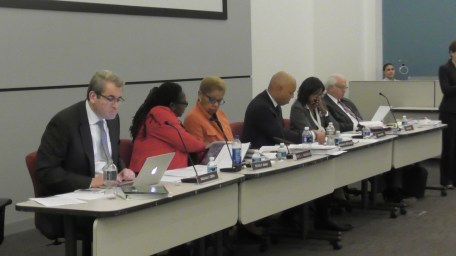
src-11-15-16-5

Eyes on the SRC:  December 15, 2016

by Karel Kilimnik

As 2016 draws to a close and we contemplate what the next four years may bring, we need to pay close attention to the ways in which the public continues to be shut out of decision-making at the SRC. The SRC is a governmental body overseeing a $2.8 billion budget. This is our tax money at work. Although we successfully negotiated a resolution to our lawsuit charging the SRC with violating the Pennsylvania Sunshine Act, there remain many hurdles with transparency.

APPS members are proud to have achieved what no individual or organization has done in the fifteen years since the SRC was imposed on the city: making that body more transparent and accountable through a court agreement. Highlights of the settlement include provisions to publish official resolutions two weeks in advance of the monthly Action Meeting and ensuring that the public has a reasonable opportunity to speak on every resolution, whether posted just before the meeting or during. Thus, anyone attending the meeting will be able to sign up at the meeting on “walk-on” resolutions, which are those posted within 48 hours of the meeting, and resolutions “from the floor” which may be introduced during the meeting by an SRC commissioner (as Sylvia Simms did in January, thus clearing the way for Mastery to take over Wister Elementary).

Of course, issues of accountability still remain.   The SRC now fails to include any text with an increasing number of resolutions deemed “quasi-judicial”  (e.g., Resolutions SRC-5 and -6). Those resolutions are blank except for the title. How can anyone make a comment, or even ask a question, about a resolution that doesn’t say anything?  The SRC has never publicly explained what “quasi-judicial” means or why charter renewals have been classified as such. The dictionary gives this meaning:  “noting, pertaining to, or exercising powers or functions that resemble those of a court or a judge”.  Renaissance charter schools are actually contract schools: they agree to provide services in exchange for payment. Does a judge get involved when a contract is signed between two parties? If not, then why is the SRC hiding these contracts behind a wall of secrecy and refusing to allow the public to view them?

Something new this month: Resolutions SRC-1 and SRC-2 are “For Review”. By whom—the people attending the meeting or just the six people at the table? How can anyone ask questions when no information is provided? The only testimony the public can give is to query the SRC Commissioners who routinely fail to answer.

The resolution to hand over $23 million to Big Picture Inc. to reopen Vaux High School and operate it as a “contract school” for six years has reappeared. Again we must ask: why is this huge sum necessary to reopen one high school? Where is the money coming from? What is a contract school? We hear that the district is too broke to have a full support staff in every school, then we hear that it has a surplus.  Teachers are told that they must “face reality” when they ask for a fair contract, then the SRC allots $23 million for one school. When will the SRC give the public some straight answers?

In October, Dr. Hite announced his newest turnaround category, “Priority Schools”, but we are still waiting for him to make a public presentation at an SRC meeting on what that might mean for the future of those schools, as well as what this will cost the district.

Renewal resolutions for Mastery schools Gratz, Clymer, and Shoemaker are MIA once again. We can only assume that Mastery does not want to agree to the conditions which the Charter School Office recommended. Again, the SRC has a responsibility to update the public on what has been happening for the past eight months.  These resolutions have been appearing and disappearing since April.  Mastery Gratz and Mastery Clymer were to have been renewed in 2016. Does this mean they receive an extra year for their next contract?

Renewal resolutions for Universal’s Audenried and Vare have not been seen, or even mentioned, since April. Those for Aspira, Inc.’s Olney and Stetson also come and go without explanation.  The SRC apparently feels no obligation to the community to tell us what is going on with these schools.

Next SRC meeting:  Thursday December 15 2016, 4:30 PM at 440 N. Broad Street.  Do you want to testify? Call 215.400.4180 before 3 PM Wednesday to ensure that your voice will be heard.

Click here to read selected resolutions relating to policy changes, revised charter applications, the reopening of Vaux and more.
Lisa Haver’s Inquirer Op Ed: Public education could face major threats in a Trump presidency

imgresby Lisa Haver
December 1, 2016

The election of Donald Trump as president had an instantaneous effect when students in several schools became targets of racial and ethnic intimidation. High school students in Bucks County found swastikas and anti-gay slurs painted on walls; one girl found a note in her backpack telling her to “go back to Mexico.” African-American freshmen at the University of Pennsylvania were sent text messages with the greeting “Heil Trump” announcing the next “N-Lynching.” Immigrant and Muslim children wondered whether they would be rounded up like criminals and jailed or deported.

Whether or not the hate crimes continue, the long-term effects of a Trump presidency could cause irreparable harm to one of the bedrocks of our democracy: an open and equitable system of public education. Trump has made several pronouncements about wanting to break up the “government schools monopoly,” viewing it through the only perspective he understands, that of a corporate CEO. His outspoken support for more charters and “school choice” would not be a complete departure from his two predecessors, whose No Child Left Behind and Race to the Top initiatives made millions for edu-vendors and testing companies while doing little to narrow the achievement gap for poor and minority students. Trump, though, talks of diverting billions of public dollars to private schools via voucher programs, despite overwhelming evidence that they have done nothing to improve educational opportunities for most students.

Apparently, Trump wants to replicate Vice President-elect Mike Pence’s experiment in Indiana, where twice as many students attend charters than only five years ago. Nearly 60 percent of Indiana children are eligible for vouchers averaging about $4000 annually – which would not cover even half the tuition of most private schools, who, of course, are under no obligation to accept them. A recent study of the Indiana program conducted by the conservative Thomas B. Fordham Institute found that voucher students in private schools actually performed worse on standardized tests than those who remained in public schools.

Taxpayers across the country are already spending $1 billion for tuition to private and religious schools, including those in Cleveland, New Orleans and Milwaukee. Two-thirds of Wisconsin students receiving vouchers were not “rescued” from failing public schools, since they were already enrolled in private schools.

Trump’s nomination of Betsy DeVos as secretary of education signals his clear intention to ramp up the privatization of American’s public schools. An heir to the Amway fortune worth an estimated $5.1 billion, DeVos has no degree or experience in education, did not attend or send her children to public schools, has never been elected to any local school board. She has been a major contributor to right-wing organizations, particularly those working to dismantle public education through voucher programs.

“It is hard to find anyone more passionate about . . . steering public dollars away from traditional public schools than Betsy DeVos,” writes New Jersey taecher Mark Weber.

One impediment to the federal imposition of this free-market approach to public education could be the growing opposition on the local level. Voters in Montana, Utah and North Carolina elected strong pro-public education governors. Georgia’s voters overwhelmingly rejected a referendum, pushed by Georgia’s Republican governor with heavy financial support from the Walton Foundation and other pro-choice groups, that would have forced public schools with low test scores to be turned over every year to private management or charter companies. An effort to unseat judges in Washington state who upheld lower court decisions that the state’s method of funding charters was unsuccessful, despite millions poured into the campaign by Bill Gates and other corporate reformers.

And, in a stunning defeat for pro-privatization donors with deep pockets such as the Walton family, who poured $26 million into the campaign, voters in 241 of 255 Boston precincts rejected a charter expansion referendum by a resounding margin of 62 percent to 38 percent.

The new administration would do well to understand that voters are rejecting failed privatization policies. Parents don’t want to be forced to search for alternatives – they want fair and equitable funding for quality public schools in their own communities.

Link to the Inquirer article.

Ears on the SRC – November 15, 2016

src-11-15-16-5

by Diane Payne
November 29, 2016

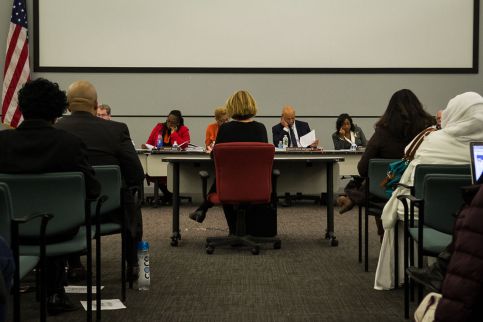
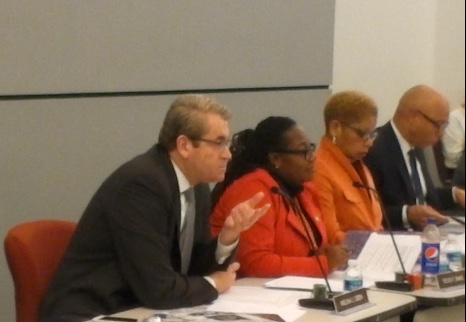
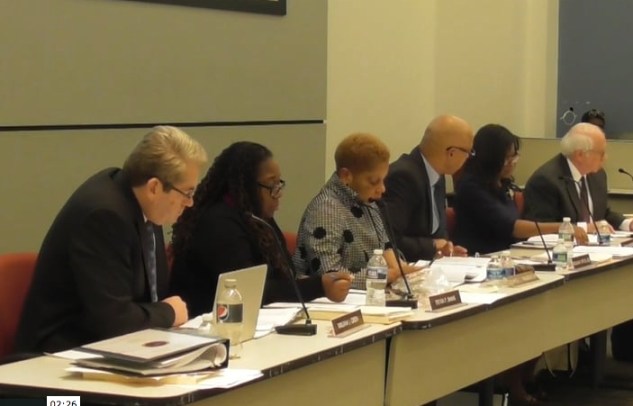
Joyce Wilkerson made her first appearance after being sworn in by Mayor Kenney and appointed Chair by Governor Wolf.

Wilkerson, currently an administrator at Temple University, has a long history of public service; she served as Chief of Staff for Mayor John Street. We are hopeful that she will steer this commission toward more transparency, accountability, and democratic values. We also hope that she will actively engage with those advocating for stronger public education.

Superintendent’s Remarks
Dr. Hite’s addressed the following topics: Priority Schools; the reintroduction of the school TV station; gratitude for Office Depot’s support of Student and Teacher of the Month; announcing the first Middle College High School at Parkway Center City; and the ongoing support of the Cole and Heidi Hamels Foundation for W B Saul High School.

 Few Answers to Concerns about Priority Schools
At October’s SRC meeting, APPS member Diane Payne asked Dr. Hite about his plan to designate eleven struggling schools “Priority Schools”, thus targeting them for some type of turnaround: You stated in the October 10, 2016 Public School Notebook article that these schools were not performing “despite investments we have made” in them. What are the specific investments you made to support these struggling schools? And please define merging, managing on a contractual basis, and restarting with significant staff shifts?

Dr. Hite responded that those questions would be answered at the November SRC meeting when he would give a full presentation about these schools, but no answers were provided by Dr. Hite at this meeting. Payne again pressed Hite to identify the resources provided to those schools. His one example was a new dental lab at Kensington Health Sciences Academy. He didn’t explain how a dental lab would raise test scores in Math or Reading for all or most of the school’s students.

It is important that the public understand the district’s failure to make the necessary investments into these struggling neighborhood schools. We read these types of statements by Dr. Hite in the press, but often there is no perspective from the teachers and students trying to teach and learn under the “Doomsday Budget” passed by the SRC year after year.

Click here to read the rest of the article.

In defense of a Philadelphia public school teacher wrongfully threatened with termination of employment

Philadelphia school teacher Marianne Kennedy was threatened with termination of employment after she was accused of abusing a student. Even though her Principal and other teachers said there was no truth to the allegations, the Philadelphia School Reform Commission was prepared to vote on termination of her employment after nineteen years as a teacher without any due process.

The school faculty and members of the community came to her defense and showed what solidarity looks like. Testimony is in the order of appearance at the School Reform Commission meeting on November 15, 2016. Each testimony should be read not only for understanding of Ms. Kennedy’s case, but for insight to how the SRC will be operating with its new Chair Joyce Wilkerson.

__________________________________________________________________

Click each picture to see the video of that person’s  testimony.

marianne-kennedy-src-11-15-16

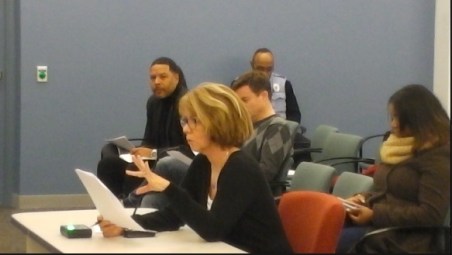
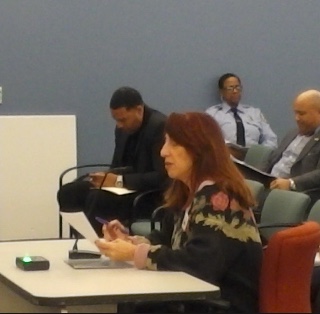
Philadelphia public school teacher Marianne Kennedy testifying in her own defense at the SRC meeting.

Click here to read the transcript of Marianne’s testimony.


richard-migliore-src-11-15-16

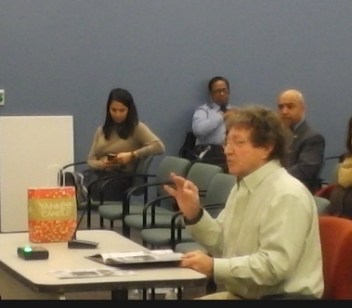
Richard Migliore, Ms. Kennedy’s lawyer and APPS member, testifying at the SRC meeting.


lynda-rubin-src-11-15-16

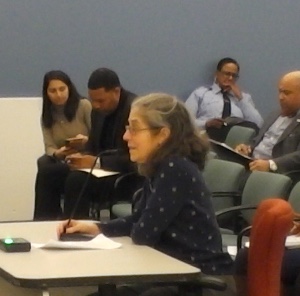
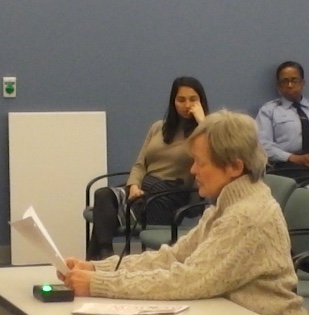
APPS member Lynda Rubin testifying in defense of Ms. Kennedy.


christine-del-rossi-src-11-15-16

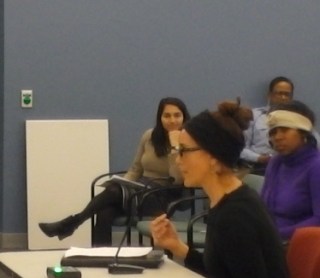
Philadelphia teacher Christine Del Rossi testifying in defense of Ms. Kennedy.

Click here to read the transcript of Chrissy’s testimony.


robin-lowry-src-11-15-16

Philadelphia teacher Robin Lowry testifying in defense of Ms. Kennedy.

Click here to read the transcript of Robin’s testimony.


src-11-15-16-5

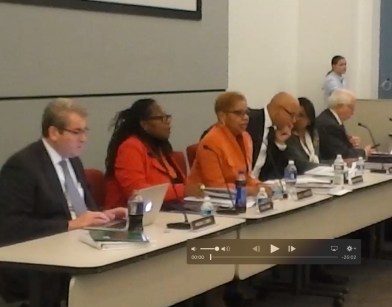
The discussion and vote on the resolution on Ms. Kennedy’s termination of employment.


On February 17th, 2017 Marianne Kennedy won her case.

Teacher accused of child abuse cleared, will return to Kensington school soon | Philadelphia Inquirer – February 17, 2017.