Commentary: Charters not really a good choice for parents and kids

imgres-1

The following Commentary by APPS co-founder Lisa Haver was published by the Philadelphia Daily News on October 3, 2016. Read the comments.

School choice is one of many issues that illustrate the stark difference between the two major candidates for president. While Hillary Clinton, supported by teachers’ unions, has expressed support for charters within a robust public system, Donald Trump promises to use the power of the presidency to promote school choice policies and replace “the failed tenure system” with merit pay for teachers. Trump recently proposed a massive voucher system in which over $20 billion in federal funds would be distributed to states so that parents could choose among “public, private, charter or magnet” schools.

While the promise of “choice” – placing education in an unregulated free-market system of winners and losers – has been sold by reformers as the answer to the underfunding of public schools for over a decade, the power of those in struggling districts to make decisions about their public schools has been stripped from them as a result of “interventions” imposed by governors and legislatures across the country. An analysis by News21 found that lawmakers in at least 20 states have either eliminated locally-elected school boards or stripped them of their power. African Americans make up 43 percent, and Hispanics 20 percent, of those disenfranchised by these takeovers. Philadelphia lost control of its school district when Harrisburg imposed the appointed and unaccountable School Reform Commission on the city in 2001.

School choice has been sold as a way to give opportunities to those painted as trapped in “failing” urban public schools. But a recent brief by the National Education Policy Center has found “an unsettling degree of segregation – particularly in charter schools – by race and ethnicity, as well as by poverty, special needs and English-learner status.” And studies continue to show that charters do not, even with additional resources, outperform public schools.

The truth is that when school districts under state control decide to privatize public schools, parents end up with fewer choices – or none. As a result of the SRC’s surprise vote last January to allow Mastery Charters to take control of John Wister Elementary School as part of the districts “Renaissance” program, families in that East Germantown catchment area no longer have access to a truly public school. Wister students feed into Pickett Middle/High School, which was taken over by Mastery nine years ago. Unless given special dispensation by district officials, their children must attend a charter school, with its rigid “no-excuses” discipline policy, from kindergarten through senior year of high school. The same dilemna faces those in the Mastery Cleveland Elementary catchment area, where students feed into Mastery Gratz Middle/High School. The only other option is to move, although some parents who have done that found themselves in the same position when their new school was targeted for takeover.

This is a precarious position for families to be forced into. Charters can and have unexpectedly shut down midyear, as Walter D. Palmer Charter did two years ago. Young Scholars Charters has walked away from two North Philadelphia elementary schools, Kenderton and Douglass, in the past two years, forcing the district into a hasty decision to take back management or find another provider. Kenderton parents organized an emergency meeting, but soon realized that they had no say in that decision.

Two years ago, Superintendent William Hite allowed parents at two North Philadelphia schools to vote on whether to allow a charter company of the district’s choosing to take control of the schools. Parents at both schools voted overwhelmingly to remain public. Thus, in 2015, parents and students at three more district schools were given no vote, but simply informed that their schools were to be placed in the Renaissance program. The choice had been made for them.

Education reformers continue to argue that opening more charters at the expense of public schools means increased “choice” for parents. Is this really a choice for parents – to send your children to a charter school or pull up stakes? Parents don’t want to go school shopping any more than consumers wanted to pick an electric company. They want districts to distribute resources equitably, so that children in every neighborhood have access to safe and stable schools.
 

APPS members respond to more hype from Hite about progress in the Philadelphia School District.

2610427494459111-hite-cpdc-cropped-1-full

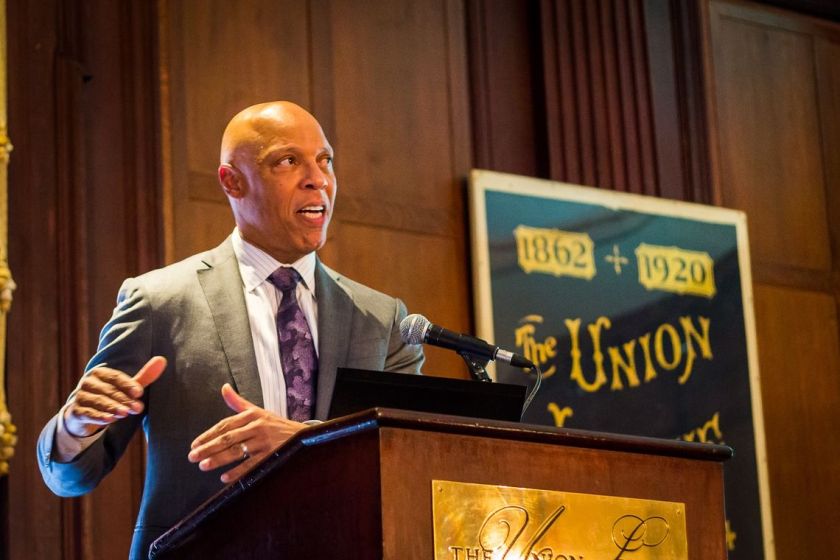
Philadelphia School Superintendent Dr. William Hite addresses the Central Philadelphia Development Corporation at the Union League. Photo by Darryll Murphy.

Despite challenges, Hite optimistic about future of District | The Notebook – September 28, 2016

Notebook comments by APPS members Lisa Haver and Rich Miglore to Superintendent Hite’s speech.


Rich Migliore

There are many many things the district still needs to do to provide every child with a first rate instructional program that meets all of their needs. A prime example is that the district educates thousands of children who suffer from Dyslexia. Yet the district does not provide those students with certified reading specialists. Nor do charter schools.

If we really care about those children, we would provide them with certified reading specialists in every school. School Librarians, too. Dyslexic children need the services of a highly qualified certified professional to learn to overcome their disability. And please, do not even begin to say that sticking them on a computer program neets their needs. That notion is — purely ridiculous.

There are also many things the district could do to save costs and provide more money to direct services to children. Every month advocates read the resolutions list and wonder why the district wastes so much money on outside contracts with suspect organizations which provide no worthwhile services to the district, nor its children.

The money and legal costs the district wastes on its failed and suspect renaissance school program is astounding and misplaced. The primary concern raised at the recent Pa. School Board’s Association “Education Summit” was the outlandish cost of charter schools. They explained that their districts could provide the very same thing for less than one quarter of the costs of their charter schools.

The costs the district expends on legal fees to outside counsel is also horrendous and is unnecessary.

If we just efficiently minded those costs, there would be millions more dollars which could and should be appropriated to children. We have few early childhood “early intervention” programs for children who are on the “autism spectrum.” Early intervention programs are crucial for those children. They should begin at age 2 and school district early intervention programs should be provided for them at age 3.

Mayor Kenney should be “on top of that.” So should Dr. Hite.

Dr. Hite knows I speak from the heart.


Lisa Haver

Another massive misappropriation of district funds is the Renaissance program. The renewals of two Aspira schools and two Universal schools have been put on hold for months now, without explanation. We know that members of the SRC have taken part in private negotiations with Aspria representatives. Why? The SRC’s Charter School Office unequivocally recommended non-renewal for these schools. What is going on with the Universal renewals–are they also in negotiations with them? Hite and the SRC has a responsibility to explain why they have, in effect, rejected their own reports.

The renewal of three Mastery Renaissance schools has also been postponed. Why? A quick look at the data for two of these schools shows that they have not succeeded in making them anything close to “high-quality”.

Part of Hite’s job is to let people know that public education should be supported. Fine. But someone needs to ask him some hard questions, including how he justifies continuing to turn over neighborhood schools to charters when the district’s own data shows that this very expensive program is not working.


Green’s role as a public advocate is dubious

imgres-2

by Lisa Haver
published in the Philadelphia Public School Notebook

August 22, 2016

School Reform Commissioner Bill Green has been making the rounds lately, along with fellow Commissioner Sylvia Simms, at events sponsored by the Parent Congress and the Education Opportunities for Families, presenting himself as an advocate for poor and working-class Philadelphians, expressing outrage and disdain at what he portrays as a lack of dedication and compassion from teachers and other school professionals.

His goal seems to be the sowing of divisions between parents and teachers, and between different demographics of parents. He recounts the old story, an urban legend at this point, of the new starry-eyed teacher, whose love of teaching and children has not yet been beaten out of her by the big bad union, who stays until 4 p.m. each day until the Philadelphia Federation of Teachers rep knocks on her door one day at 3:15, demanding that she leave because “you’re making the rest of us look bad.” That, he tells the parents, is “the culture of our school district.”

For a person in a position of power to mislead one group by demonizing another is nothing new. Green’s railing against union members — blaming them for the District’s shortcomings instead of those actually responsible for years of devastating spending and policy decisions — has become a regular feature of School Reform Commission meetings. Rather than spend money to lower class sizes or bring back school librarians, the SRC has funneled millions to vendors for questionable programs like blended learning, to testing and test-prep companies, to unnecessary training programs for teachers and administrators, to outside legal firms, and for ongoing charter expansion.

But let’s look at the culture of the SRC, especially in the last three years. Has it been a culture of openness and transparency, or one of secrecy and contempt for the public?

The record shows that Green, as both chair and commissioner, has used his position of power to thwart the will of the community, even violating the law to silence them. In October 2014, then-Chairman Green convened a meeting with no notice on the District’s website and with no public comment permitted in which the SRC voted unanimously to cancel the contract that it had negotiated with the PFT. Commonwealth Court’s unanimous ruling that the SRC acted illegally, that it has no “special powers” to unilaterally terminate a contract, was upheld last week in a unanimous decision by the Pennsylvania Supreme Court.

Green’s new role as champion of parents can only be met with skepticism by those who have been the victims of his actions. In February 2015, Green used his position as chair to make a unilateral decision, again with no public notification, to have police search the bags and confiscate the signs of parents and community members who came to be heard on the issue of an alarming impending charter expansion. Green never apologized or made a commitment to respect the rights of the public, even after the District was sued in federal court and agreed to a financial settlement with the members of the public whose First Amendment rights he trampled.

More recently, Green was exposed in the press for having lied about his role in turning over Wister Elementary to Mastery Charters after stating publicly that he had no previous knowledge that Commissioner Simms was going to introduce a resolution from the floor. Documents obtained through a Right To Know request showed that he had spoken to a representative of Philadelphia School Partnership about having PSP board members (most of whom do not live in the city) lobby for such a resolution — five days before the SRC meeting. Neither he nor Simms ever met with the Wister parents who were fighting to keep the school public.

In a recent article on the ASPIRA charter renewals, Green declared himself  a “shill for students and their parents.” But he has made sure that no parents or students would be present to witness the deal that he and Simms, who have both been consistently pro-charter and anti-union, are making behind closed doors with ASPIRA management.

Of course, it’s not just Green’s behavior that motivated Philadelphia voters to approve a non-binding referendum in May 2015 for the abolition of the SRC.

Commissioner Farah Jimenez must recuse herself from voting on an increasing number of crucial issues as the possible conflicts grow because of her husband’s connections to charters and her own role as director of an education advocacy organization. Simms has refused to answer questions from the public and the media about the nature of her connection to her sister’s activities as a paid consultant for a company that lobbies on education reform issues.

Members of the SRC who continually shut out the public, who fashion private deals with charter companies and lobbyists, who deny the public’s right to speak on resolutions that affect the future and mission of public schools and who trample on the First Amendment rights of the public can try to rebrand themselves as public advocates, but the record shows they have been anything but.

Digital Learning Goes Back to School

imgres

Alison McDowell summarizes her extensive research into the dangers of corporate education reform and personalized learning.

So I had a back and forth online with someone recently who didn’t understand the significance of education/workforce badging programs and asked me to write something up. So my thoughts are below. Ultimately I think this is all going to be linked to the TiSA (Trade in Services Agreement) as they create a global market for digital education.
*
 How to create a global market for digital learning: (detailed background from Morna McDermott)
*
*
 1. Create a common platform of educational standards. Don’t get distracted by CCSS-the uber set of standards is all pretty much in place now. https://ceds.ed.gov/
 *
2. Make sure all the developers are using a common schema for educational item data tagging. http://scorm.com/ http://dublincore.org/dcx/lrmi-term…
 *
3. Make PII data and data-collection a priority in schools. Don’t limit yourself to academic performance. Layer in SEL and bio-metrics, too. These are all important for workforce development. Gather it via embedded assessments and gaming to make it more palatable. https://www.adlnet.gov/adl-research…
 *
4. Focus on closing the digital divide by providing low-cost technology to districts with a majority of low-income students and by expanding broadband access to rural areas. For global, digital education to work, inexpensive internet everywhere must be put in place.
 *
5. Expand 1:1 device initiatives. Design learning management platforms to be run on less-expensive tablets and chromebooks. Baltimore’s STAT program is one of these. This is a parent blog with a lot of current information on concerns about the program: https://statusbcps.wordpress.com/ca….
 *
6. Systematically defund bricks and mortar educational systems. Allow facilities to decline, reduce human teaching staff, implement ongoing austerity budgets, etc. http://www.goerie.com/article/20160…
 *
7. Use fiscal pressure to introduce programs like 4-day school weeks and learn-from-home “e-days.” Public support for later high school start times can also be used to help push initiatives requiring students to take an online class in order to graduate. http://ktul.com/news/local/four-day…
 *
8. Control the teacher training pipeline to make digital learning the primary delivery vehicle.
 *
9. In response to growing teacher shortages, introduce blended/hybrid learning options into regular public schools. This enables increases in teacher/student ratios and allows “personalized” digital instruction to claim a growing percentage of the instructional day. Public monies are redirected to private companies through contacts for learning management systems and standards-based online education modules.
 *
10. Drive families out of the public school system via punitive measures (high-stakes testing, IEP non-compliance, “No Excuses” policies, etc.) and create a perception of public education as dangerous and/or ineffectual so people withdraw to do home school or private school.
 *
11. Set up charter cyber schools to accommodate the new “home school” families. This will further destabilize public school systems.
 *
12. Start to build up “virtual” public schools. In PA they are doing it through the county intermediate units. These will be cross-district, regional programs. Students will be encouraged to enroll in a “few” classes online via these programs. They will brand them differently than the cyber charters. They will market it as a savvy cost-saving measure. See PA Open Campus. https://mvp.mciu.org/ http://www.opencampuspa.net/benefit…
 *
13. Global corporations purchase cyber charter companies to do R&D to refine their online learning platforms and extend their reach-see Connections Academy (Pearson owned) in 29 states. http://www.connectionsacademy.com/n…
 *
14. Convince the public that online portfolios are better suited to the 21st century “gig” economy workforce than traditional diplomas/transcripts. Make it difficult to procure and access traditional credentialing avenues. See rise of Naviance use in schools. Push badging for non-academic skills.
 *
15. Convince people that badging has merit and is a trustworthy measure of true skill. Continue to break down the “seat time narrative.” Learning can happen “anywhere.” You can earn badges anywhere, too-not just in school. (see the links between bitcoin and skills-related badging around timestamp 40:00 https://www.youtube.com/watch?v=CKv…) ***If you do nothing else, watch this 6-minute video on “edu-blocks.”*** https://www.youtube.com/watch?v=Zss…
 *
16. Have legislation passed that allows for an increase in the use of credit-bearing ELOs (extended, expanded, enhanced learning opportunities)-preferably unlimited. Initially these programs will be before/after school and in summer, but once the community-based learning framework is in place, it can begin to usurp the role of bricks and mortar schools. Reduce seat-time funding requirements at a state level.
*
17. Use philanthropic and government funds to establish a system student-oriented maker spaces, code gyms, and other spaces for “out-of-school-time” learning. Piggy-back on the 21st Century Community Learning Center program. Push a vision that you can “remake education” by taking it out of a school building and moving it into the community. Once badging is firmly in place, make the case that bricks and mortar neighborhood schools are obsolete and that a redesigned digital learning program (complemented with some community-based projects-ELOs) provides students with the best career/life pathways.http://remakelearning.org/ https://www.edfunders.org/engage/fu… http://www.21stcclc.org/index.cfm?p…
 *
18. Blur the lines between high school and college through dual enrollment programs, many of which are delivered digitally. Couch it as “lifelong learning.” Expand online AP classes to target niche markets and add legitimacy to the online learning model.
 *
19. Get Federal legislation passed so for-profit online education providers can access student loan financing for online courses that will result in badges and micro-credentials.
 *
20. Establish a common list of skill codes for the labor force that can be tied to the online portfolios and to screen job applicants more efficiently. There will be limited on-the-job training in the future. People will need to finance their own training.
 *
21. Open up global education markets via TiSA (Trade in Services Agreement). Digital education controlled by multinational corporations (with a supplement of local project based learning) becomes the norm in the 21st century. If you are up for a short dystopian essay. It paints a compelling picture: http://vibrantlearning.aam-us.org/2…
 *
*

Don’t count on the non-profits to step up and save education. The ELO / Learning Eco-System model will allow them to significantly expand their programming, and once they accept philanthropic monies or funding via “Pay for Success” or social impact bonds, they will not be in position to fight back. Certified teachers will be replaced by Americorps/Vista kids keeping track of the online portfolios, and newly-minted college graduates will have temporary-grant funded jobs staffing project-based learning at cultural and job-training centers. No more need for certified teachers. http://www.knowledgeworks.org/sites…


For an in-depth look at corporate eduction reform and digital technology, see:

Education Technology, Surveillance and America’s Authoritarian Democracy | Schools Matter – August 19, 2016

Parents’ digital learning opt out form to share
Parents Across America