Victory for APPS in its SRC Sunshine Suit

APPS logo

From the Philadelphia Inquirer, November 18, 2016
SRC agrees to more transparency

The meeting was held early in the morning, called with minimal notice. Barely any members of the public were present, and no one registered to speak.

 But the School Reform Commission took an unprecedented step – voting to cancel its teachers’ contract – on Oct. 6, 2014.

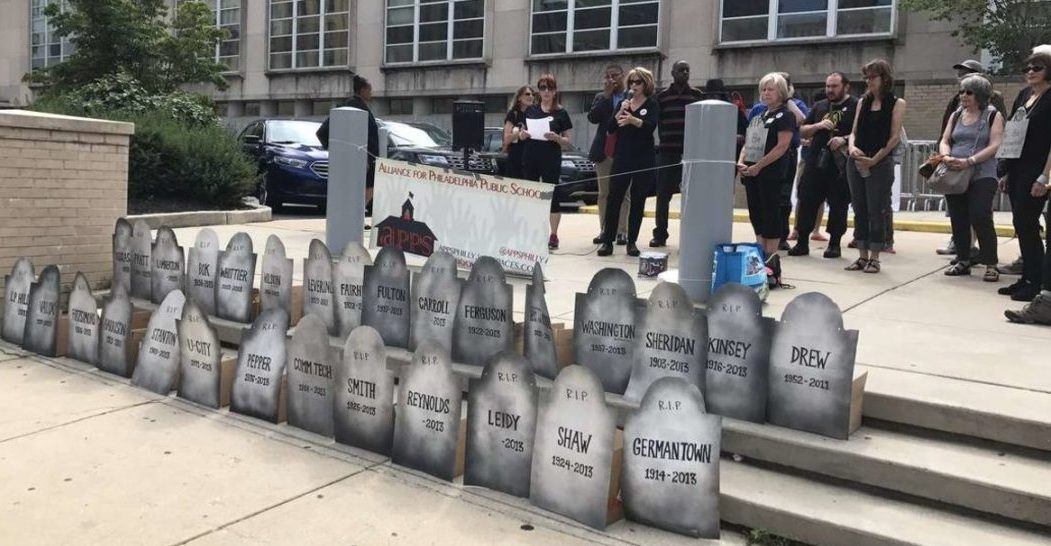
The Alliance for Philadelphia Public Schools, an activist group, sued, alleging the SRC violated the Pennsylvania Sunshine Act with this under-the-radar move. More than two years later, it has settled the case against the SRC and then-Chair Bill Green, winning a promise of more transparency from the commission.

 The SRC must now be more forthcoming about the purposes of its executive sessions, telling members of the public which specific cases it discussed if legal matters come up.

It also agreed to post on the Philadelphia School District’s website full SRC resolutions two weeks before meetings. The exception is quasi-judicial resolutions.

Resolutions presented less than 48 hours before a regular meeting will be made available to the public and clearly marked as walk-on matters. The SRC also promised to allow interested people to speak about walk-on resolutions without advance registration, and agreed to not take any votes until the public has had the chance to comment.

A district spokesman said the SRC was pleased that the parties were able to reach a settlement.

“The policy adopted in response to this case codifies practices, such as publishing resolution lists two weeks in advance of public action meetings, which the SRC put in place last year in order to increase public access and transparency,” said H. Lee Whack Jr., the spokesman.

At the October 2014 SRC meeting, no one was allowed to testify until after the vote – which has since been nullified by the state Supreme Court.

The lone speaker that day was Lisa Haver, a retired School District teacher, a frequent district critic, and a founder of the Alliance for Philadelphia Public Schools. This week, she called the settlement, years in the making, “a first step – a significant step – toward more openness and transparency.”

Haver and others have been frustrated by the SRC’s method of operation.

“People have to know what their government is doing, and to have a reasonable opportunity to speak on it,” Haver said.

The settlement is enforceable in court, and Haver said her group would continue to monitor the SRC closely.

But, she said, she is optimistic that a new-look SRC – Joyce Wilkerson just joined as chair and Estelle Richman awaits state Senate confirmation – will help push the issue.

“I think that they will honor this agreement, and they may be open to making the SRC more accountable, more transparent,” Haver said. “They both worked in government for a long time. The SRC is a governmental body. It controls a $2.6 billion budget. It has to be more accountable.”
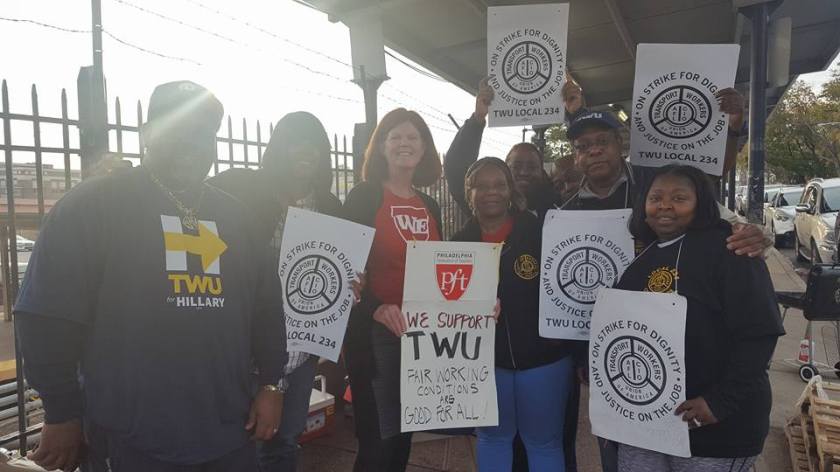
APPS member Eileen Duffey’s statement of support for the Transport Workers Union strikers

14925366_899624916835272_2018501620693254369_n

My solidarity with the transit workers is rooted in my deeply held conviction that if we are to build a future worth handing to our children, we need to care about each other and stand together where issues of justice are evident.

Much is said in the media about the inconvenience a strike engenders. Yet, for me, it is clear that a strike is never intended to be convenient.

Transit workers are striking for improved working conditions, including the right to have breaks with sufficient bathroom time. They are striking for decent wages.

As a public school employee, I am deeply aware how my working conditions become my students’ learning conditions. When I see these transit workers, I recognize that their working conditions become the conditions under which hundreds of thousands of citizens are transported across the city each day. There is no “us and them.”

As Martin Luther King told us, our lives are inextricably linked. When I see the transit workers, I see my neighbor. I see the parent or grandparent of my students.
The conditions under which SEPTA employees work need to be the conditions under which I would want my own adult children to work and under which I can hopefully see my young public school students work one day. Otherwise, my life’s work is a sham. Their conditions, today; our children’s conditions tomorrow- inextricably linked.

Commentary: Charters not really a good choice for parents and kids

imgres-1

The following Commentary by APPS co-founder Lisa Haver was published by the Philadelphia Daily News on October 3, 2016. Read the comments.

School choice is one of many issues that illustrate the stark difference between the two major candidates for president. While Hillary Clinton, supported by teachers’ unions, has expressed support for charters within a robust public system, Donald Trump promises to use the power of the presidency to promote school choice policies and replace “the failed tenure system” with merit pay for teachers. Trump recently proposed a massive voucher system in which over $20 billion in federal funds would be distributed to states so that parents could choose among “public, private, charter or magnet” schools.

While the promise of “choice” – placing education in an unregulated free-market system of winners and losers – has been sold by reformers as the answer to the underfunding of public schools for over a decade, the power of those in struggling districts to make decisions about their public schools has been stripped from them as a result of “interventions” imposed by governors and legislatures across the country. An analysis by News21 found that lawmakers in at least 20 states have either eliminated locally-elected school boards or stripped them of their power. African Americans make up 43 percent, and Hispanics 20 percent, of those disenfranchised by these takeovers. Philadelphia lost control of its school district when Harrisburg imposed the appointed and unaccountable School Reform Commission on the city in 2001.

School choice has been sold as a way to give opportunities to those painted as trapped in “failing” urban public schools. But a recent brief by the National Education Policy Center has found “an unsettling degree of segregation – particularly in charter schools – by race and ethnicity, as well as by poverty, special needs and English-learner status.” And studies continue to show that charters do not, even with additional resources, outperform public schools.

The truth is that when school districts under state control decide to privatize public schools, parents end up with fewer choices – or none. As a result of the SRC’s surprise vote last January to allow Mastery Charters to take control of John Wister Elementary School as part of the districts “Renaissance” program, families in that East Germantown catchment area no longer have access to a truly public school. Wister students feed into Pickett Middle/High School, which was taken over by Mastery nine years ago. Unless given special dispensation by district officials, their children must attend a charter school, with its rigid “no-excuses” discipline policy, from kindergarten through senior year of high school. The same dilemna faces those in the Mastery Cleveland Elementary catchment area, where students feed into Mastery Gratz Middle/High School. The only other option is to move, although some parents who have done that found themselves in the same position when their new school was targeted for takeover.

This is a precarious position for families to be forced into. Charters can and have unexpectedly shut down midyear, as Walter D. Palmer Charter did two years ago. Young Scholars Charters has walked away from two North Philadelphia elementary schools, Kenderton and Douglass, in the past two years, forcing the district into a hasty decision to take back management or find another provider. Kenderton parents organized an emergency meeting, but soon realized that they had no say in that decision.

Two years ago, Superintendent William Hite allowed parents at two North Philadelphia schools to vote on whether to allow a charter company of the district’s choosing to take control of the schools. Parents at both schools voted overwhelmingly to remain public. Thus, in 2015, parents and students at three more district schools were given no vote, but simply informed that their schools were to be placed in the Renaissance program. The choice had been made for them.

Education reformers continue to argue that opening more charters at the expense of public schools means increased “choice” for parents. Is this really a choice for parents – to send your children to a charter school or pull up stakes? Parents don’t want to go school shopping any more than consumers wanted to pick an electric company. They want districts to distribute resources equitably, so that children in every neighborhood have access to safe and stable schools.


APPS members respond to more hype from Hite about progress in the Philadelphia School District.

2610427494459111-hite-cpdc-cropped-1-full

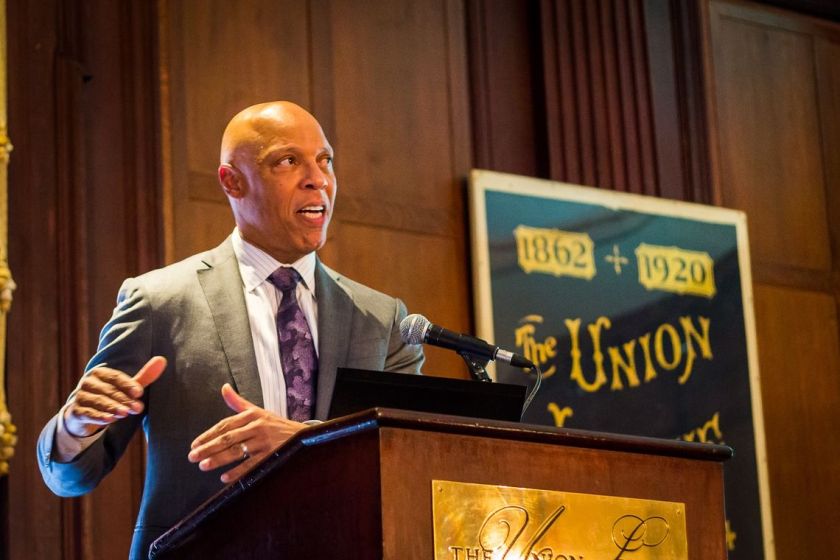
Philadelphia School Superintendent Dr. William Hite addresses the Central Philadelphia Development Corporation at the Union League. Photo by Darryll Murphy.

Despite challenges, Hite optimistic about future of District | The Notebook – September 28, 2016

Notebook comments by APPS members Lisa Haver and Rich Miglore to Superintendent Hite’s speech.


Rich Migliore

There are many many things the district still needs to do to provide every child with a first rate instructional program that meets all of their needs. A prime example is that the district educates thousands of children who suffer from Dyslexia. Yet the district does not provide those students with certified reading specialists. Nor do charter schools.

If we really care about those children, we would provide them with certified reading specialists in every school. School Librarians, too. Dyslexic children need the services of a highly qualified certified professional to learn to overcome their disability. And please, do not even begin to say that sticking them on a computer program neets their needs. That notion is — purely ridiculous.

There are also many things the district could do to save costs and provide more money to direct services to children. Every month advocates read the resolutions list and wonder why the district wastes so much money on outside contracts with suspect organizations which provide no worthwhile services to the district, nor its children.

The money and legal costs the district wastes on its failed and suspect renaissance school program is astounding and misplaced. The primary concern raised at the recent Pa. School Board’s Association “Education Summit” was the outlandish cost of charter schools. They explained that their districts could provide the very same thing for less than one quarter of the costs of their charter schools.

The costs the district expends on legal fees to outside counsel is also horrendous and is unnecessary.

If we just efficiently minded those costs, there would be millions more dollars which could and should be appropriated to children. We have few early childhood “early intervention” programs for children who are on the “autism spectrum.” Early intervention programs are crucial for those children. They should begin at age 2 and school district early intervention programs should be provided for them at age 3.

Mayor Kenney should be “on top of that.” So should Dr. Hite.

Dr. Hite knows I speak from the heart.


Lisa Haver

Another massive misappropriation of district funds is the Renaissance program. The renewals of two Aspira schools and two Universal schools have been put on hold for months now, without explanation. We know that members of the SRC have taken part in private negotiations with Aspria representatives. Why? The SRC’s Charter School Office unequivocally recommended non-renewal for these schools. What is going on with the Universal renewals–are they also in negotiations with them? Hite and the SRC has a responsibility to explain why they have, in effect, rejected their own reports.

The renewal of three Mastery Renaissance schools has also been postponed. Why? A quick look at the data for two of these schools shows that they have not succeeded in making them anything close to “high-quality”.

Part of Hite’s job is to let people know that public education should be supported. Fine. But someone needs to ask him some hard questions, including how he justifies continuing to turn over neighborhood schools to charters when the district’s own data shows that this very expensive program is not working.