Eyes on the SRC: November 16, 2017

SRC May 18

by Karel Kilimnik

 We Did It!

 On Thursday, November 2, Mayor James Kenney gave an address in City Council chambers in which he asked Council to support his decision to call for an end to the SRC. The response was overwhelming approval. Council Education Committee Chair Jannie Blackwell introduced a bill to place a referendum on the May 2018 ballot to amend the City Charter so that, for the first time, Council would have approval power over the Mayor’s choices for a 9-member school board.

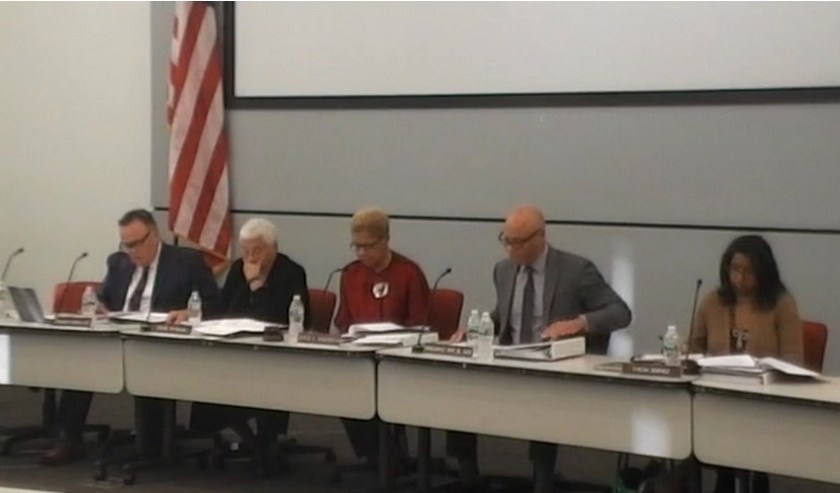
APPS members have attended every School Reform Commission meeting for the last five years, including special meetings, emergency meetings and Policy Committee meetings. Some of us have attended since the first meeting of the state-imposed board in 2001. No one is happier than we are to witness the dissolution of the SRC and a return to local control. But let’s keep our eyes on the ball and examine the realities behind it.

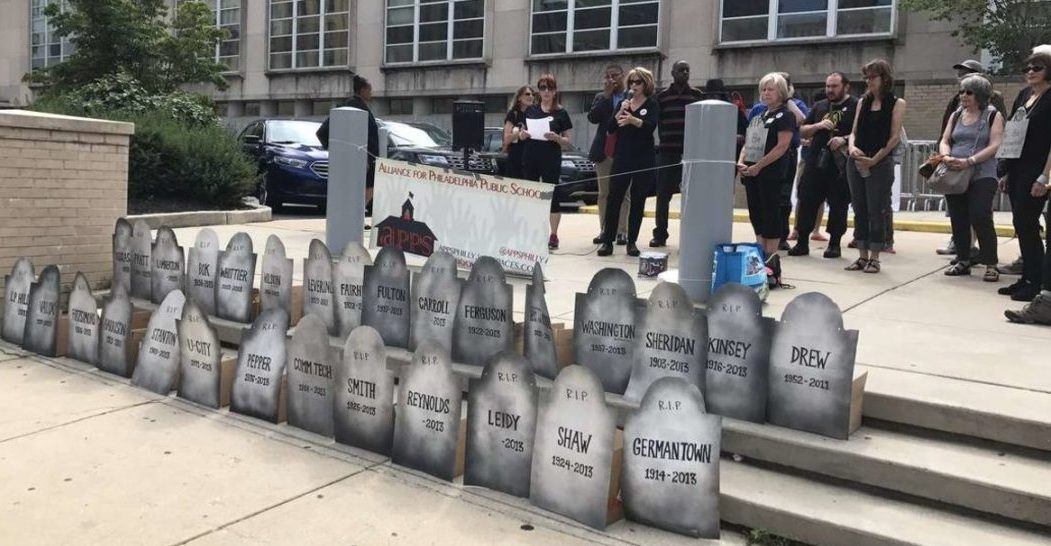
APPS has documented the devastation wrought by the unelected, unaccountable SRC for the past five years: the rampant privatization of services and staffing; the attempted cancellation of the PFT contract; the outsourcing of Professional Development, transportation services, and Special Ed programs; the forcing out of teachers in schools deemed to be “underperforming”; the annual charter expansion while evidence of that model’s failure mounts; the permanent closure of almost thirty neighborhood schools. We have called out more than one Commissioner for conflicts of interest. The list goes on.

One year ago, several community groups and unions including APPS, POWER, NAACP, Parents United for Public Education, Reclaim Philadelphia, the WE caucus of the PFT, the 215 People’s Alliance, Media Mobilizing Project and a number of local unions formed the Our Cities, Our Schools Coalition (OCOS), calling for a return to local control. OCOS organized several rallies at City Hall and district headquarters at which City Council members and community leaders spoke. OCOS held a public forum to discuss the issue (all SRC commissioners were invited; none attended). OCOS collected thousands of signatures online calling for an end to the SRC.

Mayor Kenney campaigned two years ago on a promise to return the district to local control, but flipped after he took office. He said repeatedly that it wasn’t the right time, and claimed that the district would lose funding from Harrisburg if we gave up state control. OCOS kept up the pressure on the Mayor for a year—calling his office, challenging him at neighborhood town halls, and writing commentaries in local newspapers. Contrary to the story line in recent articles and editorials in the local media, the Mayor did not wake up one day and decide to end the SRC. Resolution SRC-3 is the culmination of strong grass-roots organizing. It is the first step on the path to creating an elected school board in Philadelphia. We applaud Mayor Kenney’s decision to accede to the will of the people. But the battle for true community control is far from over.

Click here to read the full Resolution Summary for the November 16th SRC meeting.

Local Universities Enable SRC Agenda

November’s resolutions reflect the growing influence of local universities in district business. Resolution B-5 accepts “the donation of services and resources” from Temple University for “Transforming School L.I.F.E. (Leadership, Instruction, and Family Engagement) for English Learners” resurfaces . This $2.7 million grant from the federal government appeared in the October Resolution List for approval, but had to be postponed due to the absence of Commissioner Bill Green. Commissioners McGinley and Wilkerson had to abstain as they are both employed by Temple. Will Commissioner Green be absent again (as he has been for all or most of five meetings this year) and delay the vote again? If this grant went directly to the district, this problem would not exist.

Drexel University’s role continues to expand with Resolutions A-12 Categorical/Grant Fund: $250,000 Ratification of Grant Acceptance from the Promise of Strong Partnership for Education Reform; and Resolutions B-3 and B-4 for the newest SLA addition –SLAMS. Last year, Drexel was authorized to administer a $6 million federal grant in the Mantua Empowerment Zone. This Zone seems to replicate the Harlem Children’s Zone created by Geoffrey Canada in NYC. At one point, the fifth grade scores in his charter school were so low that Canada simply removed the entire fifth grade class. When outside organizations, even universities, become “partners”, they make these kinds of decisions, not district stakeholders.

More Outsourcing

Resolution A-14 continues the trend of outsourcing services formerly performed by district employees to out-of-state vendors: providing professional development, decreasing truancy, and funding staff positions. Dr Hite is a graduate of the non-accredited Broad Superintendents Academy, which advances an ideology of outsourcing, privatization, and union-busting.

Please keep in mind that both Dr Hite and Mayor Kenney have said they intend to close two neighborhood schools per year for at least the next five years. School closing announcements are usually made around this time in the school year; perhaps the news of the SRC dissolution will push it back a month or two. Dr Hite will also be disclosing his decision on the fate of the six Priority/SGS Schools in February. New charter school applications submitted in the next month will be voted on by the SRC in February 2018. The next few months will be turbulent ones—stay tuned.

What If…?

…the Hite administration took the $522, 582 earmarked here for private vendors and spent it on bring back 20 Parent Ombudsmen? Or NTAs? Parents at Priority schools meetings have said that providing these services would provide an invaluable service to the children at those schools.

Resolutions of Note

Click here to read the entire post.
 

APPS Celebrates the End of the SRC, Calls for Elected School Board

APPS-Banner-851px-2

For immediate release                                                            November 2, 2017

Members of the Alliance for Philadelphia Public Schools celebrate the impending dissolution of the School Reform Commission. We thank Mayor Kenney and Council President Clarke for their leadership in bringing this state-imposed body to an end.  State control of our schools has brought devastation to this city: precious funds have been diverted to non-public schools and over 30 neighborhoods have seen their schools closed permanently.

Since 2012, APPS members have attended every session of the SRC, including special meetings and Policy Committee meetings.  We have spent those five years fighting and organizing against the reckless spending, lack of transparency and disregard for the public exhibited by the many iterations of the SRC.  In 2014, APPS sued then-Chair Bill Green and the SRC in federal court for violating the public’s First Amendment rights when Green ordered the police to confiscate signs from members of the public—and won. The following year, we filed suit in Commonwealth Court to stop the SRC’s continual violations of the PA Sunshine Act.  Our settlement resulted in significant changes in SRC policy, including posting the resolutions to be voted on two weeks before the meeting instead of only 72 hours, and allowing the public to speak on resolutions posted just before or during the meeting.

We now have a unique opportunity to end the disenfranchisement of the people of Philadelphia.  The stakeholders in our public school system—that is, every person who benefits from a thriving public school system—should have the same rights as those in every other district in the commonwealth to elect the officials who will be entrusted to represent them in matters of school governance.

The dissolution of the SRC is not contingent on changing the City Charter.  The Charter now provides for mayoral control, as it did before SRC. The Mayor can select an interim school board for a year, during which time the city should hold community forums, as it is presently doing for the Rebuild initiative, to hear from the people whose voices were shut out during the reign of the SRC about how best to create a truly representative body for the critical task of educating our children.

Trading in one unelected, unaccountable board for another is not a progressive solution to the problems facing the district.


Ears on the SRC: October 19, 2017

Ocy 19 2017 src

by Diane Payne

 Chair Joyce Wilkerson and Commissioners Estelle Richmond, Chris McGinley and Farah Jimenez were present for the entire meeting. Missing in action once again was Commissioner Bill Green. Green has been exhibiting a disdain for his position by failing to be present for part or all of five meetings since April. No other commissioner has had such an abysmal attendance record. Green has come in at the tail end of two meetings this year, after staff presentations and public speakers, but was still permitted to vote. He has left two other meetings early only to call in by phone much later, again, just in time to vote. This time he never showed, and no explanation was given by the Chair.   Resolution B-1 Donation: $2,700,000 Ratification of Acceptance of Donation of Services and Resources from Temple University had to be withdrawn by staff because McGinley and Wilkerson abstained due to their Temple employment. That left the vote an unpassable tie of 2-2. This resolution was to accept “the donation of professional development services from Temple University to improve leadership, instruction and parent engagement of English Learners valued at $2,700,000 for the period commencing September 1, 2016 through August 31, 2021

APPS once again calls on Chair Wilkerson to address the issue of the disappearing commissioner. If Green cannot or will not perform his duties, he should resign.

Eleven members of APPS attended the October meeting; two addressed the Commission on matters of defending public education. A number of other speakers called on the SRC to vote to dissolve itself now. When the first speaker, student speaker Samuel Dennis, requested the SRC introduce a resolution to abolish, Chair Wilkerson denied his request. The Our City Our Schools (OCOS) coalition members, bearing signs, stood in solidarity. When Wilkerson refused, the members of OCOS loudly chanted “tick – tick – tick…” for the remainder of Samuel’s three allotted minutes, (during which Wilkerson tried to bring up the next speaker) symbolizing time running out for the undemocratic, unelected SRC.

Conduct Unbecoming to a Public Figure

Click here to read the entire article.

Do Communities Truly Have A Say in the Future of Priority Schools?

src

by Lisa Haver

In mid-September, just weeks after the start of the new school year, Superintendent William Hite announced this year’s list of schools targeted for some type of turnaround through his “System of Great Schools”: Rhoads Elementary, Steel Elementary, Feltonville School of Arts and Sciences, Penn Treaty Middle/High School, Gideon Elementary, and Wagner Middle School. This is the second year the district has engaged in a months-long process of data collection, choice of schools, community hearings, in-school focus groups, and determination of the fate of these schools. The district has again contracted with Cambridge Education for consulting services, this year for $100,000, to conduct focus groups with teachers and students. Temple University has been hired for $70,000 to conduct the public outreach and facilitate meetings.

Last year, eleven schools were designated Priority Schools. After the hearing and focus group period, three schools forced out principals and most faculty after being placed in the district Turnaround Network. Two other schools developed internal turnaround plans which mandated that teachers reapply for their jobs.

Some schools, including Harding Middle, have put into place an all-blended learning curriculum in which students spend a significant amount of time learning on the computer rather than interacting with the teacher and other students. The district hired ISA (Institute for Student Achievement) to be embedded year-round for intensive professional development and teacher coaching at Fels, Overbrook, and Kensington Health Sciences Academy high schools. [The resolution approves a contract with Education Testing Service (ETS) as ISA is now a subsidiary of ETS.]

The district also contracted with Jounce Partners (see Resolution B23) for similar intervention at McDaniel Elementary.

The plans implemented at many schools ignored the stated wishes of the parents who attended the community meetings. At both Blankenburg and KHSA, principals were removed over the objection of the parents and educators. At none of the hearings we attended did parents call for the reconstitution of faculty. No district representative mentioned the contracting of outside consulting companies.

Community members who attended last year’s meetings are experiencing a strong sense of déjà vu at this year’s meetings. The district is using the same Power Point presentation, with the same disclaimer that the schools are not performing “despite investments” made in them. Again, the district does not explain what the options involve unless specifically asked by community members. The district has attempted to place the onus on the public to give them information without any explanation of what could happen to the school.

One difference between this year and last is the haste in getting public participants into separate “breakout” rooms—even before any real information is provided. People at several meetings refused to move into those rooms until questions were answered by the district. At the second round of meetings, there was no general auditorium meeting; people were directed immediately into separate rooms. It seemed to be a deliberate strategy to keep educators, parents and community members from forming alliances. There were reports that teachers at three of the schools were told by principals not to attend community meetings.

As defenders of public education, APPS members are attending community meetings and posting reports from each school.

We will be updating information on the Priority Schools as the meetings continue and when Dr. Hite makes his decision.

APPS reports on Priority School meetings (in progress)

Gideon Elementary School

Penn Treaty Middle/High School

Rhoads Elementary School

Wagner Middle School