Eyes on the SRC – November 15, 2016

src

by Karel Kilimnik

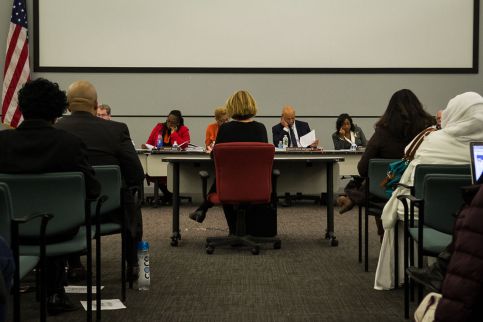
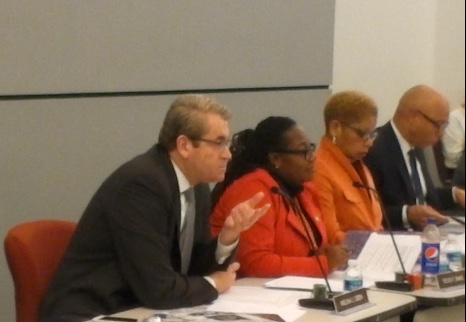
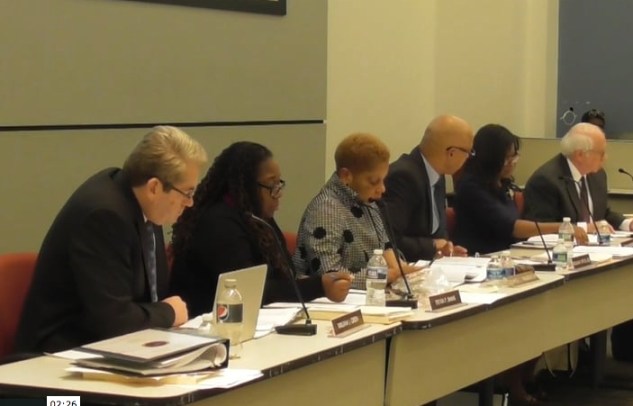
November’s meeting is the first to be chaired by Joyce Wilkerson, sworn in by Mayor Kenney on November 3 and appointed as Chair by Governor Wolf. Ms. Wilkerson was Chief of Staff for Mayor John Street and has extensive experience in government. She stated publicly that she favors or a return to local control.

The resolutions for November embody recurring themes, fully supported by the SRC, of Superintendent William Hite’s administration. One is the issue of the resolutions that have been appearing and disappearing since last April. Resolutions for renewals of Mastery Clymer, Mastery Shoemaker, and Mastery Gratz are posted—as they have been every month since April. The SRC has tabled, postponed or withdrawn these resolutions, without explanation, for seven months.

At September’s meeting, the SRC approved the reopening of Vaux High School, which had been closed in 2013, as a “contract school” to be operated by Big Picture Philadelphia. The proposed school would serve up to 500 students through 2022. Just before October’s meeting, the SRC withdrew Resolution B-10 which would have approved a six-year, $23 million contract with the education vendor to manage the school. That resolution also stipulated an option for a five-year renewal through 2017. There was never any staff presentation to explain what that program entailed or why it cost $23 million. Once again, we ask: What is happening behind the scenes that resulted in the resolution to be withdrawn? Where is this money to operate one small high school coming from?

On October 11, Dr. Hite announced that eleven schools have been designated “Priority Schools”. Details about the initiative have been sketchy. There is a list of five options for some type of turnaround, at least three of which would include major staff overhauls. One of the options is “restarting the schools”, which would imply that the school would be closed. Dr. Hite has repeatedly said that no schools would be closed this year. How do you restart a school if you haven’t closed it? In September, the SRC approved a $200,000 contract with “The Cambridge Team”, an education vendor based in Massachusetts, to conduct “school quality reviews” over a period of three weeks. Cambridge will hold three community meetings at each school and conduct two days of site visits. The contract resolution stated that part of the SQR process will be “to identify strengths at these schools which can be built upon, and will provide additional, on-the-ground data to inform which strategic investments would be most likely to drive sustained school improvement.” Of course, it is the teachers and principals who have been developing these strengths—in spite of lack of resources, teacher vacancies, the substitute debacle last year, and cutbacks in support staff. If the district observed good pedagogy, those teachers and principals would remain in these schools while the district replaced the services which have been cut by the Hite administration over the past four years. APPS has attended and written reports on many of these meeting.

Dr. Hite will announce his recommendation for all eleven schools in January 2017. Perhaps at the time he will also tell us how much the Priority School initiative will cost.

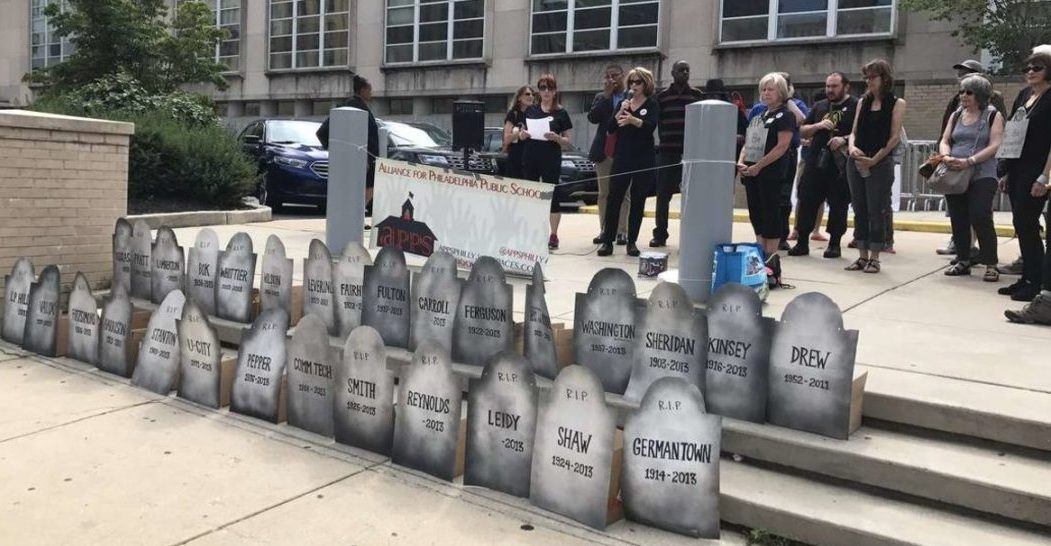
One set of Resolutions raises the issue of what happens to the buildings of shuttered schools. In 2013, there was a massive closing of 24 schools. Several of these properties are located in gentrifying neighborhoods. Bok High School, the only Philadelphia school building financed and constructed by the Works Progress Administration in 1938, and included on the National Register of Historic Places, has gone from providing “a core academic curriculum where students have been able to study accounting, bookkeeping, carpentry, health/medical assisting services, commercial/advertising art, computer systems networking and communications, engineering technologies, and culinary arts” into a space filled with a private preschool program, a range of small non-profits, working space for artists and craftspeople, as well as a summer rooftop bar. These programs may fill a need, but so did Bok High School—as a vibrant educational institution that provided opportunities for our young people. There are many other vacant buildings that would provide space for non-profits and artists, such as the Budd building in Nicetown. The neighborhood surrounding Bok is gentrifying and the services lodged within the building reflect that reality. How many more shuttered buildings are part of this gentrification of our city? Our neighborhood schools have served generations of families who expected that their children and grandchildren would be able to continue that tradition. How many of these closed schools are slated to become mixed-use buildings with market-value residences replacing residents who can no afford the rent? The SEPTA strike has shown us the value of having a neighborhood school within walking distance. What happens to a community stripped of its school?

This month, we see the continued use of non-profits to replace school staff. Partners are invaluable but should be supplemental, not primary. Volunteers are wonderful, generous people, but our students need educated and experienced staff who at the school every day. Our students need school librarians, counselors, nurses, reading specialists, art and music teachers. They deserve the best, and we should do everything we can to ensure that they receive it. Rather than close or charterize or turnaround our schools, the Hite administration needs to institute real reforms, beginning with putting back so many of the resources which have been taken out:

  • A full time school nurse to help in assessing any health issues (such as vision and auditory screenings)
  • Classroom aides to provide support in the classroom
  • Reduced class size that enables classroom teachers to support every child
  • Reading Specialists who can diagnose and remediate reading issues
  • Reading Recovery teachers in elementary schools
  • A flourishing ESOL program to support our English Language Learners
  • Small class size and supports for Special Needs students

Please note that November’s SRC Action Meeting is Tuesday (not Thursday) November 15th at 4:30 PM.

Click here to read selected resolutions relating to the ongoing expansion of charter schools, real estate interests purchases of closed Philadelphia public schools, contracting out of custodial services in violation of the SEIU contract, and more.

APPS member Eileen Duffey’s statement of support for the Transport Workers Union strikers

14925366_899624916835272_2018501620693254369_n

My solidarity with the transit workers is rooted in my deeply held conviction that if we are to build a future worth handing to our children, we need to care about each other and stand together where issues of justice are evident.

Much is said in the media about the inconvenience a strike engenders. Yet, for me, it is clear that a strike is never intended to be convenient.

Transit workers are striking for improved working conditions, including the right to have breaks with sufficient bathroom time. They are striking for decent wages.

As a public school employee, I am deeply aware how my working conditions become my students’ learning conditions. When I see these transit workers, I recognize that their working conditions become the conditions under which hundreds of thousands of citizens are transported across the city each day. There is no “us and them.”

As Martin Luther King told us, our lives are inextricably linked. When I see the transit workers, I see my neighbor. I see the parent or grandparent of my students.
The conditions under which SEPTA employees work need to be the conditions under which I would want my own adult children to work and under which I can hopefully see my young public school students work one day. Otherwise, my life’s work is a sham. Their conditions, today; our children’s conditions tomorrow- inextricably linked.

What Is the District’s Plan for Priority Schools?

by Lisa Haver
November 3, 2016

sdp

Renaissance Schools, Transformation Schools, Redesign Schools. Autonomy Network, Innovation Network, Turnaround Network.  Internal turnarounds, evidence-based turnarounds.  There may be a lack of classroom teachers, supplies, and support staff, but the Hite administration never wants for new slots in which to insert schools while creating the illusion of community involvement.

This year’s model:  Priority Schools.   Eleven schools have been chosen to be overhauled in one of five ways, most of which would involve forced transfer of faculties. The options include:

  • Entering the school into the District’s Turnaround Network
  • Merging the school with a nearby high-quality school
  • Engaging a contract partner
  • Initiating an evidence-based plan for academic improvement
  • Restarting the school

For such a big initiative, there is little information about it on the school district website.  There is no banner, only a small notice among a list of others under “What’s New” for which you have to scroll down; that is, either you stumbled upon it looking for something else, or you had to be told exactly where to find it. The link takes you to a district press release that gives few details on what this initiative involves for the eleven targeted schools.  There was never any staff presentation at an SRC meeting.

The schedule of community meetings originally listed only the initial meeting but had no times for the two focus group meetings. Dates for focus meetings have been changed more than once.  Dates for the final meeting, in which the findings of the consultants will be discussed, still have not been posted. Dr. Hite said he will announce his decision about the fates of all eleven schools in January.  Those eleven schools are: John Marshall, Blankenburg, McDaniel, Heston and Hartranft elementary schools; Harding Middle School; Bartram, Benjamin Franklin, Fels, Kensington Health Sciences Academy, and Overbrook high schools.

The district has cited low SPR numbers from years 2012-13, 2013-14 and 2014-15 as the reason for choosing these schools.  No data is available for 2015-16.

Questions have been raised about the sincerity of the statements from Dr. Hite and his staff that they want parents and the community to contribute to the decisions about the future of the schools. Parents at the eleven schools were notified that their schools had been targeted for some type of major overhaul just after Dr. Hite’s public announcement on October 11.  That gave parents at some of the schools less than one week’s notice about the first meeting.  Three of the schools’ kick-off meetings were before noon; Harding Middle School’s began at 8:30 AM.  Fewer than half had start times at 5 or after.  Thirteen of the twenty-two focus group meetings will be held before 5PM.

Although the same basic presentation has been made at all eleven schools, information about the public process has been inconsistent.  Before the focus group times were posted, the only way to know that there were focus groups, or when they would meet, was to attend the first meeting.  At Blankenburg and Harding, it seemed that most of the parent outreach was done by the principal through flyers sent home with students and  by robo-calls. At other schools, people were told that the Cambridge Team was doing that.

What is Cambridge’s role in this? The district’s press release says that it will use “objective third-party reviews to highlight school strengths and weaknesses”.  It does not identify the third party as Cambridge, whom the district hired at a cost of $200,000 for canvassing and site visits.  Although not mentioned in the October 2016 resolution approved by the SRC which approved the Cambridge contract, the company is sub-contracting with Educators for Excellence (E4E) on the School Quality Reviews and the parent outreach. Click here and here for information about who is funding E4E.  (We have requested a copy of the Cambridge contract from the SRC office.)

APPS members have attended community meetings at Bartram, Benjamin Franklin, Kensington Health Sciences Academy and Bartram high schools; Harding Middle School; and Blankenburg and Hartranft elementary schools. With the exception of the 4PM meeting at KHSA, there were no more than 8 parents at any of those meetings.  Parents at many of the meetings described themselves as “involved” or “regular volunteers”.  They were hopeful that the district would put back some of the many resources which had been stripped from the schools over the past four years, through the “Bare-bones” and “Doomsday” budgets, which have established a new normal of austerity across the district.  Community members challenged Dr. Hite’s public statement that “despite investments” made in the schools, they have failed to perform.  Blankenburg, for example, had no counselor for the previous two years. They have not had a full-time nurse or a library.  They have been a receiving school more than once in the past three years, but received no additional resources.  Very few substitutes were sent last year, and there were four unfilled teacher vacancies for the entire 2015-16 school year.

Few details about the menu of options were given.  Most of the information came in answers to questions from APPS members.  There is no explanation of what a “contract school” is except to say that the district can contract with a company with special programs not available at any district school.  Power-point presentations were made, but only at Bertram, Harding and Ben Franklin were audience members given any written material or copies of the page listing the five options.

We have asked at every meeting we attended whether reports from each meeting would be posted for the benefit of those who can’t come to the meetings.  We were told that no information will be posted.

Two years ago, two schools were designated Renaissance schools, but parents voted overwhelmingly to stay with the district. Last year, the district chose three neighborhood schools to be placed in the Renaissance program; parents were given no choice in the matter.  That same year, four schools had internal turnarounds imposed upon them which resulted  in the loss of most of the faculty; at two schools, principals were forced out. Community meetings were held, but the community had no say in the district’s decisions.

Below are our reports from the initial community meetings. (Meeting are listed in the calendar order they were held.)

Blankenburg Elementary School
Blankenburg Focus Group 1

Benjamin Franklin High School
Benjamin Franklin: Focus Group 1

Bartram High School

Kensington Health Sciences Academy
Kensington: Focus Group 1

Hartranft Elementary School

Harding Middle School

Look at this article to see who is funding Educators4Excellence
Educators4Excellence because teachers NEED their own education reform front group | Wait What?

Ears on the SRC: October 13, 2016

src-4-21-16
The Philadelphia School Reform Commission – October 13, 2016

by Diane Payne
October 23, 2016

As we continue our fight to stop the ongoing devastation of our public schools, we need to remind ourselves that the 5-member School Reform Commission is a governmental body responsible for a $2.6 billion annual budget which affects the educational conditions of 130,000 Philadelphia children. Yet this body is accountable to no one for its decisions, nor is there any watchdog group (other than APPS) which monitors its actions or spending priorities. (We got nowhere when we met with the Committee of 70 in August.) The residents and taxpayers of this city have no effective voice in this. We are subject to taxation, yet we have no representation. We cannot vote the SRC out. Pennsylvanians in the other 499 school districts across the state have board members accountable to the voters. Those in Harrisburg have deemed us not worthy or able to choose our own school board. The people of Philadelphia continue to be disenfranchised.

We now find ourselves at a crossroads which could change all of that. Two members of the SRC tendered their resignations in October; one more term is set to expire in January 2017.  Two of these seats will be filled by Mayor Kenney; there is no public hearing or approval process by City Council. Governor Wolf’s nominee must be approved by the State Senate, but there is no requirement for public hearings or public testimony. How’s that for democracy? Advocacy groups across the city are calling for the mayor and governor to appoint commissioners who are committed to abolishing this failed takeover. City Council President Darrell Clarke and Councilwomen Helen Gym, Jannie Blackwell, and Blondell Reynolds-Brown have added their voices to those calling for a return to local control.

Both Governor Wolf and Mayor Kenney campaigned on promises to abolish the SRC. Now Kenney is saying it is “not the right time”. To which advocates for public education reply: If not now…when?  When is the right time for the people of this city to be treated with the respect and afforded the same rights as those in every other county in this state?

SRC Chair Remarks

October’s agenda began with prepared remarks from Chairwoman Neff regarding her resignation.  She urged her fellow commissioners to vote on the numerous charter school renewals which have been postponed, without explanation, for six months.  Last Spring, the Charter School Office strongly recommended non-renewal for Aspira Stetson, Aspira Olney, Universal Audenried, and Universal Vare. The CSO provided extensive lists of reasons for each school, citing academic, managerial and financial issues. Since April, however, the SRC has openly tabulated votes and seized upon various parliamentary rules to avoid taking action on these resolutions.  This inaction serves to protect the special interests of the Aspira and Universal organizations despite their failing records.

In addition, Chair Neff admonished the district and the PFT to sit down and negotiate a new contract.  She noted the harm that not having a contract for four years has done to our school’s workforce and to the children they serve. Unfortunately, Neff told those present that PFT members are not facing “financial realities”. Admonishing both sides to sit down and negotiate is fair.  Admonishing one side to do something different when all of the information is not available is not fair. It is puzzling that Ms. Neff, who has consistently voted against new charters because of the financial harm they would cause, did not address this financial reality in her remarks.

Bully Pulpit

Commissioner Green did not disappoint those who count on him to bash the teachers and school professionals of the PFT at every meeting. He consistently fails to mention that the teachers have to work harder each year to make sure the children do not suffer the consequences of the failed policies and practices of the SRC and the Hite administration: inadequate resources; instability caused by yearly turnarounds of neighborhood schools; staffing vacancies; overcrowding after closure of over 25 schools; the debacle resulting from the Source4Teachers outsourcing scheme.

This time, Green stepped over the line. He violated long-honored protocol by revealing details discussed in contract negotiations. He justified this by saying he wanted to make sure that PFT members were being told the truth, clearly implying that PFT leadership is intentionally lying to its members. Are these actions considered part of good-faith negotiations? Or, as some have asked, is Green deliberately trying to sabotage those negotiations? His disdain for teachers in our public schools calls into question his ability to act on behalf of them and other members of the public in a fair and impartial manner.

PSSA Results

Dr. Hite gave remarks on the latest PSSA results, indicating that across the district, scores held steady or increased. We will have to take Hite at his word for now. Trying to find and understand this data is very difficult on the user-unfriendly district website.

APPS Testimony

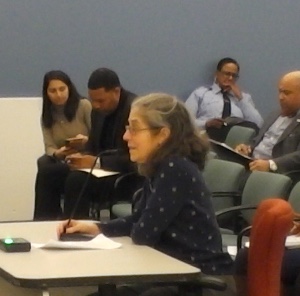
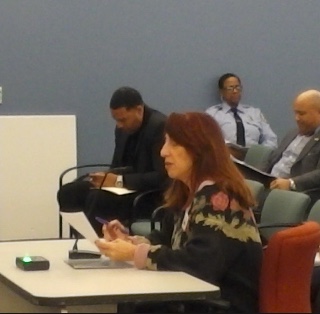
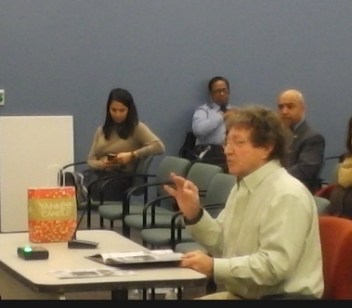
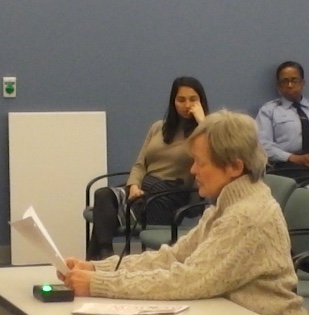
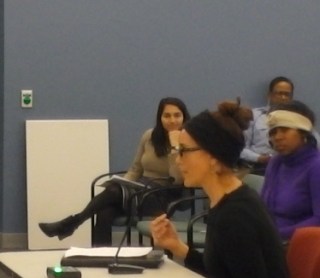
Five APPS members testified about the SRC’s questionable spending and policy priorities: Karel Kilimnik, Diane Payne, Deborah Grill, Rich Liuzzi, and Lynda Rubin.  [To see their testimony or read their transcripts, go to APPSphilly.net.] These testimonials continue to shine a light on the failed fad reforms the SRC promotes and the loss of democracy and lack of SRC accountability. Questions were asked, but as usual, answers were not forthcoming.

Drive-by Destabilization

Dr. Hite stated in a recent news article, as he did at an earlier SRC meeting, that at least three schools per year would be identified for closure.  Last month, APPS members Karel Kilimnik and Rich Liuzzi asked the SRC commissioners and Dr. Hite to disclose what schools were on the list to be closed.  Neither the commissioners nor Dr. Hite would answer the question.

In the September editions of Eyes on the SRC and Ears on the SRC, APPS drew attention to Resolution A-3, which authorized a contract with The Cambridge Team, a private company, “to develop, manage, and execute a comprehensive School Quality Review process, to gather data and develop qualitative reports on school quality and to engage the school community and gather community input, for an amount not to exceed $200,000, for the period commencing September 16, 2016 through June 30, 2017.”  APPS questioned whether this was yet another outsourcing of district services whose intent was to add to the list of privatized or destabilized schools.  October’s SRC meeting gave the answer: Yes. The Hite administration announced that eleven “Priority Schools” would be reconfigured in some way, with the process to be overseen by Cambridge. Community meetings were scheduled, with less than one week’s notification, for the last two weeks in October. Hite indicated that he would have a presentation at November’s meeting. Is there a reason why the district’s options will be explained after the community meetings are over? Is this a fast track to success—or a fast tract to more churn and privatization?

Hite’s claim that these schools are not achieving “in spite of the district’s investments” in them flies in the face of reality: that schools have been struggling to survive under the austerity budgets imposed upon them for the past three years. The menu of options for the targeted schools include merging with a nearby “high-quality” school, contracting with an unnamed private company, instituting an “evidence-based” plan; joining the district’s Turnaround Network; “restarting” the school after “major staff changes”. Although few details were given, it is clear that most of these options necessitate forced transfers of teachers. When asked by an APPS speaker to identify the extra resources given to these eleven schools, Hite had no answer.

Charter Renewal Games Continue

Mastery charter renewal resolutions for Clymer, Gratz and Shoemaker (Resolutions SRC -1 -2, and -3), were withdrawn just prior to the meeting—again.  The company is well on  its way to creating its own Mastery Northwest district.  The appearance and disappearance of these resolutions for the past six months is done without explanation. Emails obtained by APPS from a Right-to-Know request last Spring clearly show the cozy relationship between Mastery donors and Commissioners Green and Simms.

What we witnessed with Resolutions SRC-4 and -5, renewals for Aspira Olney and Aspira Stetson, was a shocking reminder of how irresponsible and unaccountable the SRC has become. First, there was no text under the title of the resolutions. The public was not allowed to know what the SRC intended to vote on. Commissioner Houston made the formal motion, and Chair Neff called for a second. Neither Green nor Simms would second the motion, and it was tabled for the sixth month. This prompted calls from the audience of “Shame!” and “Do your job!” Green and Simms continue to use their positions to protect the interests of Aspira and ignore those of the community. (Jimenez once again abstained because of a conflict.)

And where, we ask again, have the renewal resolutions for Universal Audenried and Universal Vare gone? The Charter School Office strongly recommended non-renewal for these schools also. They have not been posted since April, and there has been no explanation or update. We can only assume, based on the SRC’s history with Aspira, that similar secret negotiations are taking place with Universal. CEO Kenny Gamble wields considerable political influence in the city. Chair Neff’s plea to her fellow commissioners to deal with these issues fell on deaf ears.

The rest of the resolutions were unanimously approved with one exception.   Chair Neff voted against Resolution A-3, a $131,000 contract for new principal screening with The New Teacher Project. TNTP is a well-known national pro-privatization organization. [Please see Deborah Grill’s October testimony on the topic of TNTP.]  At 440, it seems that instilling the correct ideology takes precedence over training in pedagogy and administration.

Resolution A-5 approved grants from the Philadelphia School Partnership (PSP) for $116,630 and $54,434 to support Roxborough High School and Hill-Freedman World Academy, respectively. Will the usual strings be attached to these donations from the corporate reformers at PSP?

Prosecution without Justification

Because of the advocacy of APPS members and the strong support of her school’s staff, a resolution to begin termination proceedings against an elementary teacher was withdrawn. Beware district employees: there is a dangerous practice in place at 440—moving to terminate employees without any evidence or investigation. This teacher was summoned by DHS to explain what happened to a student at her school. She was never told that she was the subject of any investigation. The school district received a letter which stated that there was an “indication” of abuse against this student. They conducted no hearing, and no charges were filed against the teacher. To this day, she has not been informed by DHS or by the district of any charges. She has had to hire a lawyer, and has been sitting in the “rubber room” since September. The Hite administration’s policy seems to be: First the execution, then the trial! This incident serves to remind us why it is so important for teachers and school professionals to have a contract which includes clear due process provisions.