
Ears on the Board of Education: February 28, 2019

by Diane Payne

This Board meeting seems to have signaled a real change in direction by those in charge of the District. All new charter applications were denied, and Dr. Hite responded to concerns brought by teachers about oppressive administrative practices.

Present

All nine members of the Board of Education were present as well as student representative Alfredo Pratico. (Student representative Julia Frank was absent.)  All meeting agendas and materials can be viewed on the SDP website and videos of previous meetings can be viewed by scrolling down on the BOE home page and clicking on Watch Previous Board Meetings.

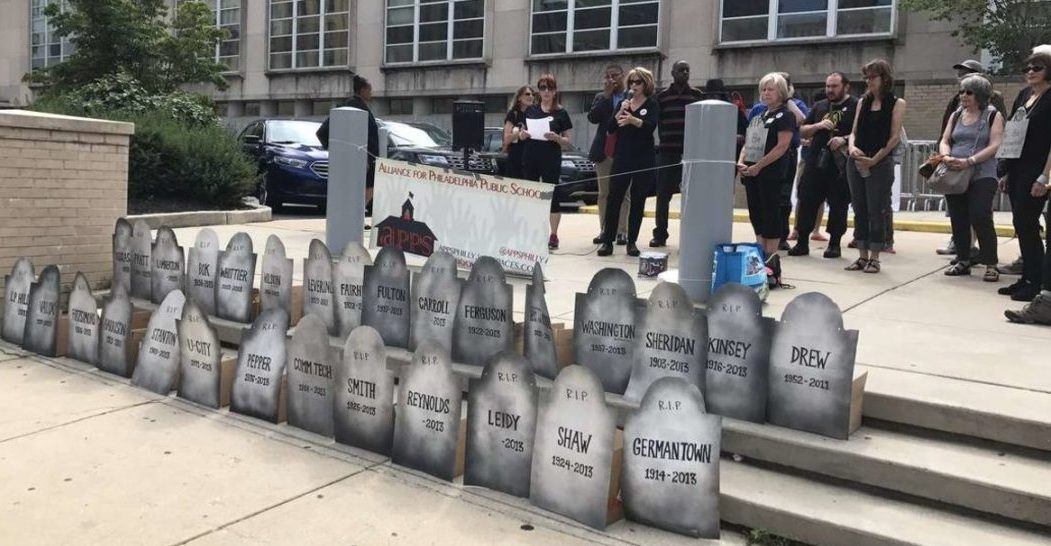
Five members of APPS testified in defense of Public Education.  You can read APPS members’ testimony (and reports on Philly Public Education issues) on the APPS website. The room was filled to capacity; some members of the public had to sit in the lobby overflow area.

The meeting opened with a beautiful student performance by The Franklin Learning Center’s singing group The Bobtones, directed by Michelle Frank.  These performances serve as a reminder of the importance of the Arts in our schools’ curricula. The Arts should never be considered an “extra.”

Committee Reports

Reports from the Student Achievement (S.A.) and Finance and Facilities (F&F) committees were presented by Co-chairs Chris McGinley (S.A.) and Lee Huang (F&F).  (See APPS’ reports of these committee meetings on our website.) Community Engagement Committee Co-chair Mallory Fix Lopez reported that the announcement on those selected (of 123 applicants) for the Parent Advisory Committee would be made next Thursday, March 7th.  She also reported that the next Community Engagement meeting will be held at the Blackwell Community Center in West Philadelphia on March 21st. Information and a request for RSVP (not mandatory, just for planning purposes for food and childcare) can be found on the Board website.  Policy Committee Co-chair Maria McColgan reported that nine policies have been on the agenda for review and will be voted on at the March Board Action Meeting: Policies 111, 123.3, 211, 217, 304, 617, 709, 804, and 805.

Click here to read the rest of the post.

Defenders of Public Education Speak Before the BOE, February 28, 2019

SB 7-9-18

Click on the individual’s name to read the transcript of his or her testimony.  You can view the video of the Board meeting and public testimony here.

APPS and Community Members

Susan DeJarnatt

Education Law Center

Deborah Grill

Lisa Haver

Karel Kilimnik

Diane Payne

Lynda Rubin

District’s System of Great Schools Decision Leaves Many Unanswered Questions

by Karel Kilimnik

After holding six community meetings at each of the three schools in the 2018 System of Great Schools (SGS) cohort, the District announced one more at each school during the week of February 4th in which the option for each school would be revealed.  APPS members attended meetings at all three SGS School last Fall. Our reports can be found here.

The two possible options for the schools were either placement in the Acceleration Network (formerly the Turnaround Network) or allowing each school to develop its own Academic Improvement Plan (AIP) . The main feature of the first option is the requirement that teachers and principals reapply for their positions in their school. Chief of Schools Shawn Bird told the Board’s Student Achievement Committee that teachers had to reapply so that the District would know whether they were willing to attend the additional monthly and summer professional development. If this is true, then the District changed its policy; it has not been true for the previous two years of this program. But why not just ask the teachers if they will attend the PD? Why would they have to go through a re-application and re-interview process just to answer one question? When questioned by the Committee about this, Bird said he wasn’t sure and would have to check.  Who would he be asking when he is in charge of the SGS process? Another last-minute policy change: this year, the AIP option could also include a requirement for teachers to reapply. This was not disclosed until the last meeting at Harrington in answer to a question from APPS. The other school communities, as far as we know, have not been informed of this.

Superintendent Hite waited until the 2017/18 SPR scores were reported until making the final decision on whether Harrington, Lamberton, and Locke Schools would enter the Acceleration Network or develop their own Plan. Ultimately, he decided to place all three schools into the AIP Option.  Each school would have a Planning Committee selected by the Principal. No criteria was provided as to how Planning Committee members would be selected, only that the Principal would choose them.

As part of the District’s stated plan to “gather information on school strengths, challenges, and ways to improve”, Temple University was awarded a contract to gather input from parents and community members about the strengths and weaknesses of each school. The “Parent. Family, & Community Input Report” (listed under Download Focus Group Report on the SGS website) noted the extremely limited involvement of families. Given that all three schools list student enrollment at over 400, there was paltry parent attendance at each school. The total for parents/community members for all six meetings came to 29 at Harrington, 23 at Lamberton, and 38 at Locke–fewer than ten at each meeting. Their report does not indicate whether Special Ed and/or English Language learners were part of their sample nor what grades were included.

Click here to read the rest of the report

Eyes on the Board of Education: February 28, 2019

by Karel Kilimnik

At the Board’s inaugural meeting last July, many new Board members made a commitment to transparency and community involvement. Agenda Items, alas, do not reflect these promises. In September 2018, the Board posted documents related to Action Items, including a list of new hires and terminations, City of Philadelphia documents on Authorization of Keystone Opportunities Zone, and the conditions for approving the new MaST Charter School. The Action Item descriptions were much fuller and more descriptive than the paltry information presented since then. The fact that the Board posted Contract Summaries, which we had asked the SRC to post many times, seemed to be a fulfillment of their commitment to transparency. Unfortunately, that was the first and last time anything resembling a contract was posted.  In October, the Board presented another Agenda format that actually had fewer details in Action Items. Also, despite our protestations, the Board has stopped providing paper copies of anything but the agenda at Action Meetings, making it impossible for the public to follow the discussions (if any) and votes on Action Items. The Board places three binders at the back table with a warning not to remove the materials. So are members of the public supposed to sit in the back if they want to know what is going on? Is this their idea of transparency? These are public documents and the public has every right to take them. The Board should provide adequate copies. Unfortunately this parsing of information continues today resulting in a lack of transparency. Their descriptions are uninformative and we continue to question what few nuggets of information are provided to the public.

Superintendent Hite continues to outsource services to vendors instead of building the capacity of District staff. We continue to remind him and the Board that there is a wealth of experience and knowledge within both the teaching and the school support staff. Building on these strengths would lead to greater teacher retention. When people feel respected and listened to, they do not feel the need to leave. Many ESOL teachers have come to both  Committee Meetings and Action Meetings to praise the professional development provided by WestEd QTEL (Action item 34). Hopefully the Board will listen and approve this Action Item.

Three charter school applications are going to be considered for approval at this meeting  (Action Items 4,5 & 6). The District’s Charter Schools Office has issued reports which enumerate significant problems with all of the applications. The District cannot afford to spend almost $119 million over the next five years on unnecessary charters. Our aging school facilities are in dire need of repair. Those millions could make a dent in the estimated $4 billion needed to bring every building up to code. The charter law makes it difficult–but not impossible–to shut down a failing charter, so approving a charter would mean at least a ten-year financial burden on the District. If the Board takes its promise to improve the opportunities for the schoolchildren of the city, then they have an obligation to vote no on these applications. (See the APPS charter reports here).

The next Board Action Meeting is Thursday February 28th at 5 PM.  The community must come out to urge the Board to vote no more charters! If you cannot attend please  submit written testimony by 5 PM Feburary 27 to schoolboard@philasd.org,  telling the Board what your school needs but will not be able to afford if the District sinks another $120 million into new charters. To sign up to testify call 215-400-4010 by 3 pm on Wednesday Feb. 27th.

Click here to read the rest of the report