What could be wrong with a “community school” model?

alison mcdowell
Alison McDowell

by Alison McDowell

If you read my SRC testimony it paints a troubling picture. Given that my testimony was limited to three minutes, I wanted to add some additional thoughts to the conversation. It’s particularly important to get these ideas out there, because Philadelphia’s mayor elect Jim Kenney and his new Chief Education Officer, Otis Hackney, just took a trip to Cincinnati with the express purpose of learning more about the community school model and how it could work in our city. While Oyler, the school they visited, is lauded for its program, the long term success of the model remains uncertain.

As I see it, two groups are working concurrently on community school initiatives. They hold opposing views about what community schools are. Corporate education eformers talk about eliminating the concept of “seat time,” instead they want to promote the idea that you can learn anywhere at any pace. I see that line of thinking as potentially very dangerous if you’re someone like me who values real bricks and mortar schools as a cornerstone of civil society. At the same time there are an increasing number of people who are involved with community school initiatives on the local level. They see community schools as neighborhood anchors. The problem is that they have absolutely no knowledge that there is another powerful group, the corporate education reformers, including Tom Vander Ark, working to undermine all they are doing.

Click here to read the entire article.


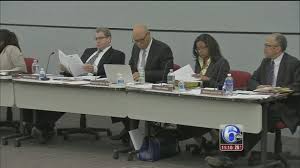
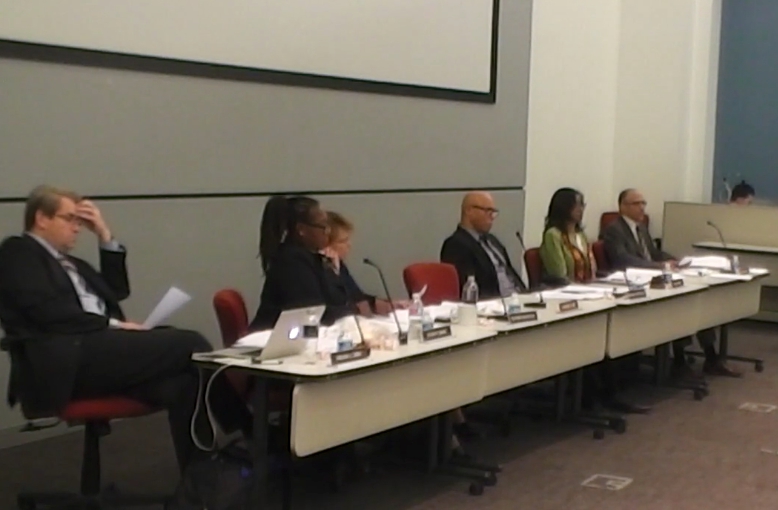
APPS testimony to the Philadelphia School Reform Commission – November 19, 2015

In the order of appearance.

Click here to see all of the videos.

Click the picture to view each video.

Diane Payne SRC 11-19-15

Video of APPS member Diane Payne testifying at the Philadelphia School Reform Commission meeting – November 19, 2015.

The last part of Diane’s testimony was cut off due to the three minute time limit.

The full transcript of Diane’s testimony.


Lisa Haver SRC 11-19-15

Video of APPS member Lisa Haver testifying at the Philadelphia School Reform Commission meeting – November 19, 2015.

As can be seen in the video, Lisa’s testimony was interrupted by Commissioners Jimenez and Green. This is Lisa’s explanation and comment about the interruption.

The full transcript of Lisa’s testimony.


Karel Kilimnik SRC testimony 11-19-15.jpg

Video of APPS member Karel Kilimnik testifying at the Philadelphia School Reform Commissionn meeting – November 19, 2015.

The last part of Karel’s testimony was read by Amy Roat of the Caucus of Working Educators because Karel’s mic was cut off at the three minute time limit.

The full transcript of Karel’s testimony.


Barbara Dowdall SRC 11-19-15

Video of APPS member Barbara Dowdall testifying at the Philadelphia School Reform Commissionn meeting – November 19, 2015.

The full transcript of Barbara’s testimony with added supplemental material.


peg devine SRC 11-19-15

Video of school nurse Peg Devine testifying at the Philadelphia School Reform Commissionn meeting – November 19, 2015.

The full transcript of Peg’s testimony.


Coleman Posses SRC 11-19-15

Video of APPS member Coleman Poses testifying at the Philadelphia School Reform Commissionn meeting – November 19, 2015.


alison mcdowell SRC 11-19-15

Video of APPS member Alison McDowell testifying at the Philadelphia School Reform Commissionn meeting – November 19, 2015.

The full transcript of Alison’s testimony.

Eyes on the November 19th SRC

9-17-15 SRC

By Karel Kilimnik

November 14, 2015

Welcome to the Fourth Edition of APPS’ “Eyes on the SRC”. Every month, the Philadelphia School Reform Commission votes, with almost no public deliberation, on pages of resolutions that will affect the academic and financial future of the district. Our purpose here is to shine a light on a few resolutions that need to be explained in more detail. We ask questions here which should be asked of the SRC members themselves. That is one reason why we need every voice to speak out against the chaos and turmoil created by this present administration and by the School Reform Commission.

School started in September with a dire lack of substitutes, and the situation has not improved. Teachers in every school are losing valuable prep time to covering classes. Dr. Hite admits that Source4Teachers is doing poorly, yet he makes no effort to terminate their contract. He and the SRC, which voted to outsource substitutes, need to be called out on this at every opportunity.

The next SRC meeting is Thursday November 19th at 5:30. To register to speak you must call 215 400 4180 by 4:30 on Wednesday November 18th. It’s best to say that you’re a teacher, parent, or community member because only “one member of an organization can register to speak” (from the District website).

Want some help with your testimony? Contact us at philaapps@gmail.com


Click here to read the November 19 Resolutions of Note

Who is Behind the Philadelphia School Partnership?

PSP

by Deborah Grill
November 9, 2015

The move to privatize public education has many players. Some attempt to move in giant steps. In Los Angeles, Eli Broad has raised $490 million in a bid to place half of Los Angeles public school students into charter schools. In New Orleans, city and state politicians took advantage of the chaos and destruction after Hurricane Katrina to fire public school teachers and convert all public schools into privately run charter schools. In Newark, Superintendent Cami Anderson, appointed by Governor Chris Christie, stripped the elected school board of most of its power and implemented “One Newark”.   This plan instituted a lottery eliminating the right of parents to enroll their child in a neighborhood school, closed many public schools, and increased the number of charter schools. Recently, New Jersey politicians have targeted Camden as the next city to close all public schools and replace them with an all-charter district.

Other school choice players, including those in Philadelphia, choose to go about it more subtly. While individual politicians and organizations have been involved in the push to open charters, the inception of the Philadelphia School Partnership (PSP) in 2010 (originally the Philadelphia School Project) has provided the organization and money to speed up the privatization of the city’s public school system.   The Partnership has been able to do this through its management of the Philadelphia Great Schools Compact, formulated and funded by the Bill and Melinda Gates Foundation. PSP’s influence has grown through its lobbying efforts and through the grants it has bestowed on schools of PSP’s board’s choosing through its own Great Schools FundPSP facilitates and staffs the Compact Committee meetings as well as serving as it fiscal agent. The meetings of both PSP’s Board and the Great Schools Compact Committee are closed to the public.

As the District begins another round of school closings and converting neighborhood schools to “Renaissance” Charters, a closer examination of PSP’s history and board members is needed to understand how this private organization has become so influential in just five years. This article is part of a series on the make-up and influence of The Philadelphia School Partnership.

Click here to read the entire article.