Digital Learning Goes Back to School

imgres

Alison McDowell summarizes her extensive research into the dangers of corporate education reform and personalized learning.

So I had a back and forth online with someone recently who didn’t understand the significance of education/workforce badging programs and asked me to write something up. So my thoughts are below. Ultimately I think this is all going to be linked to the TiSA (Trade in Services Agreement) as they create a global market for digital education.
*
 How to create a global market for digital learning: (detailed background from Morna McDermott)
*
*
 1. Create a common platform of educational standards. Don’t get distracted by CCSS-the uber set of standards is all pretty much in place now. https://ceds.ed.gov/
 *
2. Make sure all the developers are using a common schema for educational item data tagging. http://scorm.com/ http://dublincore.org/dcx/lrmi-term…
 *
3. Make PII data and data-collection a priority in schools. Don’t limit yourself to academic performance. Layer in SEL and bio-metrics, too. These are all important for workforce development. Gather it via embedded assessments and gaming to make it more palatable. https://www.adlnet.gov/adl-research…
 *
4. Focus on closing the digital divide by providing low-cost technology to districts with a majority of low-income students and by expanding broadband access to rural areas. For global, digital education to work, inexpensive internet everywhere must be put in place.
 *
5. Expand 1:1 device initiatives. Design learning management platforms to be run on less-expensive tablets and chromebooks. Baltimore’s STAT program is one of these. This is a parent blog with a lot of current information on concerns about the program: https://statusbcps.wordpress.com/ca….
 *
6. Systematically defund bricks and mortar educational systems. Allow facilities to decline, reduce human teaching staff, implement ongoing austerity budgets, etc. http://www.goerie.com/article/20160…
 *
7. Use fiscal pressure to introduce programs like 4-day school weeks and learn-from-home “e-days.” Public support for later high school start times can also be used to help push initiatives requiring students to take an online class in order to graduate. http://ktul.com/news/local/four-day…
 *
8. Control the teacher training pipeline to make digital learning the primary delivery vehicle.
 *
9. In response to growing teacher shortages, introduce blended/hybrid learning options into regular public schools. This enables increases in teacher/student ratios and allows “personalized” digital instruction to claim a growing percentage of the instructional day. Public monies are redirected to private companies through contacts for learning management systems and standards-based online education modules.
 *
10. Drive families out of the public school system via punitive measures (high-stakes testing, IEP non-compliance, “No Excuses” policies, etc.) and create a perception of public education as dangerous and/or ineffectual so people withdraw to do home school or private school.
 *
11. Set up charter cyber schools to accommodate the new “home school” families. This will further destabilize public school systems.
 *
12. Start to build up “virtual” public schools. In PA they are doing it through the county intermediate units. These will be cross-district, regional programs. Students will be encouraged to enroll in a “few” classes online via these programs. They will brand them differently than the cyber charters. They will market it as a savvy cost-saving measure. See PA Open Campus. https://mvp.mciu.org/ http://www.opencampuspa.net/benefit…
 *
13. Global corporations purchase cyber charter companies to do R&D to refine their online learning platforms and extend their reach-see Connections Academy (Pearson owned) in 29 states. http://www.connectionsacademy.com/n…
 *
14. Convince the public that online portfolios are better suited to the 21st century “gig” economy workforce than traditional diplomas/transcripts. Make it difficult to procure and access traditional credentialing avenues. See rise of Naviance use in schools. Push badging for non-academic skills.
 *
15. Convince people that badging has merit and is a trustworthy measure of true skill. Continue to break down the “seat time narrative.” Learning can happen “anywhere.” You can earn badges anywhere, too-not just in school. (see the links between bitcoin and skills-related badging around timestamp 40:00 https://www.youtube.com/watch?v=CKv…) ***If you do nothing else, watch this 6-minute video on “edu-blocks.”*** https://www.youtube.com/watch?v=Zss…
 *
16. Have legislation passed that allows for an increase in the use of credit-bearing ELOs (extended, expanded, enhanced learning opportunities)-preferably unlimited. Initially these programs will be before/after school and in summer, but once the community-based learning framework is in place, it can begin to usurp the role of bricks and mortar schools. Reduce seat-time funding requirements at a state level.
*
17. Use philanthropic and government funds to establish a system student-oriented maker spaces, code gyms, and other spaces for “out-of-school-time” learning. Piggy-back on the 21st Century Community Learning Center program. Push a vision that you can “remake education” by taking it out of a school building and moving it into the community. Once badging is firmly in place, make the case that bricks and mortar neighborhood schools are obsolete and that a redesigned digital learning program (complemented with some community-based projects-ELOs) provides students with the best career/life pathways.http://remakelearning.org/ https://www.edfunders.org/engage/fu… http://www.21stcclc.org/index.cfm?p…
 *
18. Blur the lines between high school and college through dual enrollment programs, many of which are delivered digitally. Couch it as “lifelong learning.” Expand online AP classes to target niche markets and add legitimacy to the online learning model.
 *
19. Get Federal legislation passed so for-profit online education providers can access student loan financing for online courses that will result in badges and micro-credentials.
 *
20. Establish a common list of skill codes for the labor force that can be tied to the online portfolios and to screen job applicants more efficiently. There will be limited on-the-job training in the future. People will need to finance their own training.
 *
21. Open up global education markets via TiSA (Trade in Services Agreement). Digital education controlled by multinational corporations (with a supplement of local project based learning) becomes the norm in the 21st century. If you are up for a short dystopian essay. It paints a compelling picture: http://vibrantlearning.aam-us.org/2…
 *
*

Don’t count on the non-profits to step up and save education. The ELO / Learning Eco-System model will allow them to significantly expand their programming, and once they accept philanthropic monies or funding via “Pay for Success” or social impact bonds, they will not be in position to fight back. Certified teachers will be replaced by Americorps/Vista kids keeping track of the online portfolios, and newly-minted college graduates will have temporary-grant funded jobs staffing project-based learning at cultural and job-training centers. No more need for certified teachers. http://www.knowledgeworks.org/sites…


For an in-depth look at corporate eduction reform and digital technology, see:

Education Technology, Surveillance and America’s Authoritarian Democracy | Schools Matter – August 19, 2016

Parents’ digital learning opt out form to share
Parents Across America

APPS members testimony to the Philadelphia School Reform Commission – August 18, 2016

SRC 8-18-16 -1

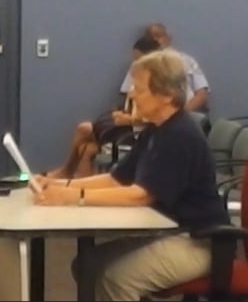
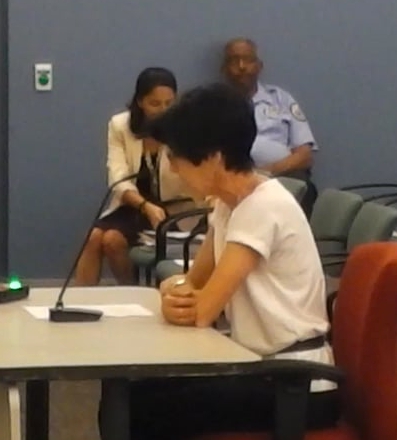
On August 18, 2016 the Philadelphia School Reform Commission’s met for its monthly Action Meeting.

This is testimony of members of the Alliance for Philadelphia Public Schools at this meeting.

All seven videos can be viewed here.

Click on the pictures below to view individual videos. Speakers are in order of appearance at the SRC meeting


Video of APPS member Carol Heinsdorf testifying at the Philadelphia School Reform Commission hearing – August 18, 2016.

Carol Heinsdorf

The transcript of Carol’s testimony.


Video of APPS member Lisa Haver testifying at the Philadelphia School Reform Commission hearing – August 18, 2016.

Lisa Haver

The transcript of Lisa’s testimony and the transcript of her interaction with Commissioner Green after her testimony.


Video of APPS member Barbara Dowdall testifying at the Philadelphia School Reform Commission hearing – August 18, 2016.

Barbara Dowdall

The transcript of Barbara’s testimony.


Video of APPS member Robin Lowry testifying at the Philadelphia School Reform Commission hearing – August 18, 2016.

Robin Lowry

The transcript of Robin’s testimony.


Video of APPS member Deborah Grill testifying at the Philadelphia School Reform Commission hearing – August 18, 2016.

Deborah Grill

The transcript of Debbie’s testimony.


Video of APPS member Lynda Rubin testifying at the Philadelphia School Reform Commission hearing – August 18, 2016.

Lynda Rubin

The transcript of Lynda’s testimony.


Video of APPS member Rich Miglore testifying at the Philadelphia School Reform Commission hearing – August 18, 2016.

Richard Migliore

The transcript of Rich’s testimony.


APPS Calls on Mayor Kenney to Investigate SRC Actions in Aspira Case

Full SRC 5-19-16

The SRC has been considering the status of the charters of two ASPIRA schools, Olney High School and Stetson Middle School, for almost two years. There have been several stories published in the Philadelphia Daily News and the Philadelphia Public School Notebook about ASPIRA’s failure to provide sufficient educational services to its students, along with serious issues about its questionable managerial and financial practices.  In April, the Charter School Office, which is under the domain of the SRC, presented detailed reports on both schools and recommended non-renewal for both. Rather than accept the findings of the CSO, the SRC has voted several times to postpone the vote.  APPS is requesting that the Mayor have his Chief Integrity officer investigate the actions of the SRC in the ASPIRA matter, in particular the private negotiations being conducted by two SRC members designed to make sure that ASPIRA retains control of the schools.
Rather than honestly answer the questions when interviewed by City and State Pennsylvania about the APPS letter, SRC Commissioner Bill Green launched a personal attack on APPS Co-founder Lisa Haver and questioned APPS independence.
 
APPS has previously questioned possible ethics violations due to conflicts of interest by SRC members relations with charter companies such as this letter to SRC Commissioner Farah Jimenez on September 2, 2015. In the letter, APPS stated: 
You identified yourself in that article as “Chair of Terry Tracy for Council-at-Large”. Mr. Tracy is a Republican party-backed candidate for city office. Subsection 696 (b)(6) of the Pennsylvania School Code of 1949, as amended, states: “No commission member may, while in the service of the School Reform Commission, seek or hold a position as any other public official within this Commonwealth or as an officer of a political party.”

Although no resolution has been posted regarding ASPIRA for Thursday’s (August 19th) SRC meeting, it is possible that the SRC will add a resolution for renewal at the last minute.

Below are the intros to the City and State Pennsylvania article and the letter to Mayor Kenney with links to the full text.


Education advocates call for investigation of Philly charter schools
City and State Pennsylvania – August 12, 2016

by Ryan Briggs

The Alliance for Philadelphia Public Schools, an educational advocacy group, has called for the city’s Inspector General and Chief Integrity Officer, Board of Ethics and the Mayor’s office to investigate the relationship between School Reform Commission members and the troubled ASPIRA charter school organization.

The charter operator has been flagged by the School District of Philadelphia’s charter office for repeated academic and financial failings, but has remained in operation for more than a year due to the repeated postponement of a charter renewal vote.

The letter accuses School Reform Commission members of engaging in a “private appeals process” to benefit the charter at the public’s expense.

APPS member Lisa Haver accused SRC members Bill Green and Sylvia Simms in particular  of colluding with school operators to keep the school in operation through “ex parte” negotiations held outside of SRC meetings

“The School District charter office’s own reports recommended nonrenewal,” she said. “They’re working it out behind closed doors. It’s a violation of public trust.”

Haver said that Green and Simms had formed “a voting bloc” bent on keeping ASPIRA running in spite of its failing record at Olney High School and Stetson Middle School, which the operator took over four and five years ago, respectively.

Click here to read the whole article published in City and State Pennsylvania


APPS letter to Mayor Kenney Calling for an Investigation into SRC Actions on Aspira

Dear Mayor Kenney,

On behalf of the members of the Alliance for Philadelphia Public Schools, we are writing to request that the City’s Chief Integrity Officer, Ellen Kaplan, conduct a full investigation into the actions of the School Reform Commission during its current renewal procedure of the charters for Aspira Stetson School and Aspira Olney School. We have attended all of the SRC meetings in April and May of this year when these resolutions were considered, and we have serious concerns that the public has been denied the right to a fair and impartial process in these matters.

Click here to read the entire letter to Mayor Kenney


Eyes on the SRC Action Meeting – August 18, 2016

Full SRC 5-19-16

by Karel Kilimnik

APPS has been keeping its collective eyes wide open for almost five years now, but this edition marks the first anniversary of our Eyes on the SRC. We believe the public has a right to know—and understand—what the SRC is voting on. This tumultuous year has brought more resolutions of outsourcing and privatization, recommendations from the Charter School Office (CSO) for non-renewals of underperforming charter schools, and skyrocketing legal fees as the SRC and district seek to overturn lower court rulings on the cancellation of the PFT contract and other matters. It’s been a year fraught with upheaval as over 5,000 students sat in classrooms without full-time teachers, a situation exacerbated by the district’s disastrous decision to approve a $34 million contract to outsource substitutes. Despite the too-little-too-late acknowledgment by Superintendent William Hite of the incompetence of Source4Teachers, the district chose to go with yet another private company rather than return to the use of union employees.

 In May, the CSO recommended non-renewal of ASPIRA Stetson Middle School and ASPIRA Olney High School, as well as Universal Audenreid and Universal Vare. The SRC engaged in a seventeen minute discourse with lawyer Ken Trujillo at the May 19 SRC meeting (his mic wasn’t turned off after three minutes, as all other speakers are) during which he promised to fix all of the ASPIRA irregularities within weeks.  However, we find not a whisper about ASPIRA or Universal in this present list of resolutions.

Although it says publicly that resolutions are posted two weeks before the meeting, that has not stopped the SRC from adding some at the last minute. Or will there be a resolution from the floor like the one introduced by Commissioner Sylvia Simms and approved by the SRC in January to hand Wister Elementary over to Mastery—which the public was not allowed to speak on?

 And as we have seen almost every year at this time, there have been several changes in top-level staff at 440.

**Please note: as of August 18 the new time for SRC Action meetings is 4:30 PM.

Click here to read selection resolutions and the APPS analysis.