
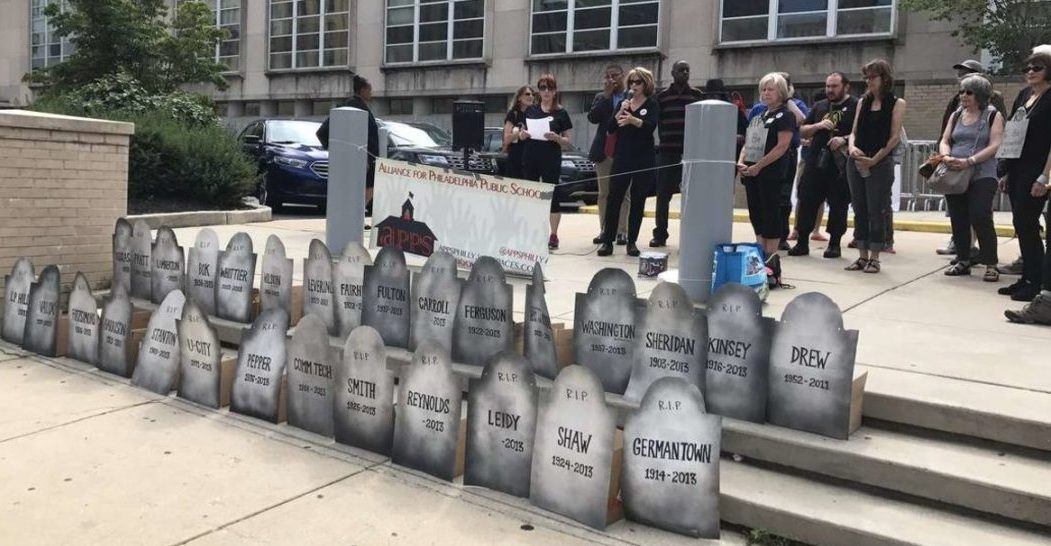
Alliance for Philadelphia Public Schools
For immediate release: July 16, 2020
Members of the Alliance for Philadelphia Public Schools, a grass-roots advocacy organization, has called on the Board of Education to vote on the District’s re-opening plan at its special July 23 Action Meeting.
“The plan presented yesterday—during a remote press conference—raises crucial questions about the health and safety of students and staff when they return to in-person classes”, said APPS co-founders Lisa Haver and Karel Kilimnik in a letter to the Board today. “Those questions must be heard and deliberated on by the Board in a public meeting, and the Board, as the governing body of the city’s public schools, must take a vote to approve or reject the Administration’s plan.”
APPS members attended all of last week’s online meetings, billed by the District as “Town Halls” but actually sessions in which members of the public submitted questions. No questions were answered during the sessions, and the District has not yet posted any on its website.
Questions and concerns—about logistics, students receiving special education services, protection for medically vulnerable students and staff, lack of space in common areas, flexibility for working parents, transportation, and more—raised by reporters at the press conference, and by members of the public afterwards, must be answered in more detail at the Board’s meeting next week, for which an agenda has yet to be posted.
APPS is also calling on the Board to mandate re-opening plans from all charter school operators.
“The Board is responsible for the health and safety of all District students, including those attending the District’s 87 charter schools”, said Haver. “The Board must require the same type of detailed re-opening plan from those administrations.”
Dear President Wilkerson and Members of the Board,
APPS members call on the Members of the Board of Education to vote to approve or reject the Administration’s proposed reopening plan at the July 23, 2020 Special Action Meeting. That meeting’s agenda should include consideration of the Advancing Education Safety Plan as an official item.
The AES plan presented yesterday—during a remote press conference—raises crucial questions about the health and safety of students and staff when they return to in-person classes. Those questions must be heard and deliberated on by the Board in a public meeting, and the Board, as the governing body of the city’s public schools, must take a vote to approve or reject the Administration’s plan.
Concerns raised but not answered at last week’s online sessions—about logistics, students receiving special education services, protection for medically vulnerable students and staff, lack of space in common areas, flexibility for working parents, transportation, and more—must be answered by District staff at the meeting.
In addition, the Board must require all charter school operators to submit the same type of detailed reopening plan for each of the 87 District charters. The Board is responsible to assure the health and safety of all of the District’s students, whether they attend District- or charter-managed schools.
We appreciate your attention to these matters and would appreciate a timely response.
Sincerely,
Lisa Haver
Karel Kilimnik
 During the coronavirus crisis, staff and administration in the Philadelphia School District have been understandably concerned about equitable access to online/virtual instruction for all students, including those with special needs. I am sure that the public applauds its plan, in this rapidly changing and unpredictable situation, to buy and distribute Chromebooks, work with service providers to ensure that all students have internet connections, and produce educational packets and online resources.

 Alliance for Philadelphia Public Schools