
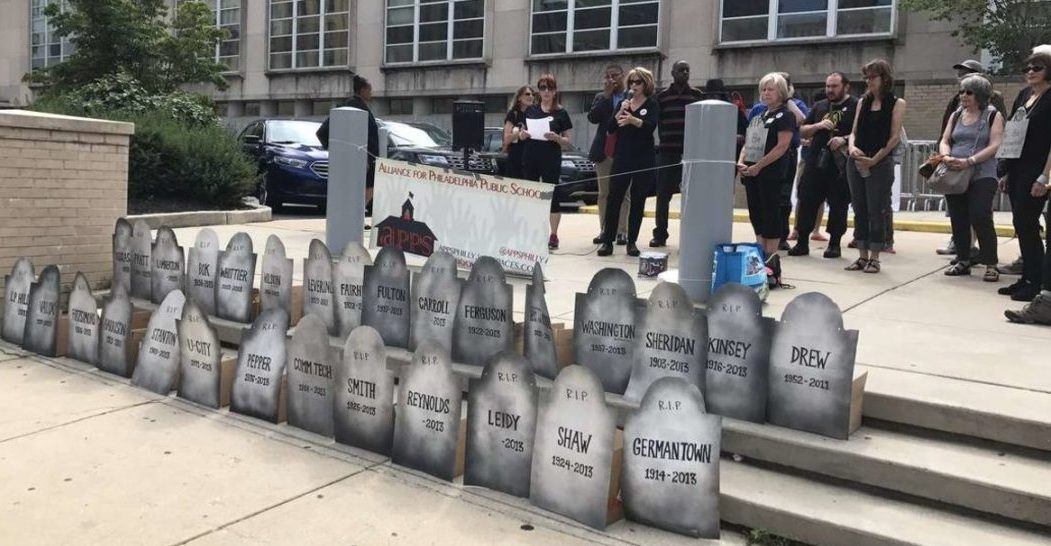
by Lisa Haver and Deborah Grill
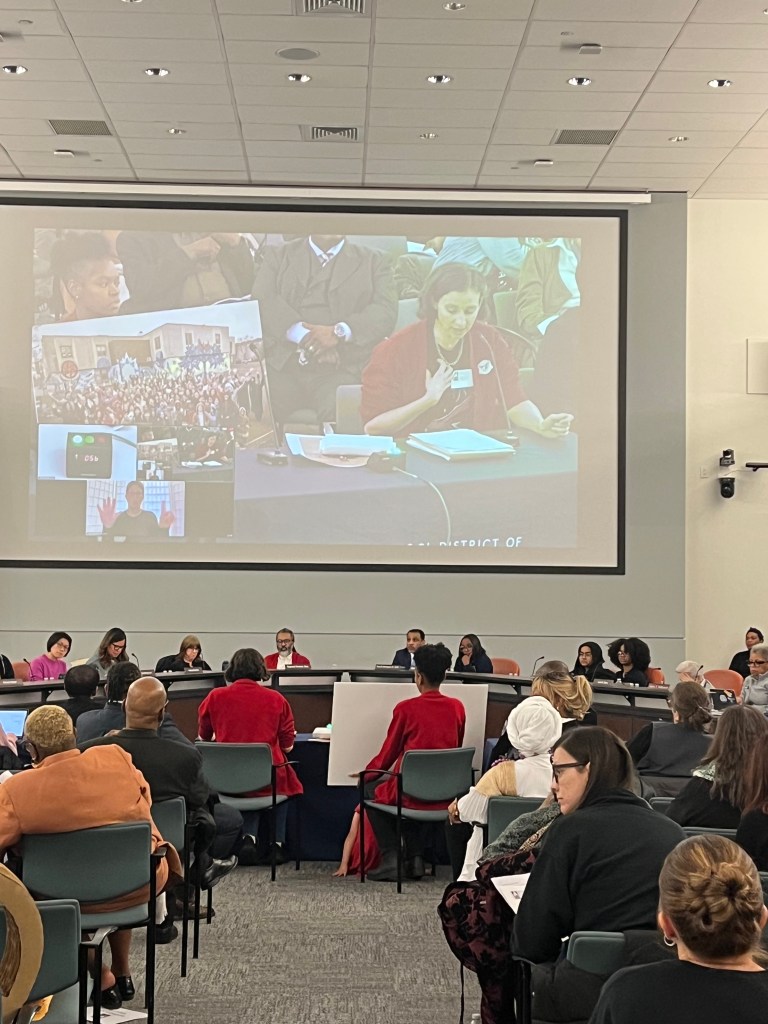
(Photo: Lisa Haver)
You didn’t answer my question.”
Parents, teachers, students, community members at district facilities meetings
‘This is not a budget issue.”
From the District’s 2024-25 facilities plan presentation
School District of Philadelphia Tony Watlington Sr. has released a $2.8 billion Facilities Master Plan that, if passed by the Board of Education, will have a devastating effect on communities in every part of the city. The latest draft of the plan, issued on February 27, recommends 18 permanent school closures, 12 co-locations, 8 buildings to be given to the city at no cost, grade band changes in 34 schools, 16 catchment areas redrawn affecting approximately 33 schools in over 20 zip codes, and modernization projects at 159 schools to begin in 2032. Schools targeted for closure are fighting to stay open. With a couple of exceptions, no meetings were held at schools facing grade conversions or catchment area changes. Most of those recommendations, in fact, were issued weeks after the original plan.
There are no projected costs for any of the recommendations or modernization projects in the plan.
The Watlington administration and its consultants have assembled a house of cards. If a middle school is built in South Philadelphia, then students would feed into certain high schools. If a school is built in Kensington, then the catchment maps would be redrawn for the three high schools in that neighborhood. If the district creates an honors program in one high school, the students who transfer to the school after theirs was closed might get into that program. And the one that the entire plan balances on: If the district receives more funding from the state and if the district raises funds from unnamed philanthropic sources, they might be able to make improvements to over 150 school buildings. At almost every meeting, board members implore the public to call their representatives in Harrisburg and ask them to fully fund public schools. Yet this plan assumes that Harrisburg will fund a large part of it. How can the district base a comprehensive 10-year plan on imaginary funding?
Continue reading here

 Alliance for Philadelphia Public Schools